

Choosing the right paving slabs can make or break an outdoor project. The wrong stone fades, stains or turns slippery after just one wet winter, and that leads to complaints and costly repairs. The right one looks sharp on day one and still performs well decades later. This guide is written for contractors, builders, landscapers, architects and importers who buy for UK projects. It compares materials, sizes, costs and care in plain language, so you can choose with confidence. You can browse the full range from SNK Surfaces, a natural stone and porcelain manufacturer, at snksurfaces.com.
What Are Paving Slabs?
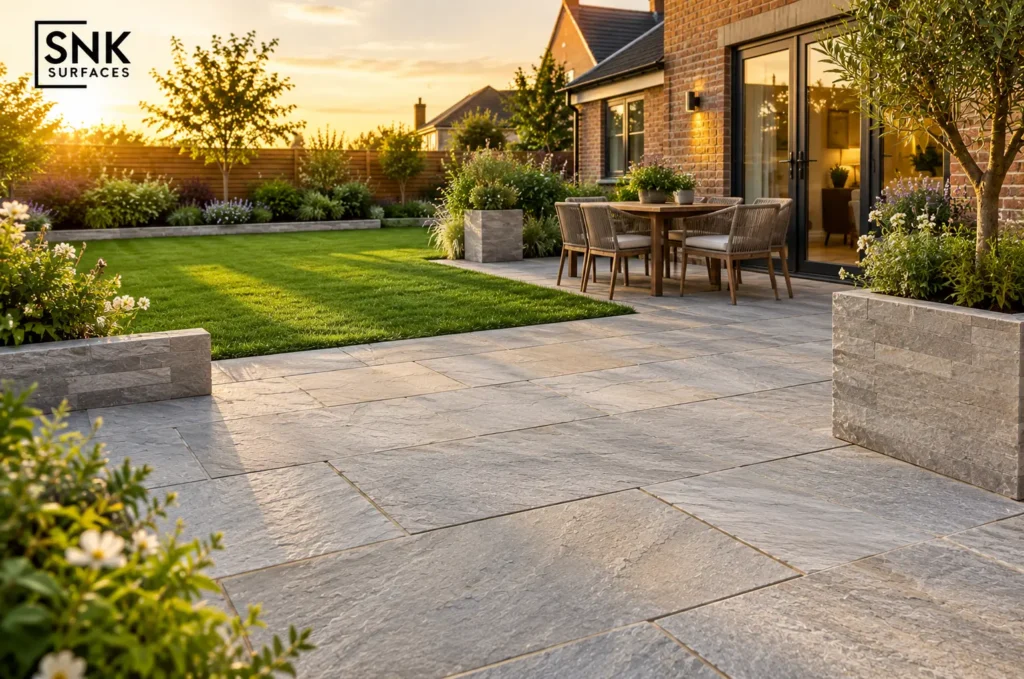
Paving slabs are flat, hard wearing units laid side by side to form a solid outdoor surface. They are cut from natural stone, made from porcelain or cast in concrete, and each material behaves differently once it is in the ground. Builders use them for patios, garden paths, driveways, poolside areas and commercial plazas, so the right choice depends heavily on where the surface will sit and how much traffic it will carry.
Types of Paving Slabs for Outdoor Spaces
Each material suits a different budget, style and level of use. Here is how the main types of paving slabs compare, so you can narrow your shortlist quickly before ordering samples.
Natural Sandstone Paving Slabs
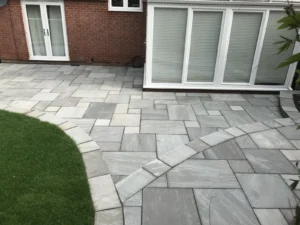
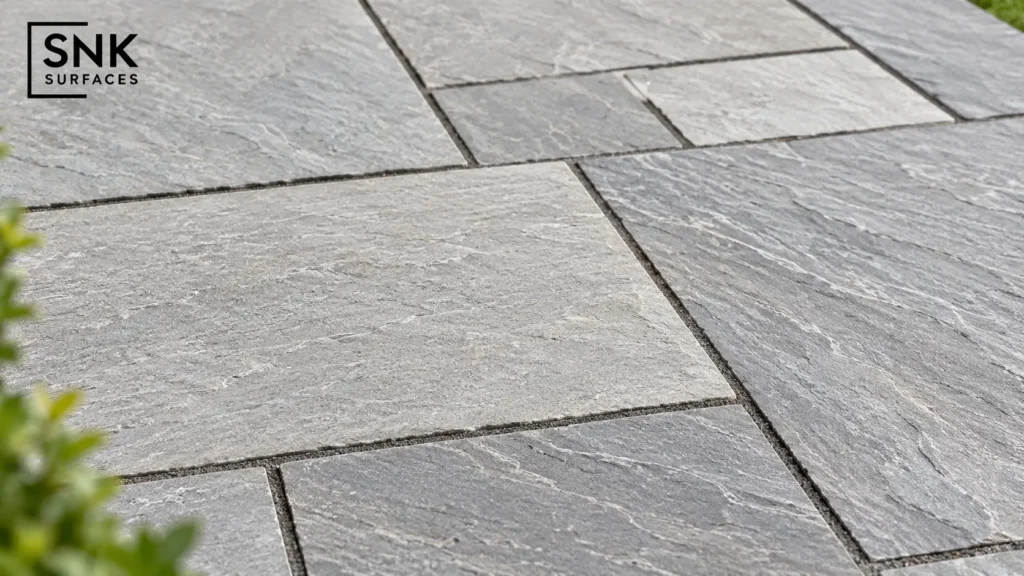
Sandstone is the most popular choice in UK landscaping, and for good reason. Natural Indian sandstone paving slabs bring warm colour and a riven texture that grips well when wet. Kandla Grey Indian sandstone is a favourite for its calm grey tone, strong value and easy match with brick and render. Expect shade changes between slabs, and mix packs as you lay to keep the finished surface balanced.
Porcelain Paving Slabs
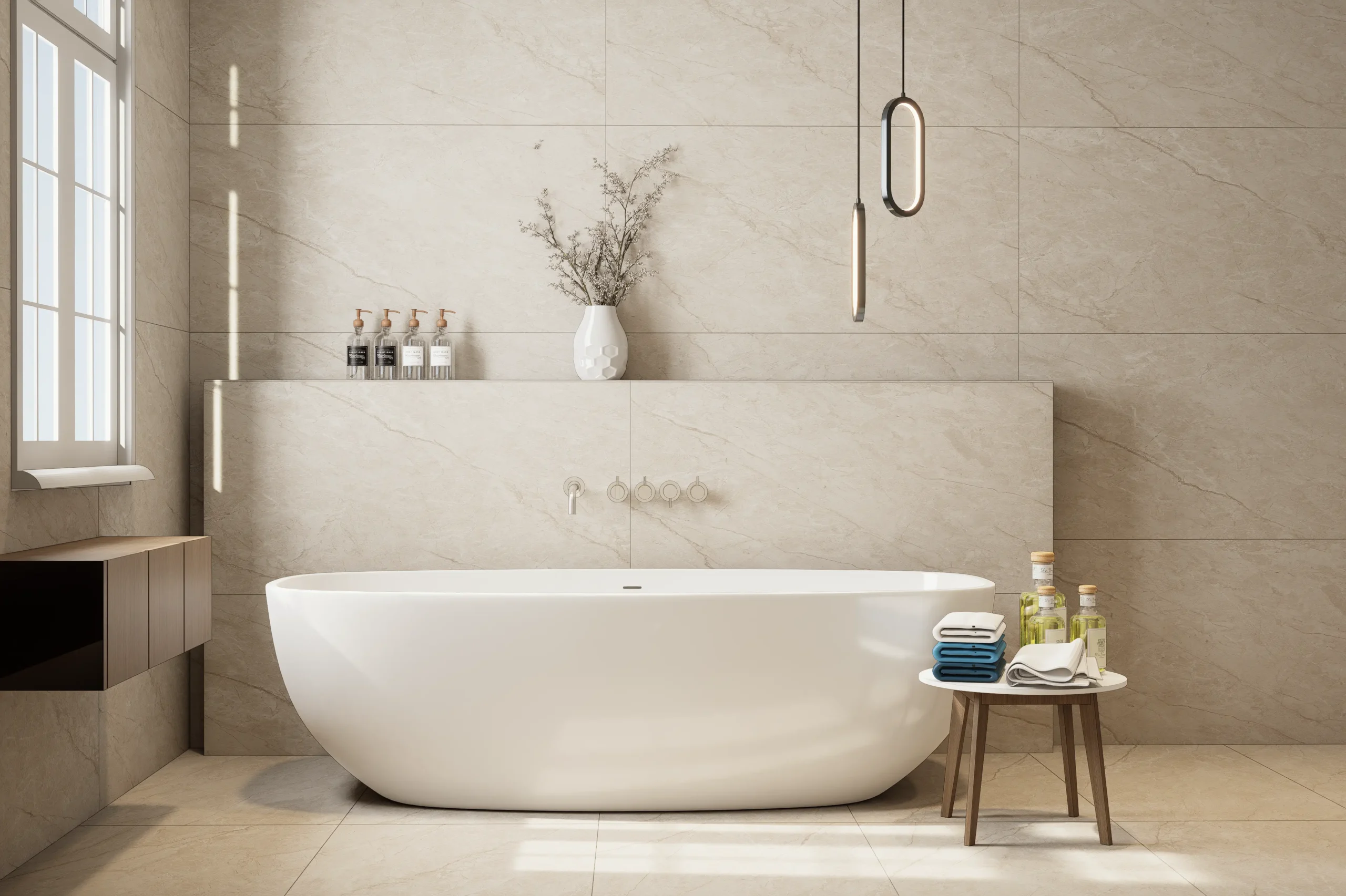
Porcelain is dense, uniform and very low in water absorption, which makes it a smart choice for the damp UK climate. Porcelain paving slabs resist frost, stains and algae far better than many other surfaces. Most outdoor ranges come in 20mm thickness, and they suit modern gardens where a clean, consistent look matters.
Outdoor Tiles
Outdoor tiles are thinner or smaller than full paving units, and they suit terraces, balconies, steps and decks where weight is a concern. Look for textured finishes and a proper frost rating. They are also easy to match with larger slabs, so you can create a neat border or a feature area without changing the overall look.
Floor Tiles
Floor tiles are made mainly for indoor use, but some porcelain ranges work both inside and outside. This helps when you want a smooth transition from a living room to a patio. Always check that the tile is rated for outdoor use, because standard indoor floor tiles can crack in frost or turn slippery in rain.
Limestone Paving Slabs
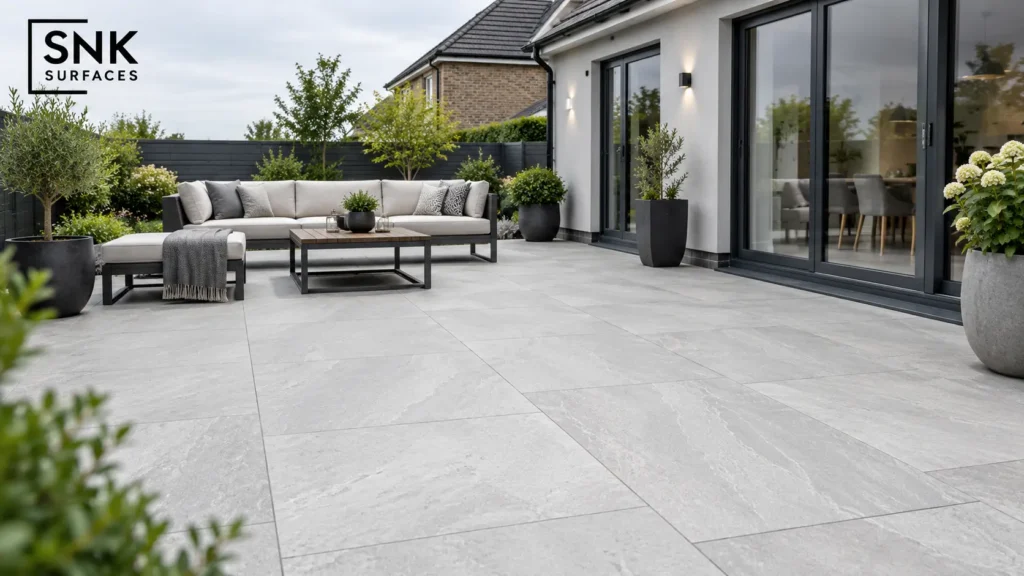
Limestone Paving gives a soft, clean look in cream, beige and grey tones. It suits formal gardens, period homes and courtyards where a calm finish is important. It needs more care than sandstone, because acidic cleaners can damage the surface and leave dull marks.
Concrete Paving Slabs
Concrete paving slabs are the budget option, and they come in many colours, sizes and textures. They can fade over time and chip at the edges, so they suit low traffic areas and projects with tight budgets. For long term value, many buyers step up to stone or porcelain.
How to Choose the Right Paving Slabs for Your Project
Consider Where You Will Use the Paving Slabs
Start with the job itself. Paving slabs for a driveway need more thickness and a stronger base than those for a garden path. A poolside needs high slip resistance, while a shaded patio needs a surface that resists moss. Note the traffic, the climate and the finish you want before you compare prices.
Choose the Right Paving Slab Material
Match the material to your budget and the look you want. Choose sandstone for warmth, texture and grip. Choose porcelain for low maintenance and a clean modern style. Choose concrete when the budget is tight and the area sees light use. A short list of two materials makes sample testing much easier.
Select the Best Colour and Finish
Light colours keep patios bright and cooler underfoot, while dark stone hides dirt but can show salt marks. Riven finishes grip well and look natural. Honed or sawn finishes look sleek and suit contemporary designs. Always view a physical sample outdoors, because natural stone shifts under different light and weather.
Choose the Right Paving Slab Size and Thickness
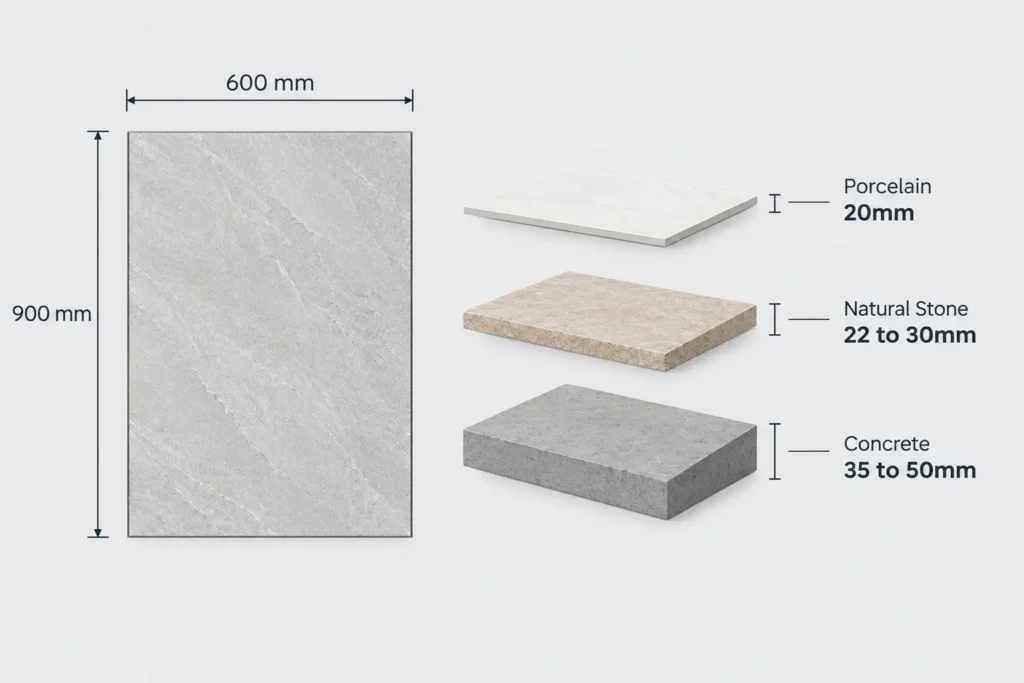
Larger formats look modern and need fewer joints, which also speeds up laying. Paving slabs 600 x 900 are a popular size for patios, because they balance good looks with easy handling. Natural stone usually runs 22 to 30mm thick for patios and paths. Porcelain is typically 20mm for outdoor use, and concrete is often 35 to 50mm.
Consider Durability and Weather Resistance
UK weather is hard on stone. Frost, rain and moss all take their toll over the years. Look for paving slabs with low water absorption and good frost resistance, since these two factors decide how well a surface ages. Ask your supplier for test data and batch details before you place a large order.
Check Slip Resistance and Safety
Wet surfaces can be dangerous, and the risk rises near pools, steps and shaded paths. Check the slip resistance rating of your paving slabs before you commit. The Stone Federation Great Britain publishes technical guidance for specifiers, including advice on slip resistance, which helps when you need to justify a choice to a client.
Best Paving Slabs for Different Outdoor Areas
Best Paving Slabs for Patios
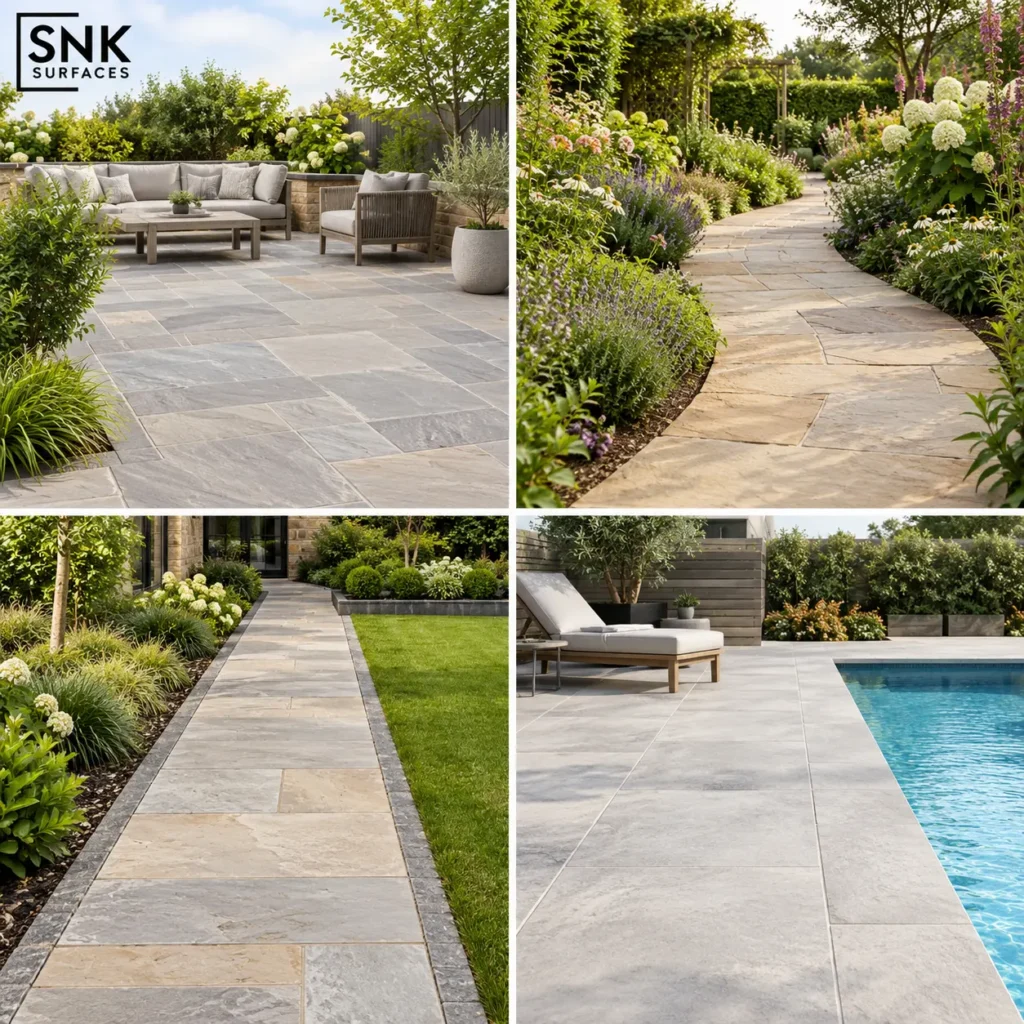
Choose patio slabs in sandstone or porcelain for the best balance of looks and performance. Sandstone suits traditional homes and cottage style gardens. Porcelain suits clean, modern lines and low maintenance. Mix sizes of paving slabs for a classic random pattern that hides small shade differences.
Best Paving Slabs for Gardens
Garden paving slabs should blend with the planting around them. Riven sandstone in grey or buff looks natural beside lawns, borders and gravel. Pick a stone that copes with shade, since moss and algae grow fast under trees and walls.
Best Paving Slabs for Pathways
Paths need grip, strong edges and good drainage. Choose a riven or sandblasted finish so the surface stays safe in rain and frost. Keep joints even and slightly filled, so water drains away and weeds struggle to settle.
Best Paving Slabs for Poolside Areas
Poolside areas need the best slip resistance you can find. Textured porcelain and riven sandstone both work well here. Avoid polished surfaces, because they become slick when wet. Choose stone that handles chlorine, salt and constant moisture without staining.
Porcelain vs Natural Stone Paving Slabs
Both types of paving slabs perform well in UK conditions. The best pick depends on the look you want, the upkeep you can manage and the budget you have set for the project.
Differences in Appearance and Texture
Natural stone has unique veining and shade changes, so no two slabs look exactly alike. Porcelain offers a steady, uniform look, and many ranges copy stone or timber very closely. Natural stone also feels warmer underfoot, which many homeowners prefer on a sunny patio.
Durability and Maintenance Requirements
Porcelain barely absorbs water, so it stains less and needs only simple washing. Sandstone is durable too, but it can benefit from sealing in some settings, especially in shade. Both materials last for decades when laid on a proper base with good drainage.
Cost and Long Term Value
Concrete costs least upfront. Sandstone often sits in the middle, and porcelain can cost more per square metre. Over time, quality stone and porcelain keep their look and value far better than cheap alternatives, which means fewer repairs and less replacement work.
How Much Do Paving Slabs Cost?
Prices for paving slabs vary widely across suppliers and ranges. As a rough UK guide, concrete may start near £15 per square metre. Sandstone often runs from about £25 to £50, and porcelain from about £30 to £60. Treat these figures as a starting point, and always request a current quote for your exact size, finish and quantity.
Factors That Affect Paving Slab Prices
Material, thickness, finish and size all change the price. Order volume, shipping and pack type matter too. Calibrated slabs cost a little more, but they speed up laying, reduce lipping between slabs and cut labour costs on larger jobs.
How to Calculate the Number of Paving Slabs You Need
Measure the area in square metres, then divide it by the area of one slab. A 600 x 900 slab covers 0.54 square metres, so you need about 1.85 slabs per square metre. Order 10 percent extra paving slabs for cuts and breakage, and keep a few spare for future repairs.
Additional Costs to Consider When Installing Paving
Budget for sub base material, sand, cement, edging, drainage, labour and skip hire. Sealer, jointing compound and cleaning products add a little more. Planning these costs early prevents surprises once the work has started.
How to Prepare for Paving Slab Installation
Preparing the Ground and Sub Base
Dig out the area to a depth that suits the slab and the expected load. Lay 100 to 150mm of compacted MOT Type 1 and check levels often. Set a gentle fall of about 1 in 80 away from buildings, so rainwater drains and never pools against walls.
Choosing the Right Installation Method
Most natural stone sits on a full mortar bed with a bonding slurry on the back. Porcelain also needs a full bed and a suitable primer. Dry laying on sand suits light use only. If you plan the job yourself, learn how to lay sandstone paving slabs before you order, so you buy the right thickness and materials.
Common Paving Installation Mistakes to Avoid
Skipping the sub base is the biggest error, and it causes sinking and cracks within a year or two. Others include no drainage fall, spot bedding and tight joints. Mixing batches without checking shade is another common problem. Lay from several packs at once to blend the colour evenly.
How to Maintain and Clean Paving Slabs
Cleaning Outdoor Paving Slabs
Sweep often, then wash with warm water and a soft brush. Use mild cleaners that suit the stone, and test them on a small spot first. Take care with pressure washers, because strong jets can damage riven surfaces and wash out joints. Keep outdoor paving slabs clean and they will look fresh for years.
Preventing Weeds, Stains and Algae
Fill joints with a quality jointing compound so weeds cannot root. Clear spills quickly, especially oil, wine and barbecue grease. Trim overhanging plants, since shade and damp feed algae. A breathable sealer can help on some stones, but check the manufacturer’s advice first.
Protecting Paving Slabs Throughout the Year
In winter, avoid rock salt on natural stone, as it can mark the surface and damage joints. Clear fallen leaves before they leave stains. In summer, check for loose slabs and fix them early, because small movements can turn into larger faults.
Why Choose SNK Surfaces for Paving Slabs?
SNK Surfaces is a trusted supplier of paving slabs for UK projects. It manufactures and exports natural stone and porcelain directly from India, so buyers deal with the source and not a middleman. The company works to ISO 9001:2015 standards, and its stone paving carries UKCA and CE marking, so architects, contractors and importers can check compliance with ease.
Speed matters on site. SNK Surfaces holds UK warehouse stock of selected natural stone and paving, so importers, distributors, landscapers and contractors can order closer to home and avoid long waits. For larger jobs, the team ships full containers from India to the UK and other global markets, with export grade packaging and clear documentation.
You can also request custom sizes, finishes and samples before you commit. That keeps colour, thickness and quality clear from the first order to the last, and it helps your project stay on schedule.
Find the Best Paving Slabs for Your Outdoor Project
Good planning saves time and money. Match the material to the job, check slip resistance and order extra for cuts. Ready to compare ranges?
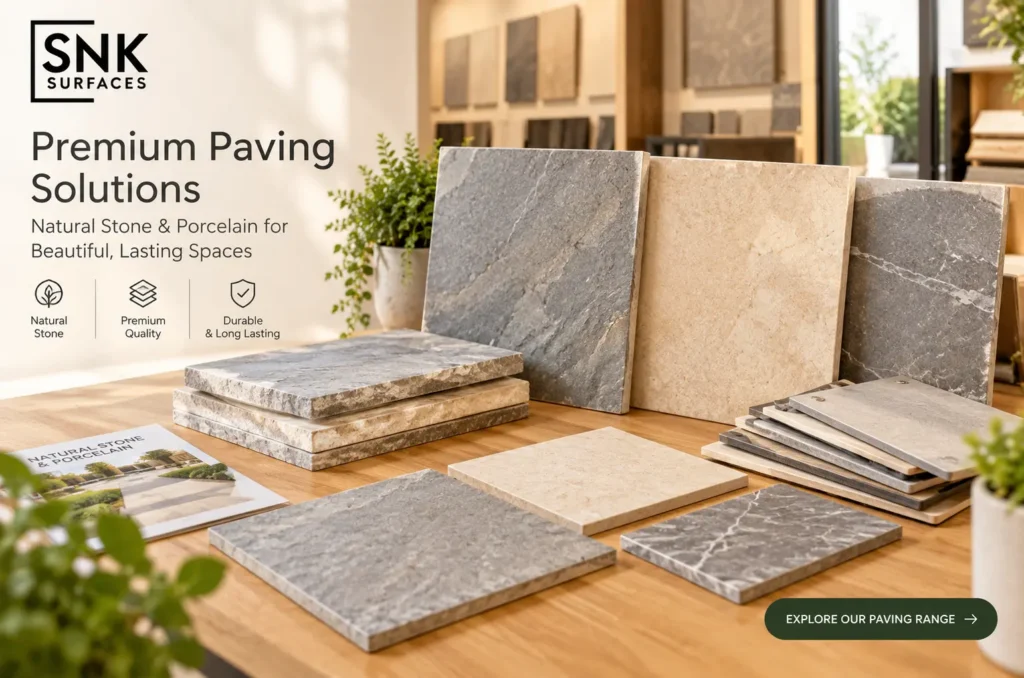
Explore the natural stone and porcelain collection at SNK Surfaces, request samples and get a quote for your next UK project.
Frequently Asked Questions About Paving Slabs
Which Paving Slabs Are Best for Outdoor Use?
Sandstone and porcelain are the top choices for most UK projects. Both handle frost and rain well. Sandstone grips better underfoot, while porcelain stains less and needs simpler cleaning.
Are Porcelain or Sandstone Paving Slabs Better?
Neither wins every time. Choose porcelain for a clean look and easy care. Choose sandstone for natural character and strong grip. Your site, budget and style should decide the final pick.
What Thickness Should Paving Slabs Be?
Use 20mm porcelain, 22 to 30mm natural stone and 35 to 50mm concrete for patios and paths. Driveways need thicker slabs on a stronger base, so confirm the load before you order.
Do Outdoor Paving Slabs Need Sealing?
Not always. Porcelain does not need sealing. Some sandstone and limestone benefit from a breathable sealer, especially in shade or near trees. Test it on a spare piece first to check the colour change.
How Many Paving Slabs Do I Need per Square Metre?
Divide one square metre by the slab area. With 600 x 900 slabs, you need about 1.85 per square metre. Add 10 percent extra for cuts and waste.
How Long Do Paving Slabs Last?
Well laid stone and porcelain can last 25 years or more. Concrete usually lasts less. Good installation and drainage matter more than any other factor.
How to Lay Paving Slabs?
Compact the sub base and spread a 30 to 40mm mortar bed. Brush slurry onto the back of the slab, then press it into place and tap it level. Keep joints around 10mm, check levels as you go and point the joints once the bed has set.
How to Clean Paving Slabs Without a Pressure Washer?
Sweep first to remove loose dirt. Scrub with warm water, mild detergent and a stiff brush, then rinse with a hose. For algae, use a stone safe cleaner and let it work before rinsing.
How to Cut Paving Slabs?
Mark the cut line clearly. Use an angle grinder with a diamond blade or a wet saw. Wear a dust mask, eye protection and ear defenders. Cut wet where possible to keep dust down and protect the blade.