
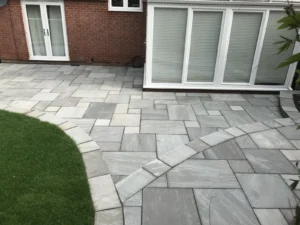
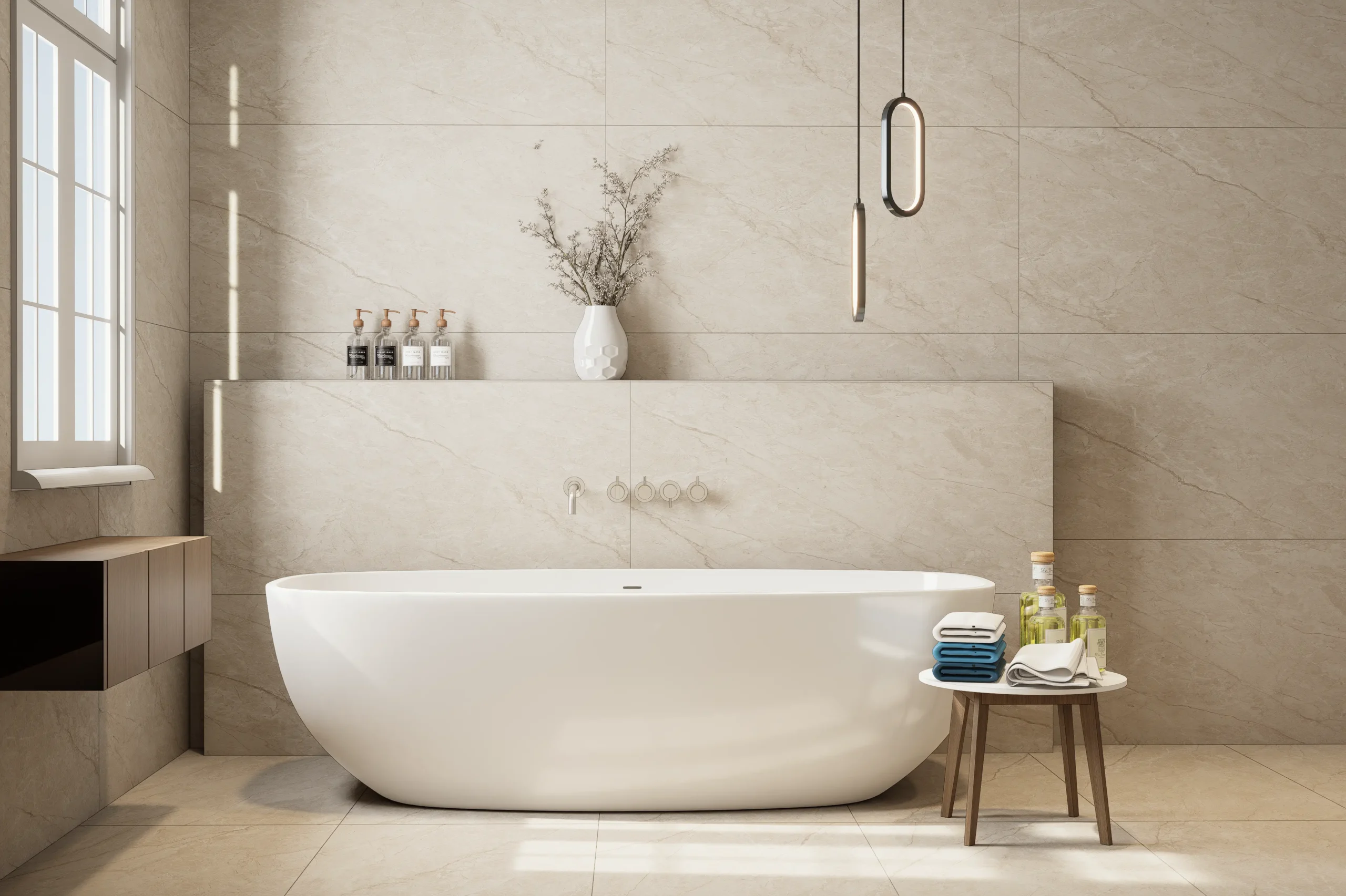

Sinai Pastel Porcelain Paving is a stylish option for outdoor spaces that need a soft, natural stone appearance. Its light, neutral tones can complement both modern and traditional garden designs.
For UK homeowners, landscapers and trade buyers, choosing the right paving involves more than colour. You also need to consider slab sizes, surface finish, installation methods, drainage and maintenance.
This guide explains the main features of Sinai Pastel Porcelain Paving, the available sizes, suitable applications and the key points to check before ordering.
What Is Sinai Pastel Porcelain Paving?
Sinai Pastel Porcelain Paving is an outdoor porcelain paving product designed to recreate the gentle appearance of natural limestone. Its light, neutral colour palette works well in gardens, patios, courtyards and outdoor seating areas.
Unlike natural stone, porcelain paving is manufactured to provide a more consistent appearance. Individual slabs may still show differences in shade and pattern, so it is important to inspect samples before making a final decision.
The product is particularly worth considering if you want a natural stone-inspired design with the practical benefits of porcelain.

What Makes Sinai Pastel Different?
Sinai Pastel has a soft, understated appearance rather than a bold or highly contrasting colour. This makes it a useful choice for projects where the paving should complement the wider garden design.
Its neutral tones can work alongside green lawns, planted borders, timber furniture, brick walls and contemporary outdoor features.
Before purchasing, check the actual product sample and current specification. Screen settings and lighting can affect how paving colours appear in photographs.
Key Features of Sinai Pastel Porcelain Paving
The right paving should balance appearance, performance and ease of care. Sinai Pastel offers a limestone-inspired design, while its technical suitability depends on the specifications of the exact product supplied.
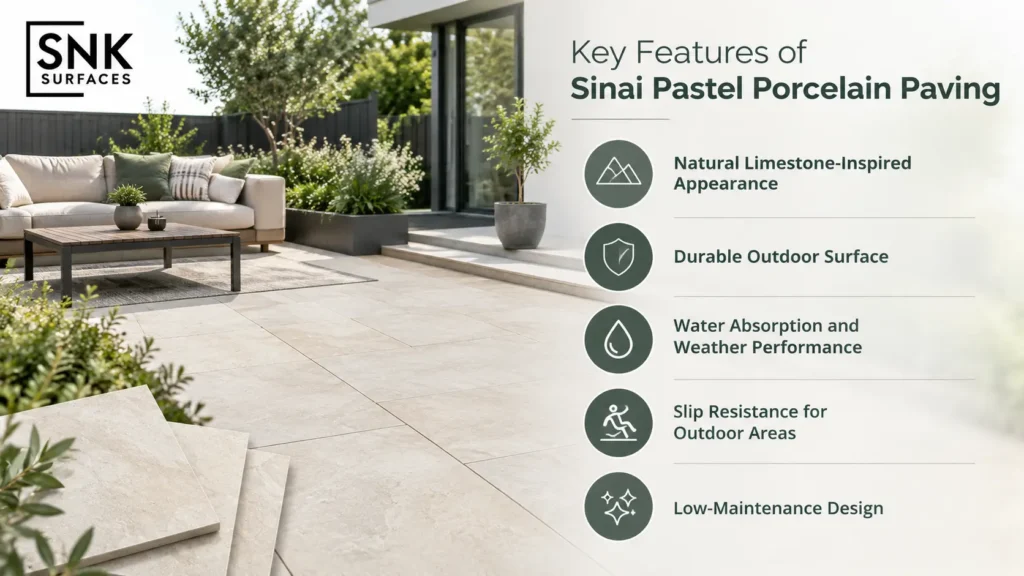
1. Natural Limestone-Inspired Appearance
Sinai Pastel is designed to bring the look of light natural stone to an outdoor space. Its neutral appearance can create a calm, coordinated finish across patios and terraces.
It can suit contemporary gardens with simple lines as well as traditional spaces with planted borders and natural materials.
2. Durable Outdoor Surface
Outdoor paving needs to cope with regular foot traffic, garden furniture and changing weather. Porcelain is manufactured through a high-temperature firing process that creates a hard, dense material.
However, overall performance also depends on slab thickness, product quality, the supporting base and correct installation. Check the manufacturer’s technical information before specifying the paving for a demanding application.
3. Water Absorption and Weather Performance
Porcelain paving is generally valued for its low water absorption. This can help reduce problems associated with moisture entering the material.
For UK projects, confirm the manufacturer’s water absorption and frost-resistance data. These details are especially important for paving exposed to rain, frost and repeated temperature changes.
4. Slip Resistance for Outdoor Areas
Slip resistance is an important consideration for patios, garden paths and other outdoor surfaces. Rain, algae, dirt and poor drainage can affect how safe a paved area feels underfoot.
Check the stated slip-resistance rating for the exact Sinai Pastel product. Do not assume that every porcelain paving slab has the same surface performance.
Choose a product suitable for the intended location and follow the manufacturer’s cleaning and maintenance advice.
5. Low-Maintenance Design
Porcelain paving can be easier to maintain than some natural stone surfaces. Regular sweeping and suitable cleaning can help remove soil, leaves and everyday dirt.
The required maintenance will depend on the surface finish, jointing material and surrounding environment. Follow the supplier’s recommendations for cleaning products and equipment.
What Sizes Are Available in Sinai Pastel Porcelain Paving?
Choosing the right size can affect the overall appearance of a patio, the number of joints and the amount of cutting required during installation.
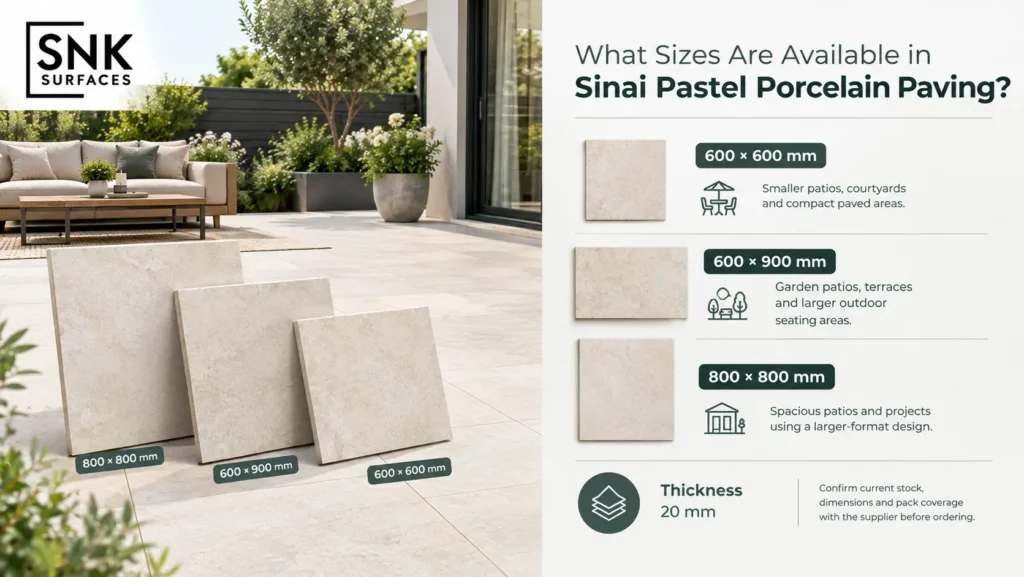
The published SNK Surfaces product listing identifies three Sinai Pastel Porcelain Paving Slabs formats: 600 × 600 mm, 600 × 900 mm and 800 × 800 mm. It also lists a thickness of 20 mm. Confirm current stock, dimensions and pack coverage with the supplier before ordering.
| Slab size | Potential application |
|---|---|
| 600 × 600 mm | Smaller patios, courtyards and compact paved areas |
| 600 × 900 mm | Garden patios, terraces and larger outdoor seating areas |
| 800 × 800 mm | Spacious patios and projects using a larger-format design |
These are general layout suggestions, not restrictions on where each size can be used.
Choosing the Right Paving Size
Smaller slabs can offer flexibility when working around corners, narrow paths and detailed garden layouts. They may also create more visible joints across the finished surface.
Larger slabs can produce a more open, contemporary appearance with fewer joints. However, they require careful handling and accurate preparation of the supporting surface.
Consider the shape of the area, the desired pattern, drainage requirements and the experience of the installation team before choosing a format.
Why Does Slab Thickness Matter?
Thickness affects how a paving slab performs within its intended installation system. The correct specification depends on the product, the supporting base and the type of traffic expected.
A slab designed for a pedestrian patio should not automatically be assumed suitable for a driveway or other vehicle-loading area.
Always follow the manufacturer’s guidance for the exact product and intended use.
Where Can You Use Sinai Pastel Porcelain Paving?
Sinai Pastel can be considered for several types of outdoor design where a light, natural stone-inspired appearance is desired. The final choice should reflect the product’s approved applications and technical specifications.
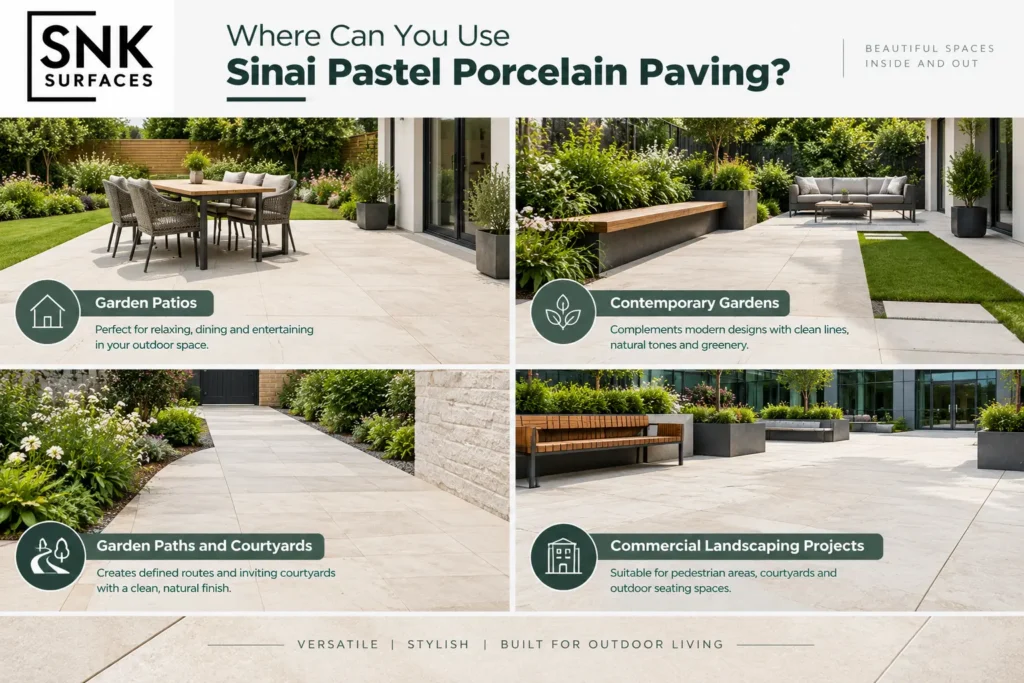
Garden Patios
A garden patio provides space for relaxing, dining and entertaining. Light neutral paving can help create a bright, coordinated setting around garden furniture and planted borders.
For the best result, plan the paving layout alongside the furniture arrangement, garden access and drainage.
Contemporary Gardens
Sinai Pastel can complement modern garden designs that use simple shapes, restrained colours and clean lines.
Pairing the paving with greenery, timber features or dark garden furniture can create a balanced contrast. Request a sample to check how the colour works with the materials already present.
Garden Paths and Courtyards
Porcelain paving can also be used to create defined routes between garden areas or to form a courtyard near the house.
Choose a suitable surface finish and make sure the finished layout allows water to drain properly. For narrow paths, consider how slab dimensions affect cutting and the appearance of the joints.
Commercial Landscaping Projects
Landscapers, builders and commercial project managers may consider Sinai Pastel for suitable pedestrian areas, courtyards and outdoor seating spaces.
Before specifying the product, check expected foot traffic, accessibility requirements, slip resistance, cleaning needs and the installation system.
For areas subject to vehicle loads or other demanding conditions, obtain confirmation that the exact product is suitable.
How Does Sinai Pastel Porcelain Paving Suit the UK Climate?
British weather can bring frequent rain, frost and changing temperatures. These conditions make product selection, installation and drainage particularly important.
Performance in Wet Conditions
Water can collect on a paved surface if the levels and drainage are poorly planned. This may create puddles and contribute to algae or dirt build-up.
Choose a product with suitable documented slip resistance. Ensure the installer designs the finished surface to direct water away from buildings and towards an appropriate drainage point.
Frost and Temperature Changes
Water that enters a material can freeze and expand in cold weather. This is one reason why frost resistance and water absorption matter when selecting outdoor paving.
Check the manufacturer’s declared performance rather than relying on the general characteristics of porcelain alone.
The Importance of Proper Drainage
Even a suitable paving slab can perform poorly if water cannot drain away. The sub-base, bedding, surface falls and drainage arrangements all contribute to the finished installation.
Good drainage is essential for outdoor paving, particularly in areas exposed to heavy rainfall. For projects in England, refer to the UK Government’s guidance on permeable surfacing for front gardens to understand how paving choices can affect surface water runoff.
Plan these elements before laying the slabs. If the project is complex or close to a building, use a suitably experienced installer.
Sinai Pastel Porcelain Paving Installation: What You Need to Know
Correct Sinai Pastel Porcelain Paving Installation starts with good preparation. The supporting base, bedding materials, drainage and jointing method must all suit the product and site conditions.
The following steps provide a general overview. Always follow the manufacturer’s installation instructions and seek professional advice where required.
Step 1: Prepare the Ground
Remove vegetation, loose soil and unsuitable material from the installation area. The required excavation depth depends on the ground conditions, expected loads and proposed paving build-up.
Create a stable formation and install a suitable sub-base in accordance with the chosen installation specification.
Step 2: Prepare the Sub-Base
The sub-base provides support for the paving and helps distribute loads. It must be appropriate for the ground, intended use and drainage requirements.
Compact the material correctly and check that the surface is stable and level to the planned falls. Do not use a generic depth or construction detail without considering the site.
Step 3: Plan the Bedding and Bonding System
Outdoor porcelain paving requires an installation system suitable for porcelain. Depending on the method, this may include a full mortar bed and a compatible bonding primer.
Spot bedding can leave unsupported areas beneath the slabs and may increase the risk of failure. Follow the product and installation-system manufacturer’s instructions for bedding coverage and bonding.
Step 4: Set the Levels and Drainage Falls
Plan the finished height before laying the first slab. The paved surface must direct water towards the intended drainage area rather than towards the building.
Check levels regularly as work progresses. Good drainage planning helps reduce standing water and supports the long-term performance of the installation.
Step 5: Lay the Porcelain Slabs
Position each slab carefully using the correct tools and handling methods. Maintain consistent joints and check alignment throughout the installation.
Cutting porcelain requires suitable equipment and appropriate safety precautions. Inspect slabs before installation and follow the manufacturer’s guidance on handling, cutting and acceptable tolerances.
Step 6: Finish the Joints
Use a jointing material that is compatible with the paving and the selected installation system. Joint width and preparation requirements can vary by product and method.
Allow the installation to cure for the specified period before using the paved area. Avoid introducing loads or cleaning the surface before the materials have reached the required stage.
How to Clean and Maintain Sinai Pastel Porcelain Paving
Routine maintenance helps preserve the appearance of outdoor paving. A simple cleaning schedule can prevent dirt and organic material from building up.
Regular Cleaning
Sweep the surface to remove leaves, soil and loose debris. Wash the slabs with water and a suitable pH-neutral cleaner when needed.
Use cleaning products approved for the paving and jointing materials. Test unfamiliar products on a small, inconspicuous area first.
Removing Algae and Outdoor Stains
Damp, shaded areas may develop algae or other organic growth. Use a suitable outdoor paving cleaner and follow its instructions carefully.
Avoid harsh chemicals or aggressive cleaning methods unless the manufacturer confirms they are safe for the surface and joints.
Does Porcelain Paving Need Sealing?
Porcelain paving generally does not require the same routine sealing as many natural stone surfaces. However, jointing products and installation materials may have their own protection requirements.
Check the manufacturer’s recommendations before applying a sealer or pre-grouting treatment. Using an unsuitable product can affect the finish or leave unwanted residue.
Sinai Pastel Porcelain Paving vs Other Paving Materials
Different paving materials suit different budgets, designs and maintenance preferences. Comparing their properties can help you select the right option for your project.
Porcelain Paving vs Natural Limestone
Natural limestone offers genuine stone texture and natural variation. Porcelain can provide a more consistent manufactured appearance with a limestone-inspired design.
Natural stone may need specific cleaning and sealing treatments, depending on its type and finish. Porcelain often requires less surface maintenance, but the exact requirements should always be checked.
Porcelain Paving vs Sandstone
Sandstone has a distinctive natural texture and variation in colour. It can suit traditional gardens and landscapes that use natural materials.
Porcelain may appeal to buyers who prefer a more consistent look and a surface that is generally easier to clean. Consider appearance, slip resistance, maintenance and installation costs when comparing the two.
Porcelain Paving vs Concrete Slabs
Concrete paving can be a practical choice for projects with particular cost or design requirements. It is available in different formats, finishes and colours.
Porcelain may provide a more refined stone-effect appearance, depending on the product selected. Compare the full project cost, including preparation, bedding, labour, cutting and jointing, rather than looking at slab prices alone.
What Should Trade Buyers Check Before Ordering?
For landscapers, builders and paving contractors, product selection is only one part of the purchasing process. Accurate specifications and delivery planning help keep projects organised.
Confirm the Technical Specifications
Request the latest product datasheet and check the dimensions, thickness, surface finish, slip-resistance data and intended application.
Confirm that the supplied product matches the requirements of the project. Do not rely solely on general product descriptions or photographs.
Calculate the Required Quantity
Measure the paved area and calculate its size in square metres. Divide the area by the coverage of one slab or use the supplier’s pack coverage to estimate the order quantity.
Allow extra material for cuts, the laying pattern and potential breakage. The required allowance depends on the shape of the area and the complexity of the design.
Check Samples and Shade Variation
A sample helps you assess the colour and texture in natural light. This is especially useful for pale or neutral paving, where differences in tone can affect the finished design.
Where possible, order enough material from a consistent production batch to complete the project. Ask the supplier about shade variation and batch identification before ordering.
Plan Delivery and Site Storage
Confirm the delivery date, pack quantity, unloading arrangements and access for delivery vehicles. Make sure the site has a suitable storage area that protects the slabs from damage.
For commercial projects, coordinate delivery with the installation schedule. This can help reduce delays and avoid unnecessary handling.
Compare the Total Project Cost
The purchase price is only one part of the overall budget. Include the cost of preparation, sub-base materials, bedding, primers, jointing products, cutting equipment, labour and waste.
A clear estimate helps contractors compare options and provide more accurate quotations to their clients.
Conclusion: Is Sinai Pastel Porcelain Paving Right for Your Project?
Sinai Pastel Porcelain Paving is worth considering if you want a light, neutral outdoor surface with a natural limestone-inspired appearance. Its understated design can complement a wide range of garden styles.
The best choice depends on the available sizes, verified technical performance, installation requirements and overall project budget. Take time to review samples and confirm the specifications before placing an order.
For trade buyers and landscaping professionals, careful quantity planning, consistent batch selection and correct installation can help deliver a more reliable finished result.
Use the product datasheet and supplier guidance as the final reference when specifying Sinai Pastel Porcelain Paving for a UK project.
Frequently Asked Questions About Sinai Pastel Porcelain Paving
What Is Sinai Pastel Porcelain Paving?
Sinai Pastel Porcelain Paving is an outdoor porcelain paving product with a light, limestone-inspired appearance. It can suit patios, courtyards and other appropriate outdoor areas, subject to the manufacturer’s specifications.
What Sizes Are Available in Sinai Pastel Porcelain Paving Slabs?
The published SNK Surfaces listing identifies 600 × 600 mm, 600 × 900 mm and 800 × 800 mm formats, with a listed thickness of 20 mm. Confirm the current sizes and availability with the supplier before ordering.
Is Sinai Pastel Porcelain Paving Suitable for UK Gardens?
It may be suitable for UK garden projects when the exact product is specified for outdoor use and meets the project’s requirements. Check its frost resistance, slip-resistance rating, installation guidance and drainage needs.
Is Sinai Pastel Porcelain Paving Slip-Resistant When Wet?
Slip resistance depends on the specific surface finish and its tested performance. Check the manufacturer’s rating for the exact product and consider how water, dirt and algae may affect the finished area.
Does Sinai Pastel Porcelain Paving Need Sealing?
Porcelain paving generally does not need routine surface sealing. However, some jointing or installation products may require specific treatments. Follow the recommendations for the paving and the complete installation system.
How Do You Clean Sinai Pastel Porcelain Paving?
Sweep away loose dirt and wash the surface with water and a compatible pH-neutral cleaner. For stubborn stains or algae, use a suitable product according to the manufacturer’s instructions.
Can Sinai Pastel Porcelain Paving Be Used for Commercial Projects?
It may be appropriate for commercial pedestrian areas, courtyards and outdoor seating spaces if the product meets the relevant performance requirements. Confirm suitability for expected traffic, accessibility and maintenance needs before specifying it.
How Much Sinai Pastel Porcelain Paving Do I Need?
Measure the area in square metres and divide it by the coverage of one slab. Add a suitable allowance for cuts and waste, then round up to the required number of slabs or packs.
For example, a 20 m² rectangular patio using 600 × 900 mm slabs would require approximately 38 slabs before allowing for waste. Each slab covers 0.54 m², so the actual order should include extra material and account for pack quantities.