
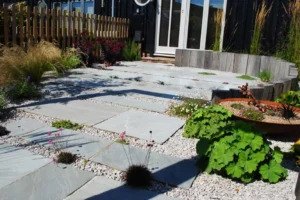
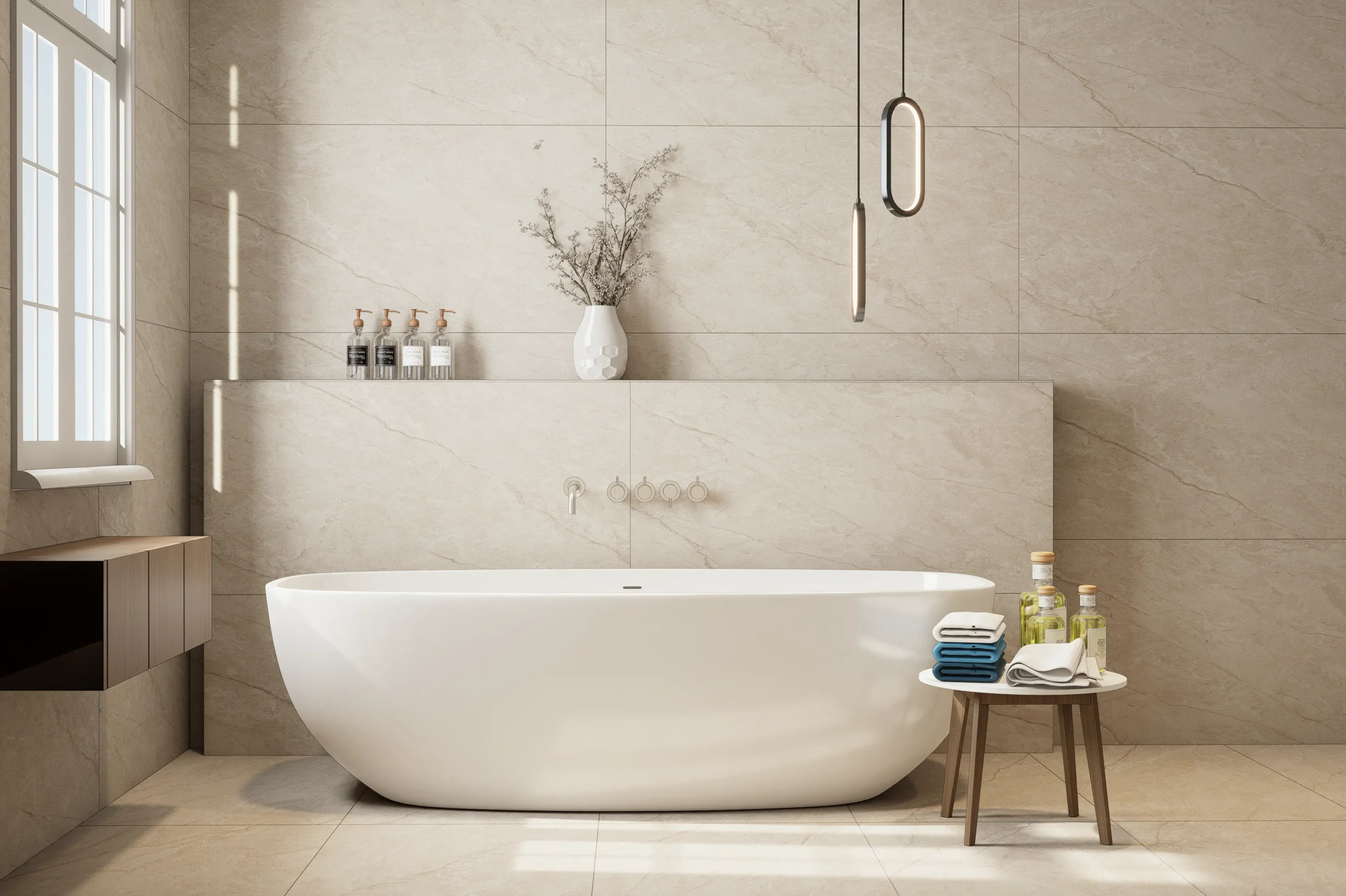

The types of Indian sandstone paving differ in colour, texture, finish and price. Choosing the right one takes a little planning. This Types of Indian Sandstone Paving guide explains each stone, its look and its best use. SNK Surfaces, a quality-certified manufacturer and exporter of natural stone from India, shares this advice from daily work with importers, builders and landscapers.
Many buyers start with colour. That is a good first step. But finish, thickness, cost and care matter just as much.
This guide covers every major type, plus downsides, sealing, cleaning, installation and cost. Read the sections that match your project.
What Is Indian Sandstone Paving?
Indian sandstone paving is natural stone cut from quarries across India. Suppliers shape it into slabs, setts and patio kits for outdoor floors. It is one of the most widely used paving stones in the world.
Each slab carries its own tone, grain and veining. No two pieces match exactly. This gives a patio a warm, handmade look.
Architects and contractors use it for patios, paths, pool surrounds and courtyards. It suits classic and modern designs.
Where Does Indian Sandstone Come From?
Most Indian sandstone comes from quarries in Rajasthan and Madhya Pradesh. Workers extract large blocks and split or saw them into slabs. Each region produces different colours and grain patterns.
Sandstone forms from compacted sand grains pressed together over millions of years. Minerals such as iron oxide create the reds, browns and golds. This is why colours change from quarry to quarry.
Reliable sourcing matters. A good exporter grades slabs by size, thickness and shade before shipping.
Why Is Indian Sandstone Popular for Patios?
Price is a big reason. Indian sandstone costs less than many European natural stones. It still offers strong durability and real character.
The colour range is wide. You can choose cool greys, warm buffs, deep blacks or bold multi-tones. That suits almost any garden style.
The riven surface also gives natural grip. Homeowners like the texture, and contractors like how it lays.
Key Characteristics of Indian Sandstone Paving
Indian sandstone is hard and dense. It handles foot traffic, furniture and weather well. Most slabs measure 18 mm to 25 mm thick.
The stone is porous, so it absorbs some water. Sealing helps in wet or shaded spots. It also shows natural colour variation.
Finishes range from rough riven to smooth sawn. Edges can be hand-dressed or machine-cut. These choices change the look and the cost.
Types of Indian Sandstone Paving
Each type below has its own colour story and best use. Treat them as starting points. Always view a real sample in your own light.
Many buyers also check a Sandstone colour chart first. A chart shows the full range side by side. Natural stone still differs slightly from any printed image.
Pick two or three favourites, then compare samples wet and dry. This simple step prevents most regrets.
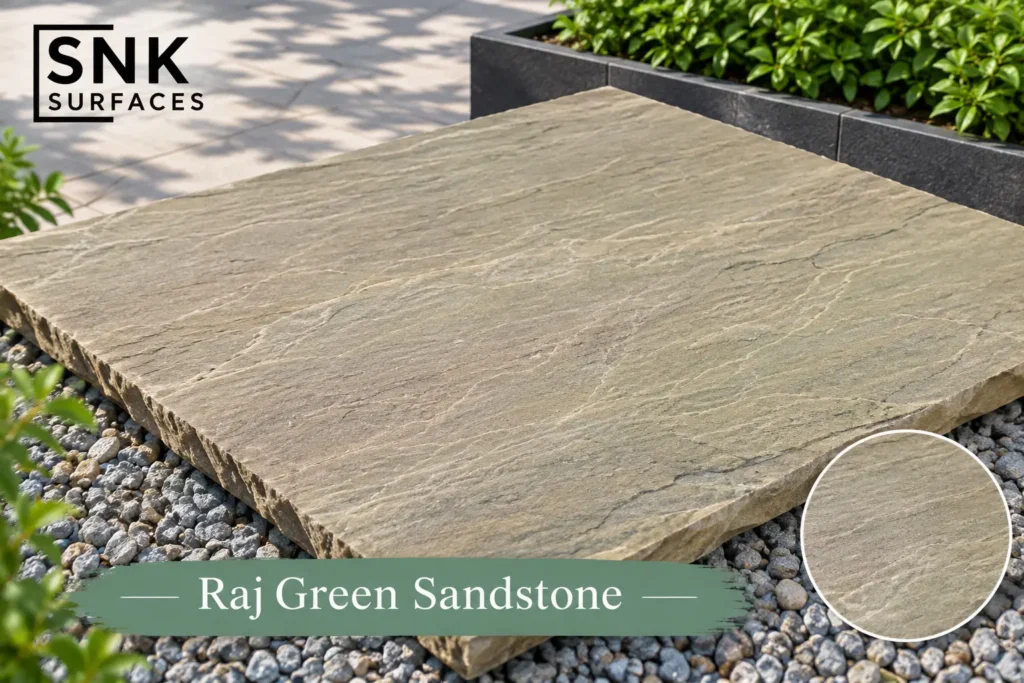
Raj Green Indian Sandstone
Raj Green blends earthy greens, browns and occasional plum or grey tones. The mix looks natural and calm. It suits cottage gardens and planted spaces.
It comes in riven and sawn finishes. It is also one of the more affordable choices. That makes it popular for large patios.
Expect strong variation between slabs. Lay slabs from several packs together to spread the shades.
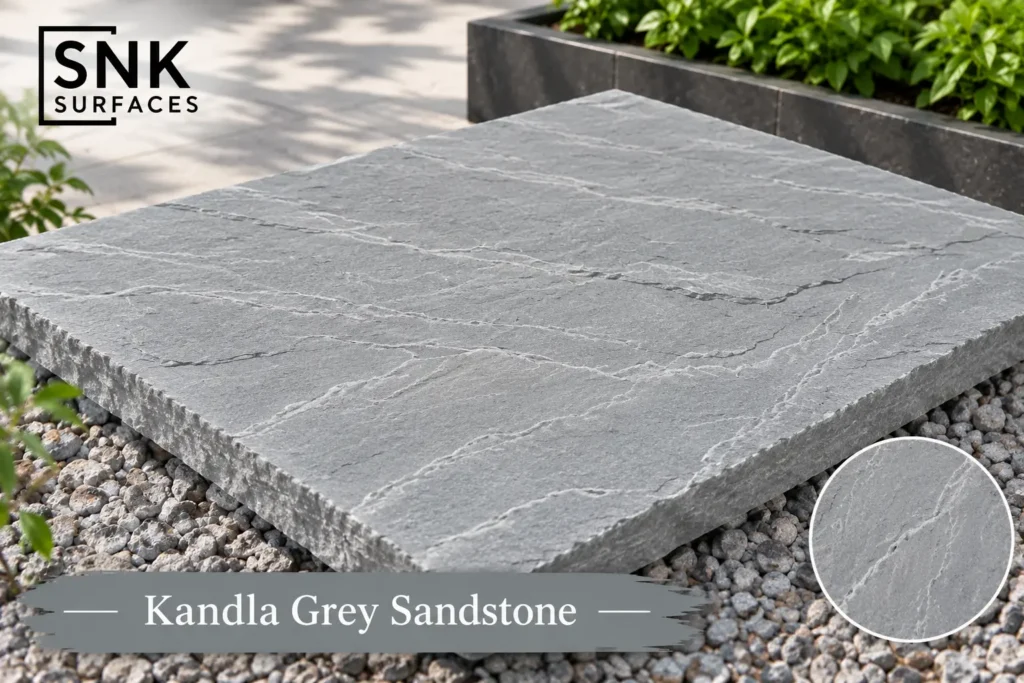
Kandla Grey Indian Sandstone
Kandla Grey is a firm favourite worldwide. Its light to mid-grey tones form a neutral backdrop. It pairs well with bright planting and dark furniture.
Riven suits traditional settings. Sawn gives a clean, modern look. Both perform well outdoors.
Grey also hides everyday dirt better than lighter colours. That makes it a safe pick for busy family gardens.
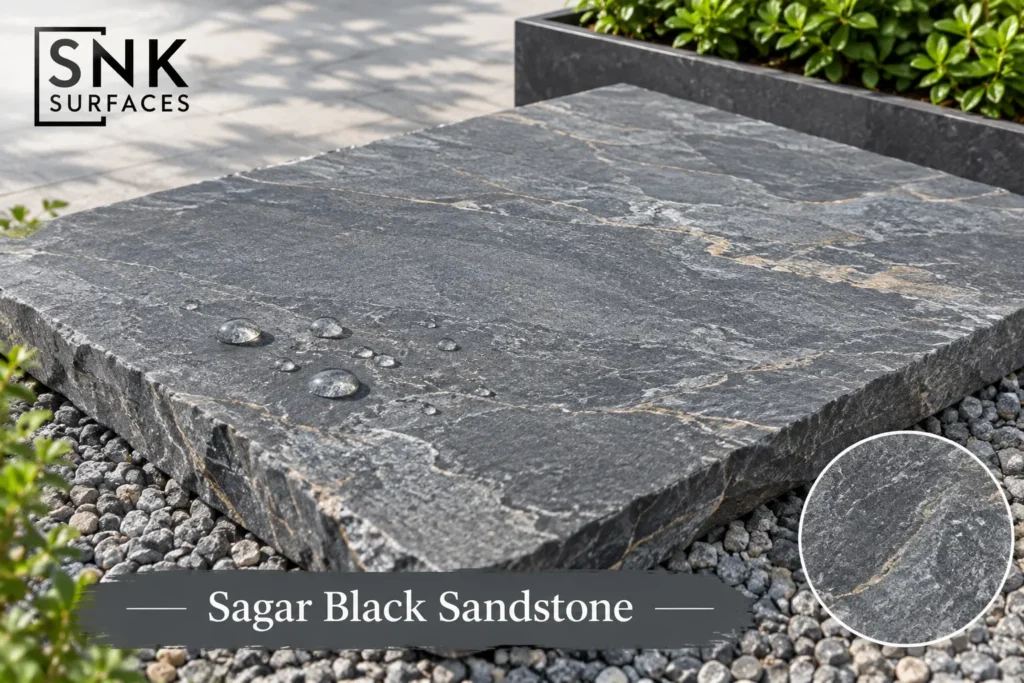
Sagar Black Indian Sandstone
Sagar Black offers deep charcoal and black tones. It gives patios a bold, high-end look. Designers often use it in contemporary gardens and commercial spaces.
Dark stone gets hot in strong sun. Think about bare feet and sunny terraces before you choose it. Some shade solves the issue.
Dark slabs also show dust and water marks. A regular sweep keeps them sharp.
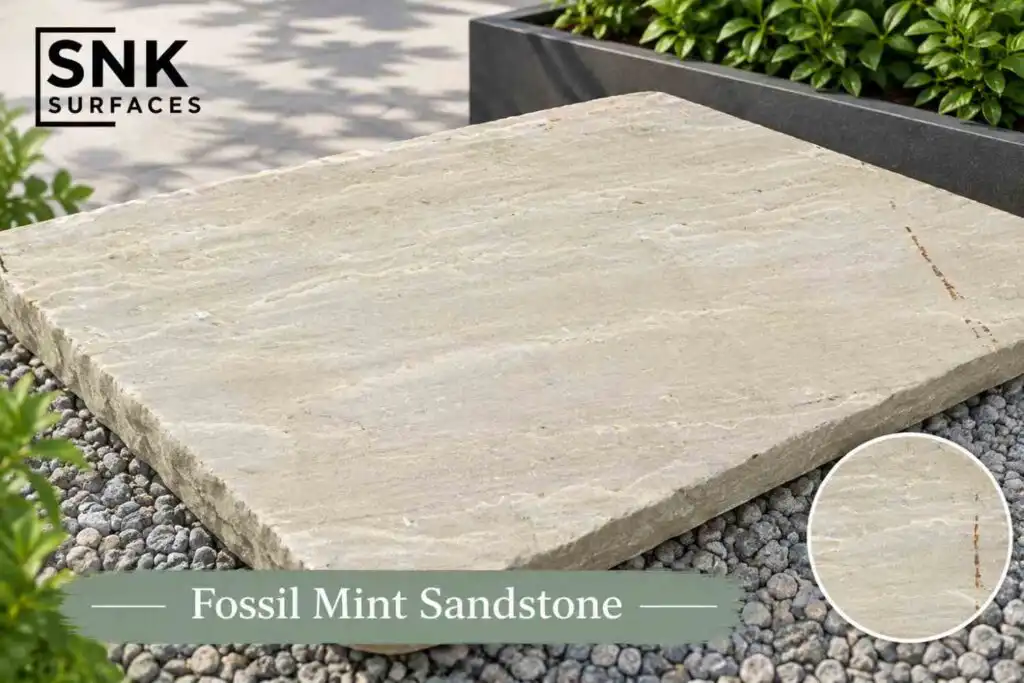
Fossil Mint Indian Sandstone
Fossil Mint shows gold, buff and warm orange tones. Some slabs carry faint fossil markings. These details add interest.
The stone looks richer when wet. Rain brings out the warm shades. Many owners enjoy that change.
It suits traditional and rustic gardens. Pair it with brick, timber or soft planting.
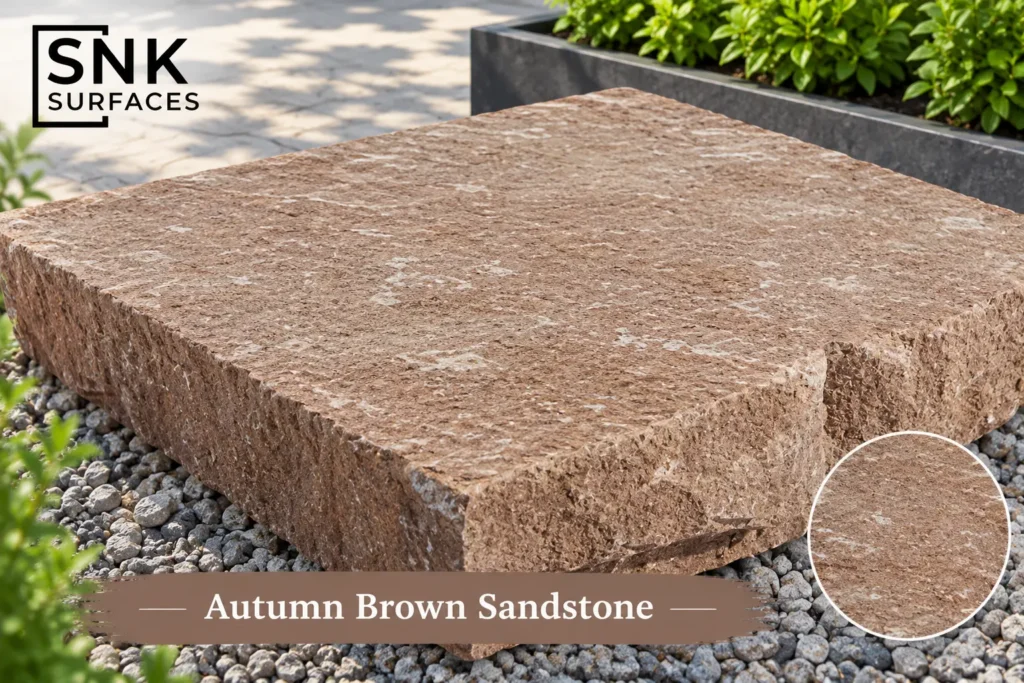
Autumn Brown Indian Sandstone
Autumn Brown mixes brown, buff and grey tones. The riven surface gives it a classic, lived-in feel. It remains a popular choice for family patios.
The warm shades blend with brick houses and wooden fences. They also hide light marks. Upkeep stays simple.
Mixed-size kits make random layouts easy. They create a relaxed, traditional pattern.
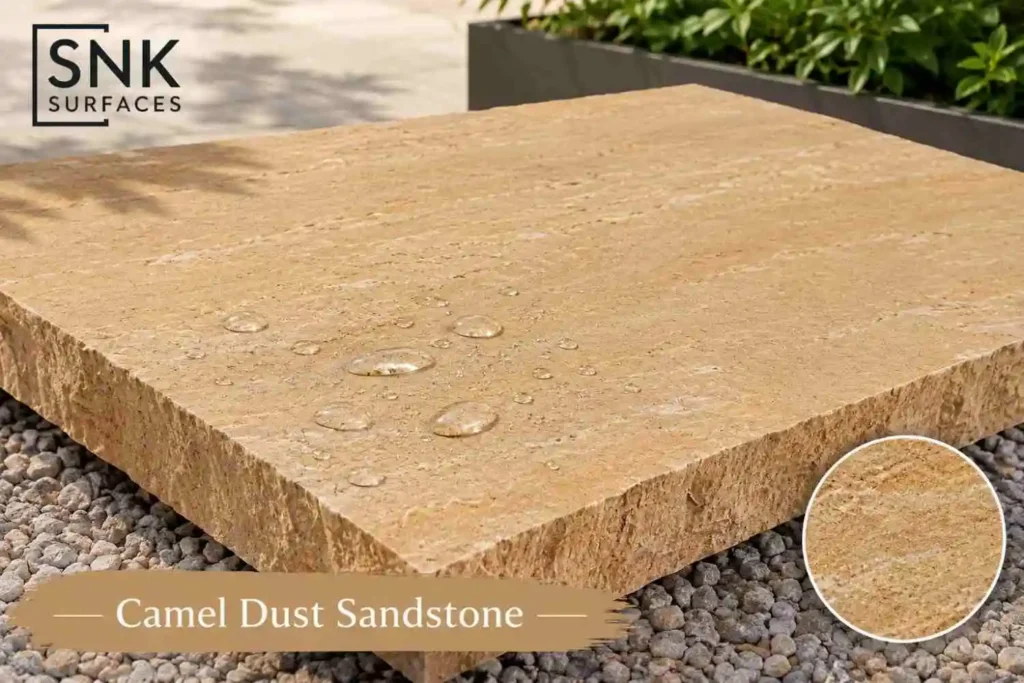
Camel Dust Indian Sandstone
Camel Dust shows soft sand, beige and light brown tones. It feels warm without being loud. It brightens shaded areas well.
The stone suits traditional and contemporary spaces. A sawn finish looks sleek. A riven finish looks rustic.
Light stone shows dirt in busy areas. Plan regular cleaning and sealing.
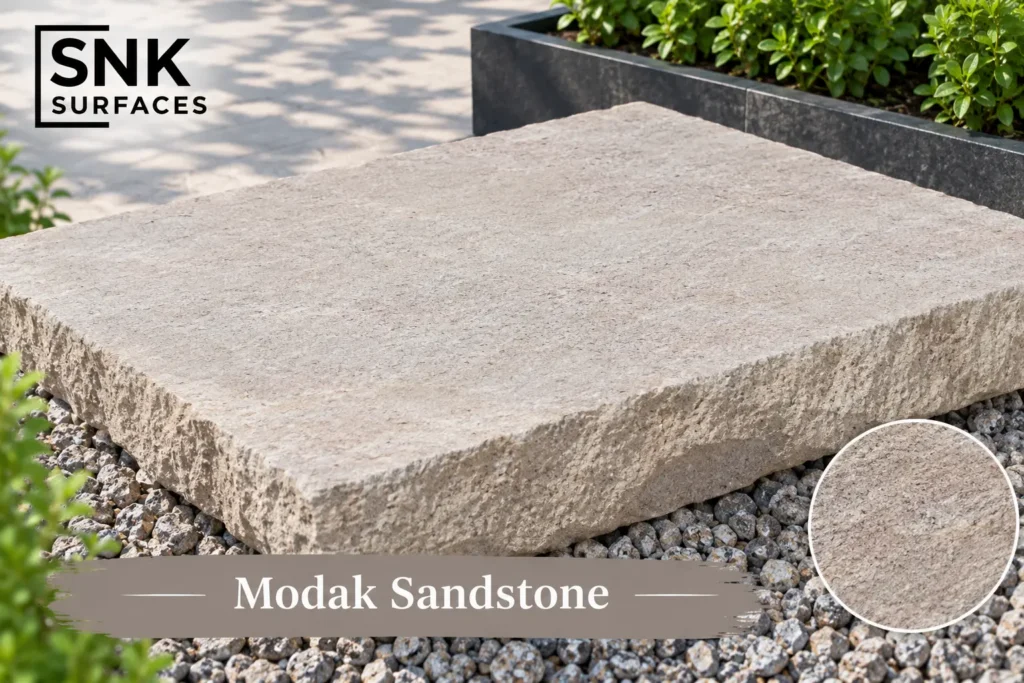
Modak Indian Sandstone
Modak Stone is a multi-coloured stone with buff, pink, red and brown tones. Each slab looks lively and different. It suits gardens that need a warm, rich floor.
The colour mix hides small marks. That helps in high-traffic areas.
Match furniture and planters to the strongest tone. This keeps the overall look balanced.
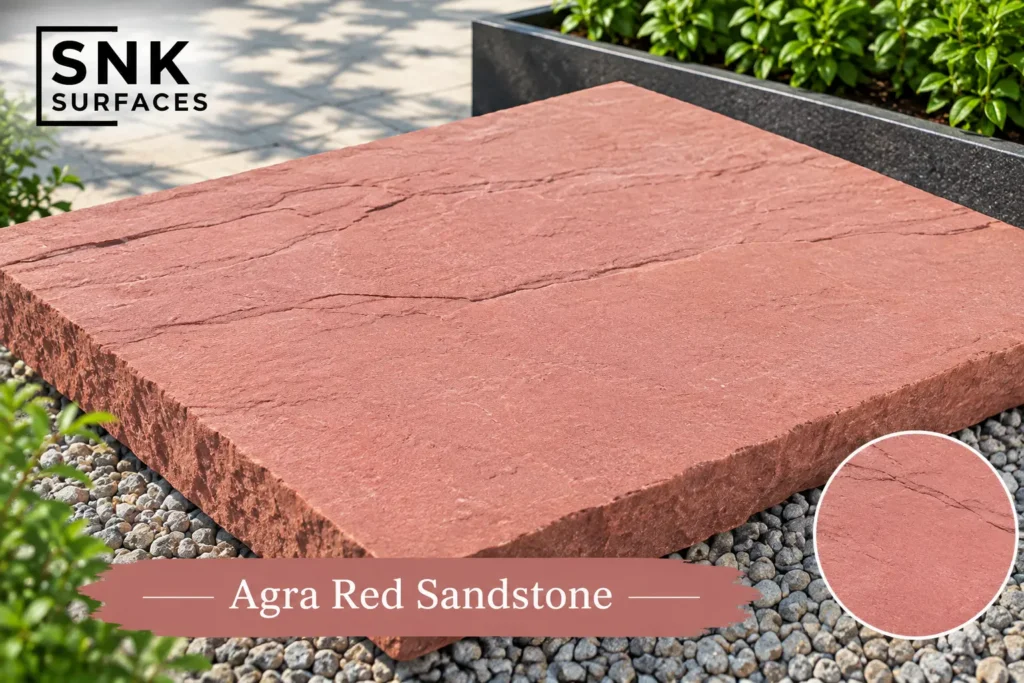
Agra Red Indian Sandstone
Agra Red delivers deep red and rust tones. It has a traditional, heritage look. It suits period homes and formal courtyards.
The strong colour makes a statement. Use it where you want the paving to lead. Keep walls and furniture simple.
Red tones can soften after years of sun. Sealing slows this and keeps the colour rich.
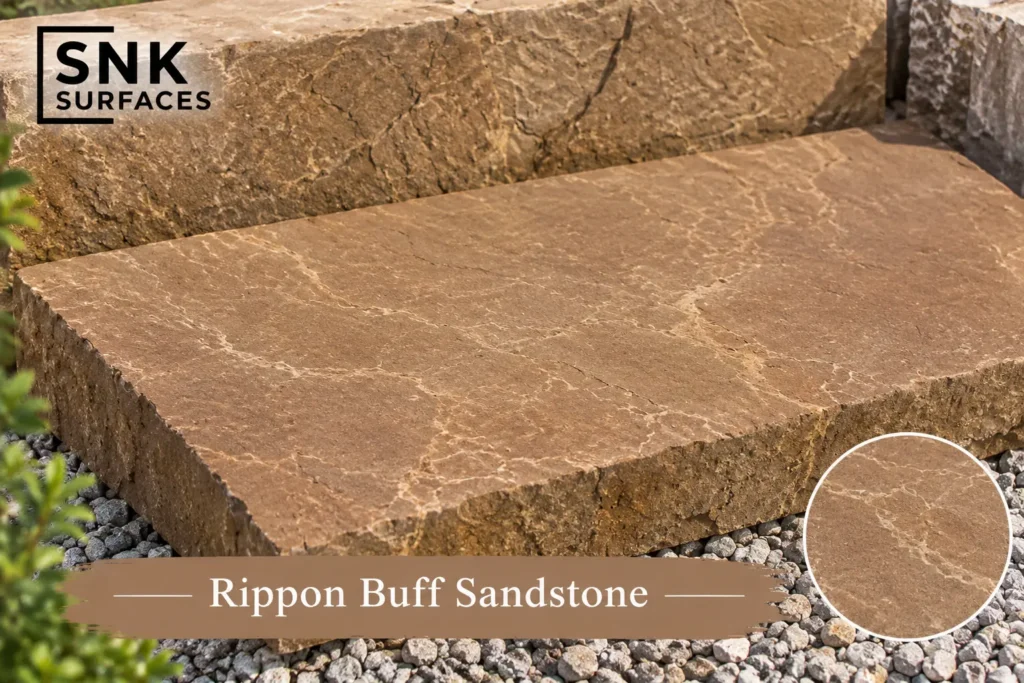
Rippon Buff Indian Sandstone
Rippon Buff is a multi-coloured stone with an underlying buff tone. Veining and shade changes appear between slabs. Those variations give it charm.
It looks good wet and performs well in changing weather. Many owners choose it for its warm, friendly feel.
It works in classic and modern gardens. A sawn cut suits modern layouts best.
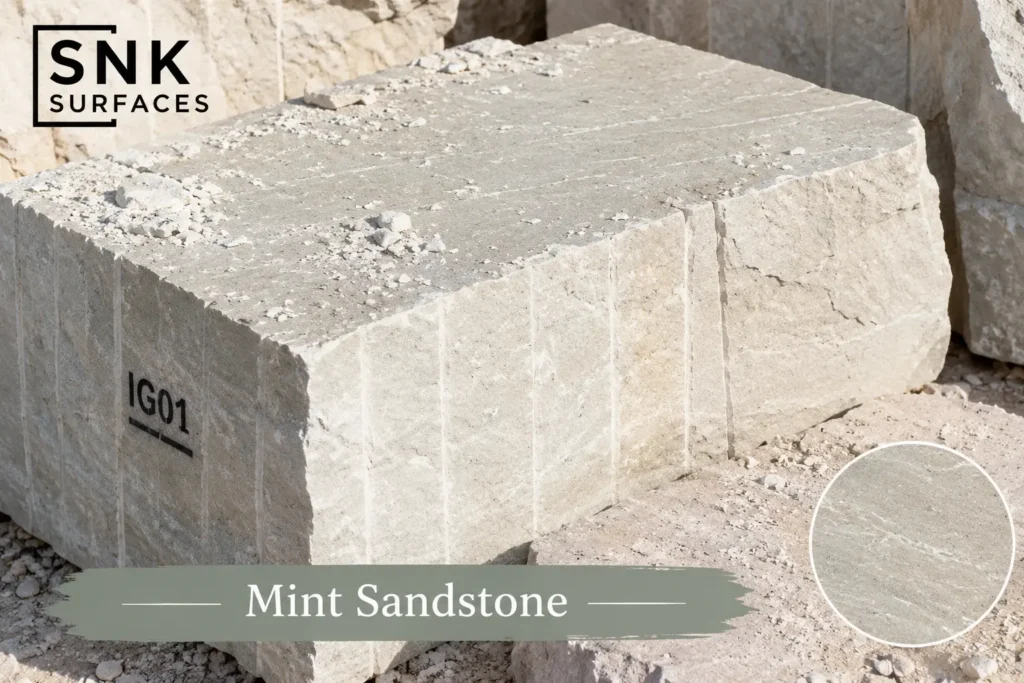
Mint Indian Sandstone
Mint sandstone offers buff, yellow and beige tones. Occasional orange or purple veins cross the surface. It suits contemporary gardens.
The light shades brighten dark corners. They make small gardens feel more open.
Mint also pairs well with planting beds. Green foliage stands out against the soft background.
Rainbow Indian Sandstone
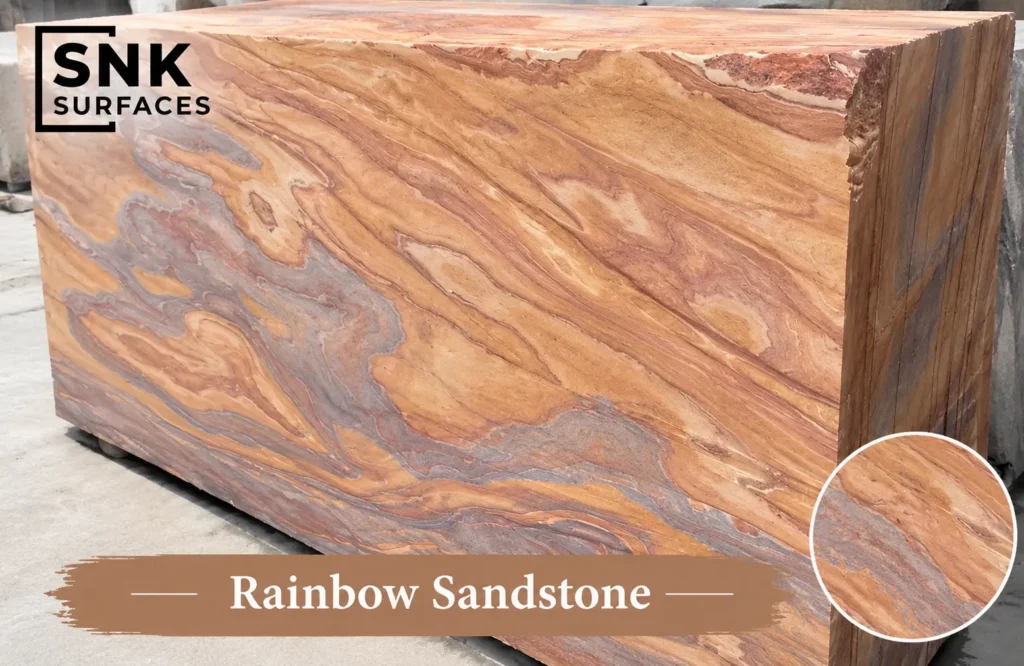
Rainbow sandstone shows swirls of orange, purple, gold and brown. Every slab looks like a small piece of art. It makes a strong statement.
Designers often use it in sawn finishes for a clean edge. It looks striking in modern courtyards and pool areas.
Because the pattern is bold, give it space. Avoid crowding it with other busy materials.
What Is the Most Popular Colour of Indian Sandstone?
Grey and brown lead the market. Kandla Grey and Autumn Brown sell in the highest volume. Their neutral tones suit most houses.
Popularity changes by region and style. Warm buff tones do well in rustic markets. Cool greys and blacks lead in modern projects.
Pick the colour that suits your building, not just the trend. A good match lasts longer than a fashion.
Popular Indian Sandstone Colours for Patios
Kandla Grey tops many lists. It works with nearly every style. Autumn Brown follows for traditional homes.
Raj Green, Fossil Mint and Rippon Buff also sell well. They add warmth and character. Rainbow suits buyers who want a bold look.
Many buyers search for Indian Sandstone colours UK before they order. The same shades are in demand worldwide. Importers should stock a balanced mix.
How to Choose the Right Sandstone Colour for Your Garden
Start with your house. Match or complement the brick, render or roof. This creates a united look.
Think about light. Shaded gardens suit lighter stones like Camel Dust or Mint. Sunny gardens handle darker stones better.
Then consider upkeep. Mid-tones hide dirt best. Order samples and view them wet and dry.
Natural Colour Variation in Indian Sandstone
Variation is a feature of natural stone. It comes from minerals, layers and quarry location. You cannot remove it, and you should not want to.
Mix slabs from several packs before laying. This spreads dark and light pieces evenly. It prevents patchy areas.
Tell clients about variation early. Clear expectations prevent complaints later.
How to Choose the Right Type of Indian Sandstone Paving
The right stone depends on your design, light, budget and care time. Start with the look you want. Then check the practical needs.
Use samples, not photos. Lighting and screens change colours. A real slab tells the truth.
Talk to your supplier about thickness and finish too. These details affect cost and installation.
Best Indian Sandstone for Traditional Patios
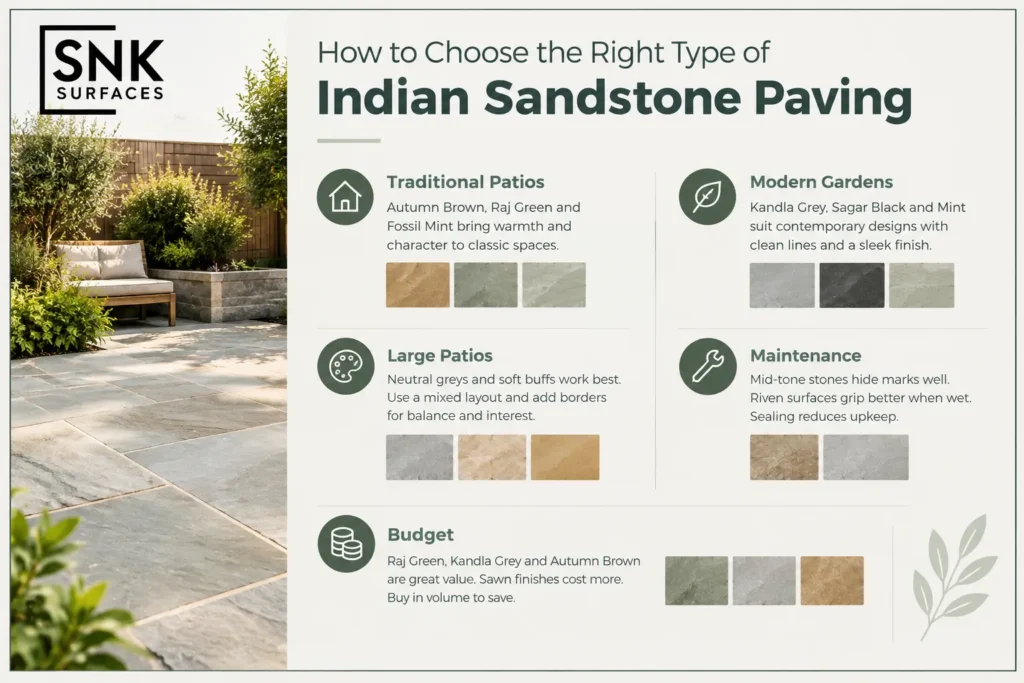
Autumn Brown, Raj Green and Fossil Mint suit classic settings. Their warm tones blend with brick, timber and planting. A riven finish adds to the effect.
Mixed-size kits give a relaxed, random pattern. This is the classic cottage look.
Choose hand-dressed edges for extra authenticity.
Best Indian Sandstone for Modern Gardens
Kandla Grey, Sagar Black and Mint suit modern designs. A sawn finish gives clean lines. Large slabs reduce joints and look sleek.
Pair them with simple planting and strong shapes. Restraint makes modern gardens work.
Uniform sizes and tight joints complete the look.
Best Colours for Large Patios
Large areas need balance. A single bold colour can feel heavy across many square metres. Neutral greys and soft buffs usually work best.
Use a mixed layout to break up the surface. Add borders or accent bands for interest.
Order enough stone in one batch. This keeps shades consistent across the whole area.
Choosing Sandstone Based on Maintenance Requirements
Mid-tone stones hide marks best. Grey and brown tones forgive dirt and pollen. Very light and very dark stones show more.
Riven surfaces hold more dirt than sawn ones. But they also grip better when wet.
Sealing reduces upkeep on any colour. Plan a simple cleaning routine from the start.
Choosing Sandstone Based on Budget
Raj Green, Kandla Grey and Autumn Brown sit in the lower to mid range. Rarer colours and thicker cuts cost more. Sawn finishes often cost more than riven.
Think about total cost, not only slab price. Installation, sealing and upkeep all count.
Buying in volume from the source can lower unit costs. Importers and contractors benefit most.
Indian Sandstone Paving Finishes and Textures
Finish changes the feel and performance of the stone. It also changes the price. Choose it with as much care as colour.
The main finishes are riven, sawn and calibrated. Each suits a different style. Cut type adds another choice.
Let us look at each one in turn.
Natural Riven Indian Sandstone
Riven stone has a split, textured surface. It looks natural and gives good grip. It suits traditional and rustic designs.
Slab thickness varies slightly. Installers must adjust the bed to keep the surface level. This takes skill.
Riven stone holds a little more dirt. Regular brushing keeps it fresh.
Sawn Indian Sandstone
Sawn stone has a smooth, cut surface. It looks clean and modern. It suits contemporary gardens and commercial spaces.
The surface is easy to sweep and clean. It shows less texture variation.
Take care in wet areas. Smooth faces can turn slippery, so check slip ratings for pools and ramps.
Calibrated Indian Sandstone
Calibrated stone is machine-trimmed to an even thickness, often 22 mm. Edges stay consistent. Laying is faster and neater.
It combines natural looks with easier installation. Many patio kits use calibrated slabs.
It costs a little more than uncalibrated stone. Time saved on site often balances this.
Hand-Cut vs Machine-Cut Sandstone
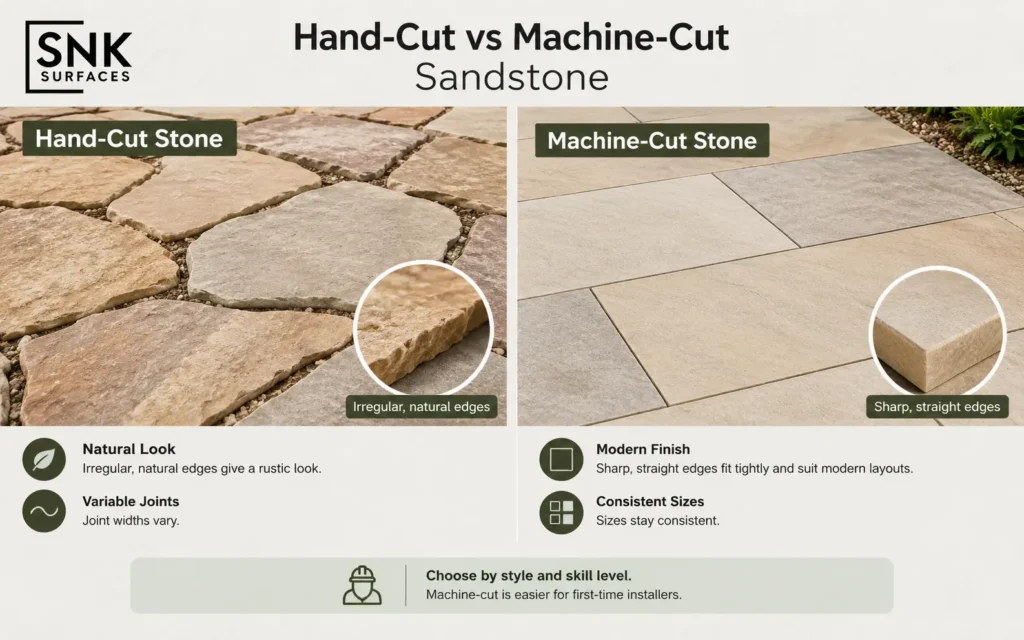
Hand-cut stone has irregular, natural edges. It gives a rustic look. Joint widths vary.
Machine-cut stone has sharp, straight edges. It fits tightly and suits modern layouts. Sizes stay consistent.
Choose by style and skill level. Machine-cut is easier for first-time installers.
What Are the Downsides of Indian Sandstone?
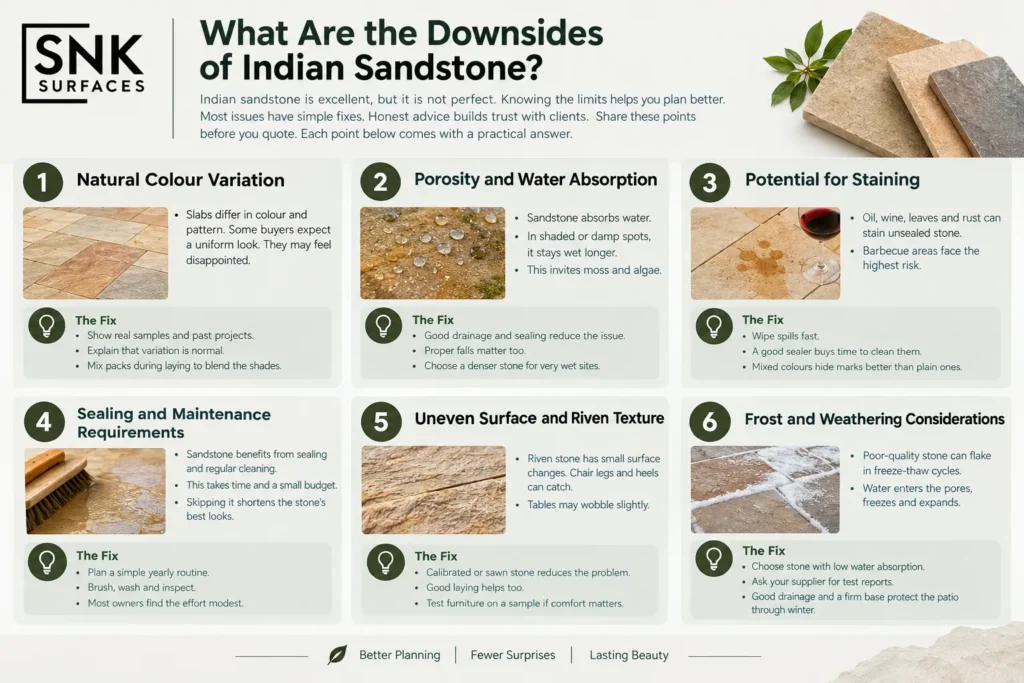
Indian sandstone is excellent, but it is not perfect. Knowing the limits helps you plan better. Most issues have simple fixes.
Honest advice builds trust with clients. Share these points before you quote.
Each point below comes with a practical answer.
Natural Colour Variation
Slabs differ in colour and pattern. Some buyers expect a uniform look. They may feel disappointed.
Show real samples and past projects. Explain that variation is normal.
Mix packs during laying to blend the shades.
Porosity and Water Absorption
Sandstone absorbs water. In shaded or damp spots, it stays wet longer. This invites moss and algae.
Good drainage and sealing reduce the issue. Proper falls matter too.
Choose a denser stone for very wet sites.
Potential for Staining
Oil, wine, leaves and rust can stain unsealed stone. Barbecue areas face the highest risk.
Wipe spills fast. A good sealer buys time to clean them.
Mixed colours hide marks better than plain ones.
Sealing and Maintenance Requirements
Sandstone benefits from sealing and regular cleaning. This takes time and a small budget. Skipping it shortens the stone’s best looks.
Plan a simple yearly routine. Brush, wash and inspect.
Most owners find the effort modest.
Uneven Surface and Riven Texture
Riven stone has small surface changes. Chair legs and heels can catch. Tables may wobble slightly.
Calibrated or sawn stone reduces the problem. Good laying helps too.
Test furniture on a sample if comfort matters.
Frost and Weathering Considerations
Poor-quality stone can flake in freeze-thaw cycles. Water enters the pores, freezes and expands.
Choose stone with low water absorption. Ask your supplier for test reports.
Good drainage and a firm base protect the patio through winter.
Indian Sandstone vs Porcelain Paving: Which Is Better for a Patio?
Both materials work well outdoors. They suit different tastes and budgets. Your priorities decide the winner.
Sandstone offers natural character. Porcelain offers consistency and low upkeep.
Compare them across the points below.
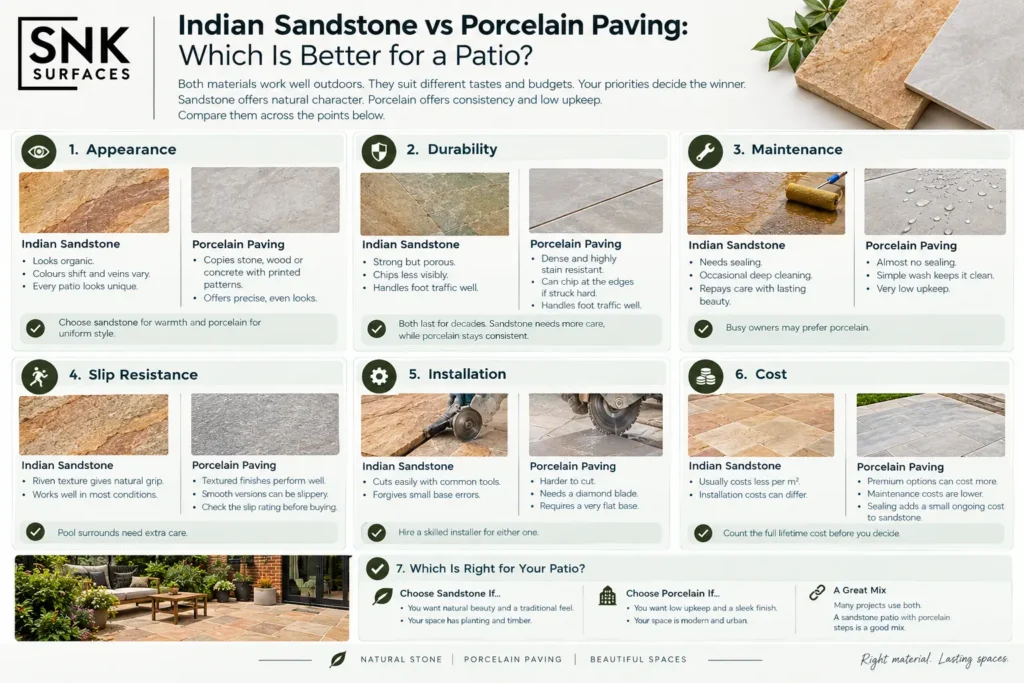
Indian Sandstone vs Porcelain: Appearance
Sandstone looks organic. Colours shift and veins vary. Every patio looks unique.
Porcelain copies stone, wood or concrete with printed patterns. It offers precise, even looks.
Choose sandstone for warmth and porcelain for uniform style.
Indian Sandstone vs Porcelain: Durability
Both last for decades. Sandstone is strong but porous. Porcelain is dense and highly stain resistant.
Porcelain can chip at the edges if struck hard. Sandstone chips less visibly.
Both handle foot traffic well.
Indian Sandstone vs Porcelain: Maintenance
Porcelain needs almost no sealing. A simple wash keeps it clean.
Sandstone needs sealing and occasional deep cleaning. It repays this care with lasting beauty.
Busy owners may prefer porcelain.
Indian Sandstone vs Porcelain: Slip Resistance
Riven sandstone gives natural grip. Textured porcelain also performs well.
Smooth versions of either can turn slippery when wet. Check the slip rating before buying.
Pool surrounds need extra care.
Indian Sandstone vs Porcelain: Installation
Sandstone cuts easily with common tools. It forgives small base errors.
Porcelain is harder and needs a diamond blade. It demands a very flat base.
Hire a skilled installer for either one.
Indian Sandstone vs Porcelain: Cost
Sandstone usually costs less per square metre. Premium porcelain can cost more. Installation costs can differ too.
Maintenance costs favour porcelain over time. Sealing adds a small ongoing cost to sandstone.
Count the full lifetime cost before you decide.
Indian Sandstone vs Porcelain: Which Is Right for Your Patio?
Choose sandstone for natural beauty and a traditional feel. It suits gardens with planting and timber.
Choose porcelain for low upkeep and a sleek finish. It suits modern, urban spaces.
Many projects use both. A sandstone patio with porcelain steps is a good mix.
How Long Does Indian Sandstone Patio Paving Last?
Indian sandstone lasts a very long time. With good installation and care, many patios stay in shape for 25 to 50 years or more.
Lifespan depends on stone quality, base, drainage and upkeep. Each factor adds or removes years.
Let us break these down.
Typical Lifespan of Indian Sandstone Paving
Most patios last at least 25 years. Well-laid and cared-for patios often last much longer. The stone itself rarely fails.
Problems usually start with the base, not the slab. Fix the base and the stone keeps going.
Warranty terms vary by supplier. Ask before you buy.
Factors That Affect the Lifespan of Indian Sandstone
Density and thickness matter most. Dense slabs resist wear and frost. Thicker slabs resist cracking.
Climate plays a role. Freeze-thaw cycles and heavy rain stress the surface.
Traffic and cleaning methods count too. Harsh chemicals shorten life.
How Installation Quality Affects Longevity
A weak base causes most failures. Poor compaction leads to sinking and cracks. Poor drainage leads to heave and moss.
Full mortar coverage under each slab prevents hollow spots. Spot bedding invites cracks.
Hire experienced installers and check their work.
How to Extend the Life of an Indian Sandstone Patio
Seal the stone and reseal on schedule. Clean it gently and often. Fix cracked joints fast.
Keep drainage clear. Trim plants that push into joints.
Small habits protect a large investment.
Should You Seal Indian Sandstone?
Yes, in most cases. Sealing protects against stains, moss and water damage. It also keeps colours richer.
Sealers come in natural-look and colour-enhancing styles. Pick one that suits your stone and finish.
Test on a spare slab first.
Benefits of Sealing Indian Sandstone
Sealing reduces water absorption. Spills sit on top longer, which gives you time to wipe them away.
It slows moss and algae growth. It also makes cleaning easier.
An enhancing sealer deepens colour. A natural-look sealer keeps the original shade.
When Should New Indian Sandstone Be Sealed?
Wait until the mortar and jointing have fully cured. This often takes several weeks. Sealing too early traps moisture.
Clean the surface first. Remove dust, residue and any cement haze.
Apply in dry weather and follow the product instructions.
How Often Should Indian Sandstone Be Resealed?
Most sealers last three to five years. Heavy traffic and harsh weather shorten this.
Test with water. If it soaks in quickly, the seal has worn.
Reseal after a deep clean for the best results.
What Happens If You Don’t Seal Indian Sandstone?
The stone absorbs more water and dirt. Stains set quickly. Moss and algae grow faster.
Colours can look dull sooner. Cleaning takes more effort.
The patio still works. It just ages faster.
Can Unsealed Indian Sandstone Still Last for Years?
Yes. Many unsealed patios last for decades. The stone stays strong.
What changes is the look. Expect more weathering and marks.
Some owners like that aged, rustic character.
How to Clean and Maintain Indian Sandstone Paving
Simple care keeps sandstone looking fresh. Steady habits beat occasional heavy cleaning. Start gently and step up only when needed.
Use soft tools and mild products. Avoid anything harsh.
The steps below cover the common jobs.
How Often Should Indian Sandstone Be Cleaned?
Sweep weekly in busy seasons. Wash the whole surface once or twice a year. Spot-clean spills straight away.
Shaded areas need more attention. They grow moss faster.
Set a seasonal reminder to stay on track.
How to Remove Dirt and Moss from Indian Sandstone
Brush loose debris first. Apply a stone-safe moss cleaner and wait as directed. Scrub with a stiff brush.
Rinse with clean water. Repeat on stubborn patches.
Improve drainage and sunlight where possible to stop moss returning.
How to Remove Stains from Indian Sandstone
Act fast. Blot liquids and never rub. Use a stone-safe poultice or cleaner for oil and rust.
Test on a hidden spot first. Some products change colour.
Persistent stains may need a professional.
Should You Jet Wash Indian Sandstone?
You can, but carefully. Strong pressure can damage the surface and wash out the jointing. It can also leave stripes.
Low pressure is safer. Many owners prefer a brush and mild cleaner.
Never use a pinpoint nozzle.
How to Jet Wash Indian Sandstone Safely
Use a wide fan nozzle and low pressure. Keep the lance about 30 cm from the surface. Move in smooth, even passes.
Work from one side to the other. Avoid aiming at the joints.
Let the patio dry fully, then repair joints and reseal if needed.
Cleaning Products to Avoid on Indian Sandstone
Avoid bleach and strong acids. They can etch the stone and change its colour.
Avoid abrasive powders and wire brushes. They scratch the surface.
Choose products made for natural stone.
How to Install Indian Sandstone Paving
Good installation protects your investment. The steps are simple, but each one matters. Follow them in order.
Check local building standards and manufacturer guides before you start.
Here is the process from ground to cure.
Preparing the Ground
Mark the area and dig out soil to the needed depth. Remove roots and soft ground. Set the finished level below any damp-proof course.
Plan a gentle fall of about 1 in 80 away from buildings. This moves water off the patio.
Lay a weed membrane if needed.
Choosing the Right Sub-Base
Use compacted crushed stone such as MOT Type 1. For patios, a depth of 100 mm to 150 mm works well. Compact it in layers.
Drives and heavy areas need a deeper, stronger base. Consider a concrete layer there.
A firm base prevents sinking.
Preparing the Mortar Bed
Mix a semi-dry mortar bed, usually 35 mm to 50 mm thick. Keep it workable but not wet.
Prepare only what you can lay in time. Old mortar sets and weakens.
Brush a bonding slurry on the back of each slab.
Laying Indian Sandstone Paving Slabs
Start from a straight edge or corner. Place each slab gently and tap it level. Keep joints even.
Check levels often. Wipe off mortar as you go.
Mix slabs from different packs to blend colours.
Jointing Indian Sandstone Paving
Leave joints around 8 mm to 10 mm wide. Fill them with a suitable mortar or jointing compound. Press it in firmly.
Brush off the excess before it dries. Do not stain the stone.
Avoid jointing in rain.
Allowing the Patio to Cure
Keep foot traffic off for at least 48 hours. Wait longer before placing heavy furniture. Full curing takes a few weeks.
Protect the area from heavy rain during setting.
Seal only after full cure.
How Much Does Indian Sandstone Paving Cost?
Cost depends on colour, finish, thickness, supplier and volume. Prices change with freight and market conditions. Always ask for a current quote.
Think beyond the slab. Base, labour and sealing make up the real budget.
The sections below break it down.
Indian Sandstone Paving Cost Per Square Metre
In the UK retail market, slabs often sit between £25 and £55 per square metre. Premium colours and calibrated cuts cost more. Prices vary by supplier and season.
Export pricing differs. It depends on order size, container load and shipping terms.
Ask for a full quote with all charges.
Factors That Affect Indian Sandstone Prices
Colour rarity, thickness and finish drive price. Calibration adds cost. Larger slabs often cost more per piece.
Freight, duty and exchange rates also matter. Quarry output changes supply.
Buying direct from a manufacturer can reduce cost.
Indian Sandstone vs Porcelain Paving Cost
Sandstone is usually cheaper to buy. Porcelain can cost more per square metre, especially in premium ranges.
Porcelain needs less upkeep. That can narrow the gap over time.
Weigh upfront price against lifetime care.
Installation and Labour Costs
Labour varies by region and project size. In the UK, laying often costs about £40 to £80 per square metre. Complex layouts cost more.
Groundwork can add a lot. Poor soil or drainage needs extra work.
Get written quotes from several installers.
Long-Term Maintenance Costs
Sealing, cleaning products and occasional repairs make up ongoing costs. These stay modest for most patios.
A good seal every few years saves bigger repairs later.
Budget a small yearly amount for upkeep.
How to Maintain Indian Sandstone Throughout the Year
Each season brings different tasks. A short routine in each one keeps problems small. It also protects the finish.
Follow this simple calendar.
Small, timely jobs beat big rescues.
Indian Sandstone Maintenance in Spring
Spring is the best time for a deep clean. Remove winter dirt, moss and algae. Check joints for gaps.
Reseal if the water test fails. Dry weather helps.
Trim plants near the edges.
Protecting Sandstone During Summer
Sweep often and wipe spills fast. Barbecues and drinks cause most stains.
Use mats under grills and planters. Watch dark stone in strong sun.
Rinse dust with a gentle hose.
Preparing Indian Sandstone for Winter
Clear leaves before they stain. Check that drainage is open. Fill cracked joints.
Avoid rock salt on the stone. Use a stone-safe de-icer.
Keep the surface as dry as possible.
Removing Weeds, Moss and Algae
Pull weeds early, before roots spread. Use a joint brush or a stone-safe killer.
Treat moss with a suitable cleaner. Scrub and rinse.
Re-point joints to keep seeds out.
Common Problems With Indian Sandstone Paving
Most patio problems have clear causes. Spot them early and fix them quickly. Prevention costs less than repair.
Use the checks below.
Each one has a simple answer.
Why Is My Indian Sandstone Changing Colour?
Sunlight, weather and moisture slowly alter surface tone. Iron minerals can rust and leave orange marks. Sealers can also darken or lighten stone.
Most changes are natural. They often look attractive.
Clean and reseal to refresh the colour.
Why Is Indian Sandstone Turning Green?
Algae and moss grow in damp, shaded areas. Poor drainage speeds this up.
Clean with a stone-safe product. Improve light and airflow where you can.
Sealing slows regrowth.
Why Is My Sandstone Patio Staining?
Oil, food, leaves and metal cause stains. Unsealed stone absorbs them fast.
Treat stains early with the right cleaner. Never use harsh acids.
Seal the surface to prevent repeats.
Why Is Indian Sandstone Cracking?
Cracks usually come from a weak base or poor bedding. Heavy loads and frost add stress.
Hollow spots under slabs make them snap. Full mortar coverage prevents this.
Replace cracked slabs and fix the base below.
Why Are Weeds Growing Between Sandstone Slabs?
Seeds land in open or worn joints. Weeds then take root.
Clear them and refill with strong jointing compound. Keep joints tight.
Treat the area to stop regrowth.
How to Prevent Common Sandstone Patio Problems
Build a firm base and plan drainage. Use full-bed mortar. Seal after curing.
Clean on a schedule. Fix small defects fast.
Choose quality stone from a trusted supplier.
Frequently Asked Questions About Indian Sandstone Paving
These are the questions buyers ask most. The answers are short and practical. Use them as a quick check before you order. Each answer links back to the detailed sections above.
Is Indian Sandstone Good for Patios?
Yes. It is strong, attractive and affordable. It suits most garden styles. It needs a solid base and some care. With both, it performs for decades. It remains one of the most trusted patio stones.
Is Indian Sandstone Better Than Concrete Paving?
Most buyers say yes for looks. Sandstone has natural variation and richer colour. Concrete is uniform and often cheaper. Sandstone usually lasts longer and ages more gracefully. Concrete can fade and stain. Pick by budget and style.
Is Indian Sandstone Suitable for UK Weather?
Yes, when you choose quality stone and install it well. Good drainage is key. Sealing adds extra protection. Low-absorption stone handles frost best. Ask for test data. Many UK patios use it successfully.
Does Indian Sandstone Fade Over Time?
It can soften slightly under years of sun. Reds and browns may lighten a little. The change is gradual. Sealing slows fading. Shade helps too. Many owners enjoy the mellow look.
Does Indian Sandstone Become Slippery When Wet?
Riven stone grips well. Smooth sawn stone can feel slick, especially with algae. Keep it clean and well drained. Check slip ratings for pools and steps. Textured finishes are safest.
Can Indian Sandstone Be Used for Driveways?
Yes, with the right setup. Use thicker slabs and a strong base, often with concrete. Bed them fully in mortar. Standard patio slabs may crack under vehicles. Ask your supplier for driveway grades. Plan for oil stains and seal the surface.
Can You Lay Indian Sandstone on Concrete?
Yes. Use a suitable flexible adhesive or mortar system. Prime the concrete if advised. The slab must be sound and sloped for drainage. Clean it well first. Follow the product guide closely.
Can You Lay Indian Sandstone on Soil?
No. Soil moves and holds water. The patio will sink and crack. Dig out and build a compacted sub-base first. Then add a mortar bed. This step protects your whole investment.
How Do You Stop Indian Sandstone From Moving?
Build a firm, compacted base. Use full mortar bedding under every slab. Fill joints well. Add edge restraints where needed. Keep drainage clear. Good groundwork prevents most movement.
How Often Should Indian Sandstone Be Cleaned?
Sweep weekly and wash once or twice a year. Spot-clean spills straight away. Shaded patios need more care. Moss grows quickly there. A steady routine keeps the stone fresh.
Final Thoughts: Choosing the Right Indian Sandstone Paving
The best indian sandstone paving matches your style, light, budget and care time. Grey suits modern spaces. Brown and buff suit traditional ones. Bold multi-tones suit statement designs. Look at finish and thickness as closely as colour. Plan the base, sealing and upkeep from the start. These steps decide how well the patio ages.
Order samples, ask questions and compare natural stone options with care. A confident choice now saves money and stress later.
Why Choose SNK Surfaces?
SNK Surfaces is a trusted supplier and exporter of natural sandstone and porcelain surfaces. We manufacture in India and ship to importers, distributors and contractors worldwide. Our team backs every order with quality checks and clear certification.
Our range of Indian sandstone slabs covers popular colours, finishes and sizes. We grade and pack each batch with care. This keeps shades consistent and reduces damage in transit.
For faster supply across the UK, we keep selected stock in a UK warehouse. Buyers can order from local stock and cut waiting time. At the same time, we ship full containers direct from India to customers around the globe.
Ready to plan your next project?
Explore our full range and speak with the team at SNK Surfaces for samples, specifications and a quote.