
Sandstone is one of the oldest building materials people still use today. If you have ever walked on a stone patio or seen a historic building with warm, textured walls, there is a good chance you were looking at sandstone. At SNK Surfaces, we supply and export natural sandstone to contractors, architects, and landscape designers around the world, backed by quality certifications that confirm every batch meets international construction standards.
This guide covers what sandstone actually is, the different types available, and where it works best. Whether you are specifying stone for a commercial build or picking paving for a garden, you will find clear answers here without the fluff.
What Is Sandstone?
Sandstone is a sedimentary rock formed from sand grains that were compacted and cemented together over thousands of years. The grains are usually quartz or feldspar, held in place by natural minerals like silica or iron oxide. This slow formation process is what gives sandstone its layered texture and wide range of natural colors, from soft mint to deep brown.
Because it forms in layers, sandstone can be split into slabs relatively easily. This makes it practical to quarry and cut, which is one reason it has been used in construction for thousands of years, from ancient temples to modern patios.
Types of Sandstone
India produces some of the most sought after sandstone in the world, largely from the Rajasthan region. Each variety has its own color, texture, and best use case.
Mint Indian Sandstone
A light, cool toned stone with soft White and grey undertones. It works well in modern gardens and contemporary building exteriors where a clean, calm look is the goal.
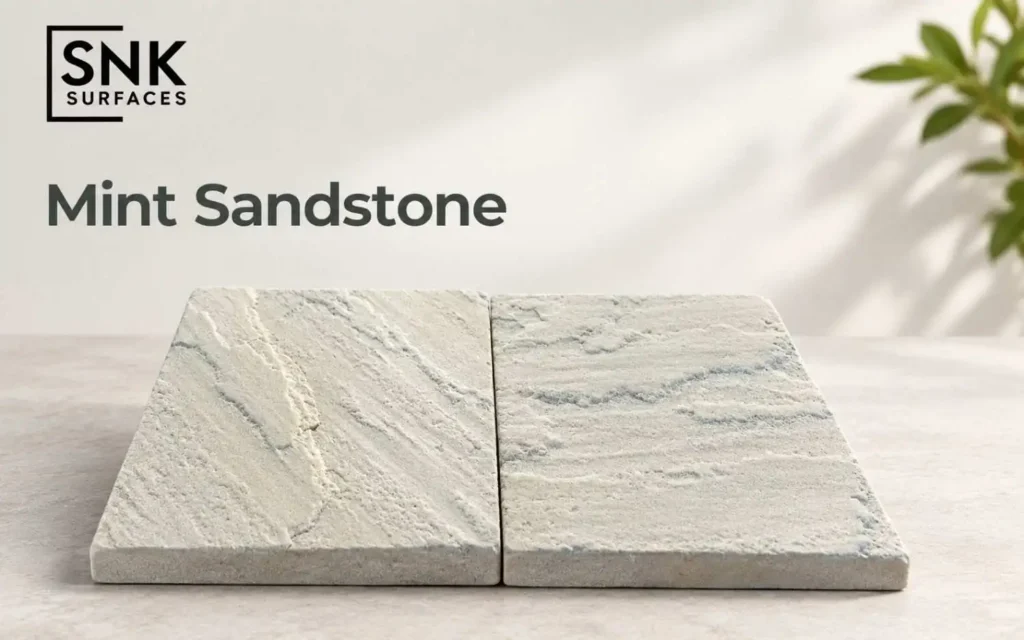
Fossil Mint Sandstone
Shares the same light color family as Mint sandstone but includes visible fossil patterns in the surface. These natural markings give each slab a unique look, which many designers prefer over uniform stone.

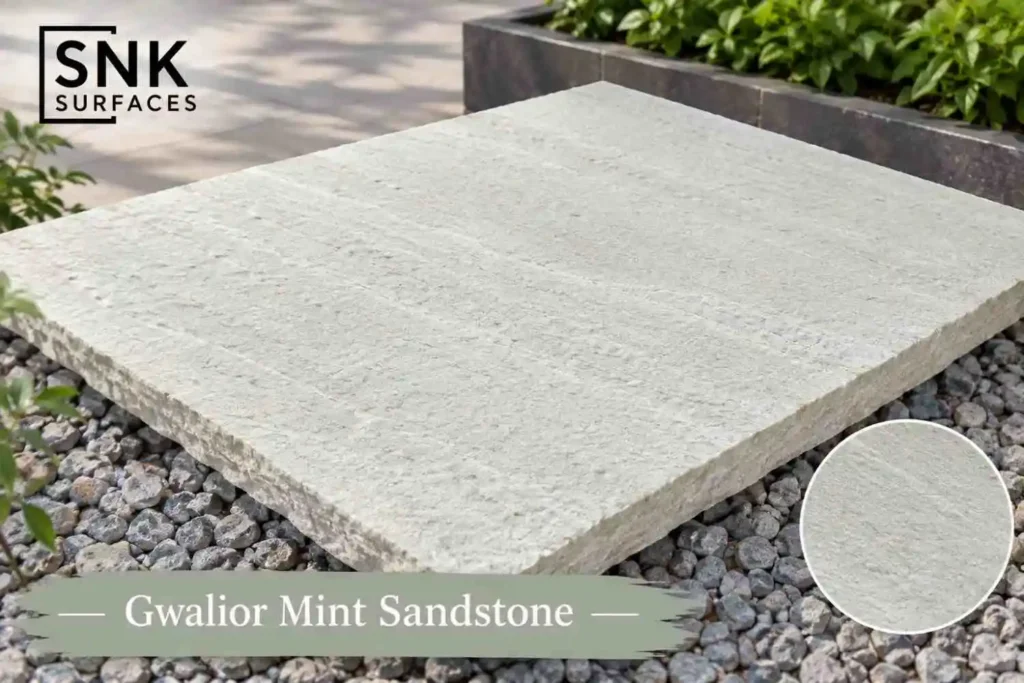
Gwalior Mint Sandstone
Another light coloured variety, slightly more consistent in tone than Fossil Mint. It suits large paved areas where a smoother, more even finish is needed.
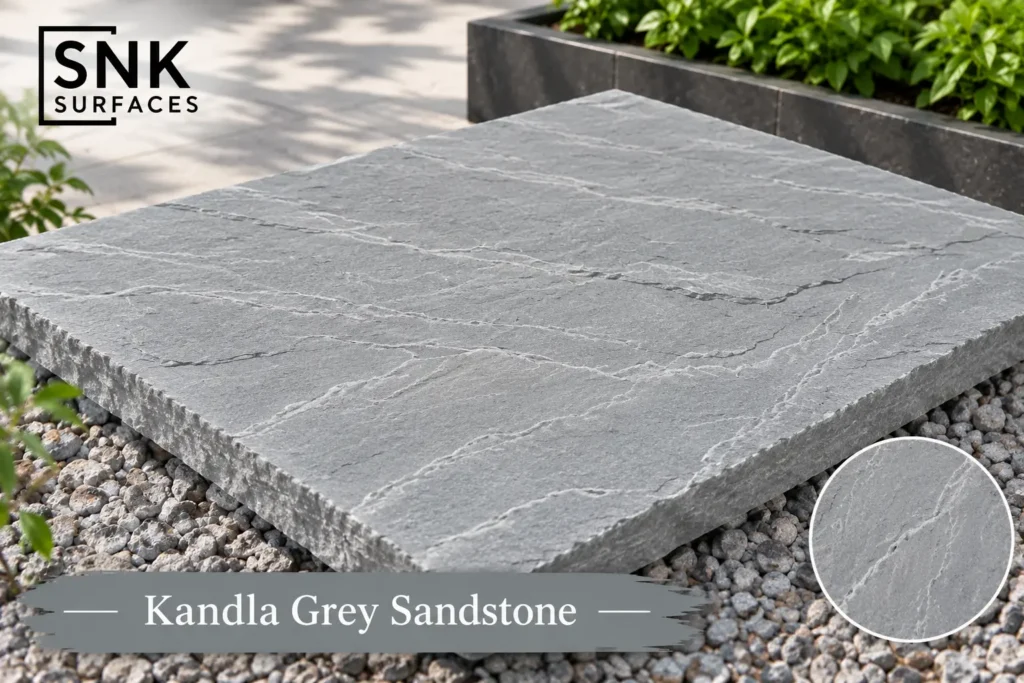
Kandla Grey Sandstone
One of the most popular choices for UK and European patios. It has a blue-grey base with light buff flecks, and it does not show dirt or footprints as easily as lighter stones.
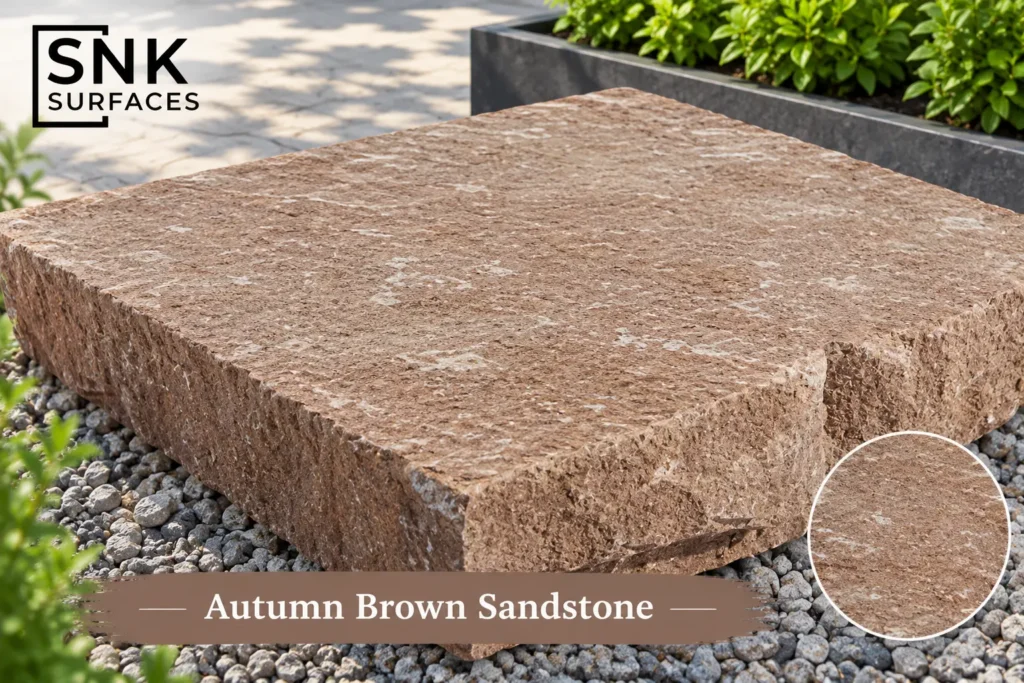
Autumn Brown Sandstone
Brings warm brown and rust tones to a project. It pairs naturally with red brick homes and traditional landscaping styles.
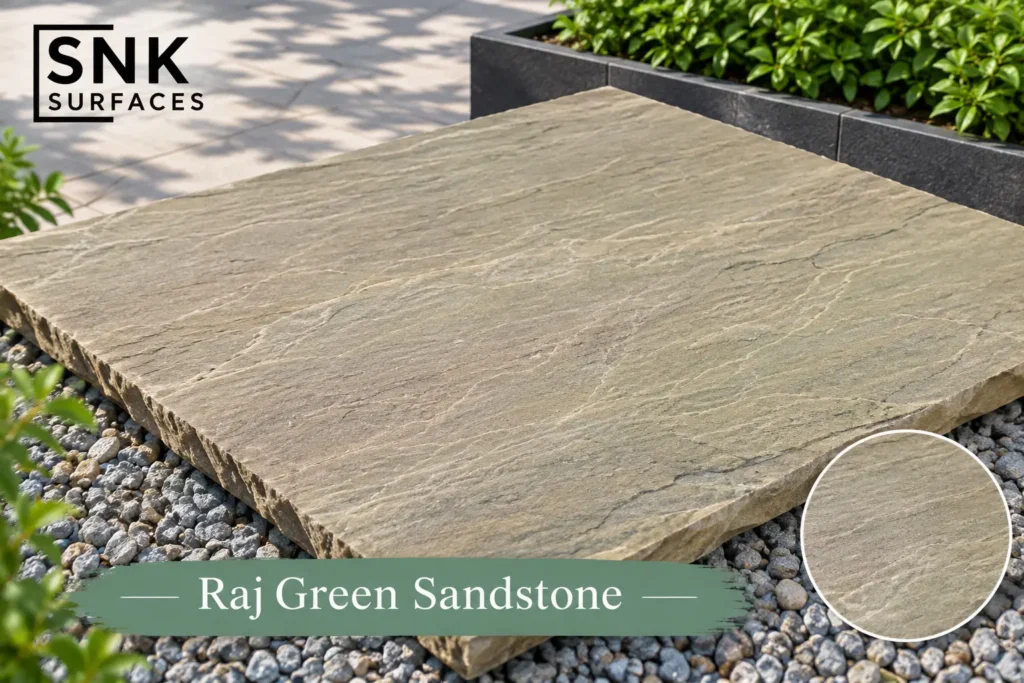
Raj Green Sandstone
Mixes plum, rust, and sage tones in a single slab. No two pieces look exactly alike, which is part of why it remains a long-time favorite for driveways and patios.
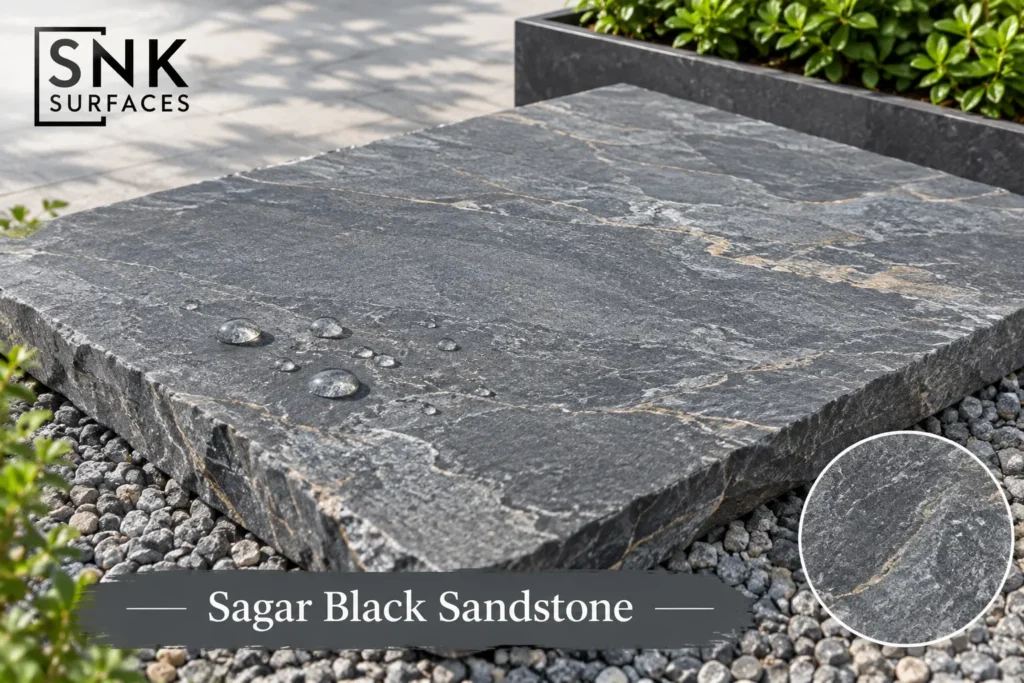
Sagar Black Sandstone
A darker, denser option often chosen for bold flooring or contrast borders around lighter paving. Its deep tone makes it a strong feature stone rather than a background material.
Properties and Characteristics of Sandstone
Physical Properties of Sandstone
Sandstone’s biggest strength is its balance of durability and workability. It can handle heavy foot traffic and outdoor weather, yet it is still soft enough to cut, shape, and finish without specialist equipment.
Aesthetic Characteristics
Its texture ranges from fine to coarse depending on the grain size, and its natural color variation means every slab looks slightly different. This is a feature, not a flaw, for buyers who want a genuinely natural look rather than a manufactured, uniform surface.
Strength, Durability, and Slip Resistance
A riven or textured finish grips well underfoot even when wet, which matters for patios, pool surrounds, and public walkways. This slip resistance is a major reason sandstone works so well outdoors.
Sandstone Paving
What Is Sandstone Paving?
Sandstone paving refers to sandstone cut into slabs specifically for outdoor flooring, such as patios, paths, and driveways. It has become one of the most requested paving materials for residential and commercial landscaping because it looks natural and lasts for decades with basic care.
Sandstone Paving for Patios and Walkways
For patios and walkways, lighter stones like Mint Indian Sandstone or Fossil Mint Sandstone create an open, welcoming feel that suits smaller or shaded spaces.
Sandstone Paving for Driveways and Outdoor Areas
For driveways and larger outdoor areas, denser and darker options like Kandla Grey Sandstone or Sagar Black Sandstone tend to hold up better under vehicle weight and heavy use.
Choosing the Right Sandstone for Paving
Choosing the right sandstone for paving comes down to three things: expected foot or vehicle traffic, the climate it will face, and the finish you want.
Sandstone Paving Finishes and Surface Textures
A riven finish gives a rustic, textured surface, while a sawn or honed finish gives a smoother, more contemporary look.
Uses of Sandstone
Construction Applications
In construction, sandstone is used for building facades, wall cladding, and structural elements where both strength and appearance matter.
Flooring and Wall Cladding
Its texture also makes it a common choice for flooring in both commercial and residential spaces, giving interiors a natural, grounded feel.
Decorative and Landscaping Uses
For landscaping, sandstone is a go-to material for patios, garden paths, retaining walls, and decorative borders. It blends naturally with greenery in a way that manufactured materials often cannot match.
Historical and Monumental Uses
Sandstone has shaped some of the world’s most recognized structures. It appears in monuments, temples, and government buildings across multiple continents, a track record that speaks to just how long this stone actually lasts.
Popular Indian Sandstone for Outdoor Projects
Mint Indian Sandstone works well for landscaping where a light, airy feel is the goal, while Fossil Mint Sandstone adds visual texture to the same kind of space.
Gwalior Mint Sandstone suits larger outdoor areas that need a consistent tone, and Kandla Grey Sandstone is a strong fit for contemporary designs that lean toward cool, neutral colors.
For warmer palettes, Autumn Brown Sandstone and Raj Green Sandstone both work well against red brick or traditional garden settings, offering earthy tones that age gracefully outdoors.
How to Choose the Right Sandstone
Choosing Sandstone by Color
Lighter stones like Mint or Fossil Mint brighten shaded or smaller spaces, while darker stones like Sagar Black Sandstone or Kandla Grey add contrast and depth to larger, sunnier areas.
Choosing Sandstone by Application
Paving needs a slip resistant finish and enough thickness to handle wear, while wall cladding can use thinner, more decorative cuts.
Choosing Sandstone for Different Climates
Areas with heavy rain or frost benefit from denser stone with lower water absorption, so climate should always factor into your final choice.
Choosing the Right Finish and Texture
Riven surfaces suit traditional or rustic designs, while sawn and honed finishes fit modern architecture.
Choosing Between Different Indian Sandstone Varieties
If you are unsure, request samples in natural and wet conditions, since sandstone color often shifts noticeably when wet.
Advantages of Sandstone
Natural Beauty and Versatility
Sandstone gives a natural, non repetitive look, since no two slabs are identical.
Durability and Long-Term Performance
It holds up well over time under normal wear, weather exposure, and foot traffic.
Low Maintenance Requirements
Basic cleaning and occasional sealing are usually enough to keep sandstone performing well for decades.
Sustainability and Natural Origin
Because it is a natural material, sandstone also has a lower environmental footprint compared to many synthetic paving options.
Suitable for Indoor and Outdoor Applications
It works equally well indoors and outdoors, which gives architects and designers real flexibility across a single project.
Sandstone Maintenance and Care
How to Clean Sandstone
Cleaning sandstone regularly with water and a mild detergent keeps it looking its best and prevents dirt from settling into the surface. A stiff brush works well for outdoor slabs.
Sealing Sandstone
Sealing sandstone, especially in paving applications, helps prevent staining and reduces water absorption. This is particularly useful in areas with heavy rainfall or frequent spills.
Preventing Stains and Discoloration
Wipe up organic spills like leaves or food quickly, since they can leave marks if left for extended periods.
Maintaining Sandstone Paving
Routine sweeping and occasional resealing every few years is usually enough to keep sandstone paving performing well for decades.
Sandstone vs Other Natural Stones
Sandstone wins on authenticity and natural variation, though porcelain requires less sealing over time. As Wikipedia’s overview of sandstone explains, its formation from compacted sand grains is what gives it that natural durability and texture, which is exactly why it continues to compete well against newer manufactured materials.
Sandstone vs Limestone
Sandstone is generally more slip resistant than limestone, making it a better fit for outdoor paving.
Sandstone vs Granite
Sandstone is easier to cut and shape but slightly less hard than granite, which is why granite is often chosen for heavy commercial flooring instead.
Sandstone vs Slate
Sandstone offers a wider color range and a more textured, natural surface compared to slate.
Sandstone vs Porcelain Paving
Sandstone wins on authenticity and natural variation, though porcelain requires less sealing over time. According to the United States Geological Survey’s rock classification research, sandstone’s durability and abundance have made it a foundational material in construction for centuries, which explains why it continues to compete well against newer manufactured materials.
Why Choose SNK Surfaces
SNK Surfaces manufactures and exports natural sandstone and porcelain surfaces directly from India, supplying contractors, architects, and importers across the UK and global markets. Every batch is quarried and finished to consistent standards, so buyers get reliable quality whether they are sourcing a single product line or a full project order.
To support faster delivery across the UK, SNK Surfaces also maintains UK based stock, allowing landscapers, distributors, and construction professionals to source select natural stone and paving products without waiting on long shipping times. This combination of direct manufacturing and local stock helps keep both timelines and costs predictable for commercial buyers.
FAQs About Sandstone
How is sandstone formed?
Sandstone forms when sand grains, mostly quartz or feldspar, are compacted and cemented together over thousands of years by natural minerals like silica or iron oxide.
What are the different types of sandstone?
Common types include Mint Indian Sandstone, Fossil Mint Sandstone, Gwalior Mint Sandstone, Kandla Grey Sandstone, Autumn Brown Sandstone, Raj Green Sandstone, and Sagar Black Sandstone.
What is sandstone paving?
Sandstone paving is sandstone cut into slabs for outdoor flooring, commonly used for patios, walkways, and driveways.
Is Indian sandstone good for paving?
Yes. Indian sandstone is widely used for paving because it is durable, slip resistant, and available in a wide range of natural colors.
What is Mint Indian Sandstone?
Mint Indian Sandstone is a light coloured sandstone with soft green and grey tones, popular for modern landscaping and patios.
What is Fossil Mint Sandstone?
Fossil Mint Sandstone is similar in tone to Mint sandstone but features visible natural fossil patterns, giving each slab a unique appearance.
What is Gwalior Mint Sandstone?
Gwalior Mint Sandstone is a light, evenly toned stone suited to large paved areas that need a consistent look.
What is Kandla Grey Sandstone?
Kandla Grey Sandstone is a blue-grey stone with light buff flecks, popular for modern patios because it resists showing dirt and footprints.
What is Autumn Brown Sandstone?
Autumn Brown Sandstone is a warm toned stone with brown and rust hues, often paired with red brick homes and traditional gardens.
What is Raj Green Sandstone?
Raj Green Sandstone mixes plum, rust, and sage tones in each slab, making it a popular choice for driveways and patios with natural character.
Is sandstone suitable for outdoor landscaping?
Yes. Sandstone is one of the most commonly used stones for outdoor landscaping due to its durability, natural texture, and slip resistant surface.
Is sandstone durable?
Yes. Sandstone holds up well against weather, foot traffic, and general wear when properly sealed and maintained.
Is sandstone environmentally sustainable?
As a natural material, sandstone generally has a lower environmental footprint than many manufactured paving alternatives, since it requires less industrial processing.
How does sandstone compare with other natural stones?
Sandstone is more slip resistant than limestone, easier to shape than granite, and offers more color variation than slate, making it a versatile all-around choice.
How should sandstone paving be maintained?
Regular cleaning with water and mild detergent, occasional sealing, and prompt cleanup of organic spills will keep sandstone paving in good condition for years.
What makes sandstone suitable for construction?
Its balance of strength and workability lets builders cut and shape it easily while still relying on its long-term durability.
What are the main properties of sandstone?
Sandstone is known for its natural color variation, moderate hardness, slip resistant texture, and strong weather resistance.
Which sandstone is best for paving?
Kandla Grey, Raj Green, and Sagar Black Sandstone are among the most popular for paving due to their density and slip resistance.
What factors should be considered when choosing sandstone?
Color, intended application, local climate, and finish are the main factors to weigh before choosing a sandstone type.
Can sandstone be used in different climates?
Yes, though denser varieties with lower water absorption perform better in wet or freezing climates.
Ready to source sandstone for your next project?
Visit SNK Surfaces to explore our full range of natural stone and porcelain surfaces, and get in touch with our team for pricing and availability.