
How to Choose the Best Porcelain Tile Manufacturer for Long-Term Supply Partnerships
15 min read
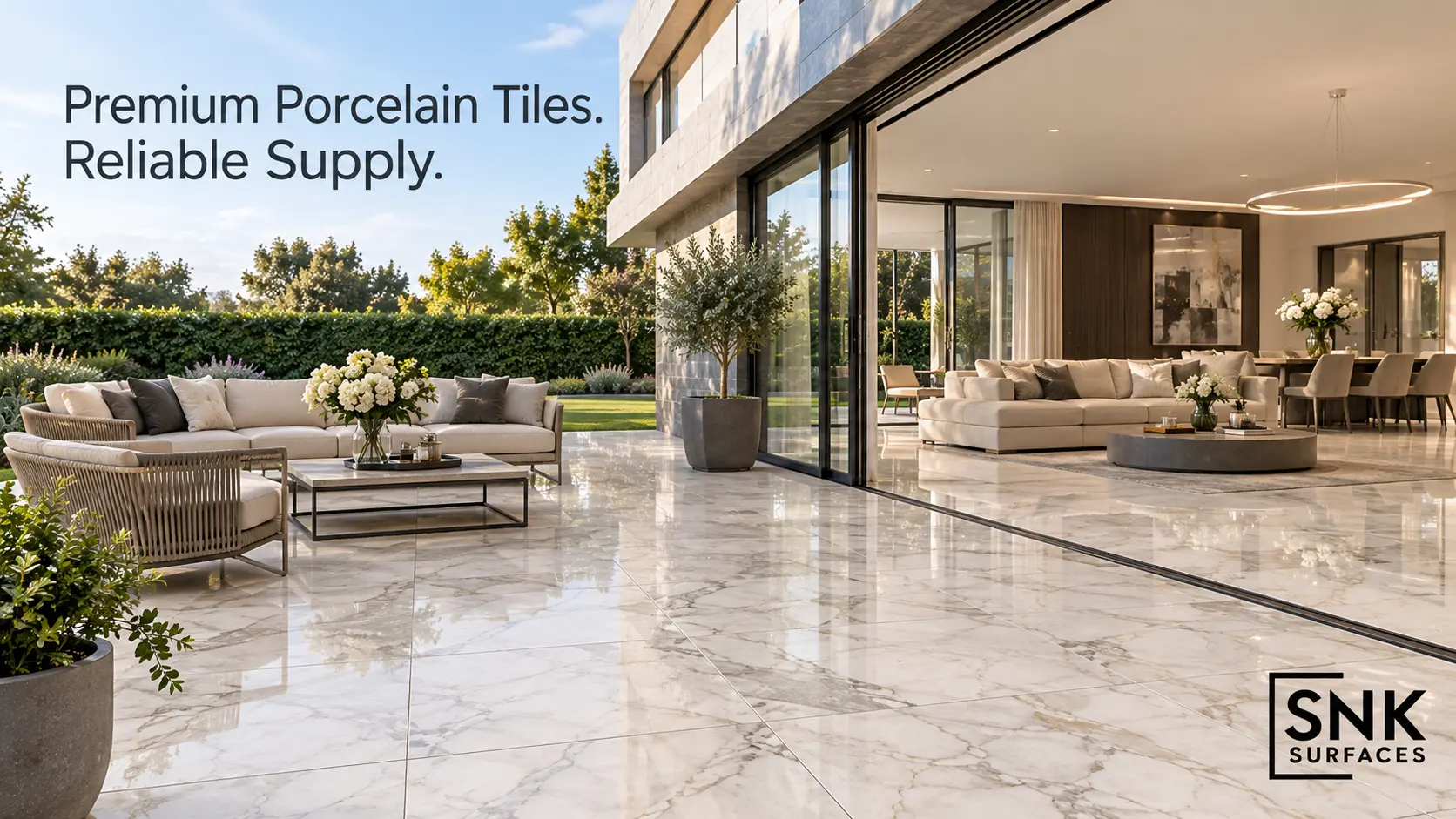
Choosing the Best Porcelain Tile Manufacturers means finding a production partner that can deliver consistent quality, maintain repeat-order availability, meet export requirements and support your business as it grows. A dependable manufacturer does more than sell tiles. It helps importers, contractors, builders and distributors manage costs, protect product standards and maintain a stable supply chain.
Explore the porcelain tile collections at SNK Surfaces to understand the product options available for residential, commercial and outdoor projects.
For international buyers, choosing the right supplier is an important business decision. A low initial quotation may look attractive, but inconsistent batches, delayed shipments and poor communication can create higher costs later.
A long-term partnership should offer predictable production, transparent pricing, reliable documentation and clear communication. These factors help businesses serve their customers without unnecessary supply interruptions.
Why Does Choosing the Right Porcelain Tile Manufacturer Matter?
A porcelain tile manufacturer affects more than the appearance of your products. It influences your inventory planning, project timelines, customer satisfaction and profit margins.
Importers and distributors often place repeat orders for the same colours, finishes and sizes. If the next shipment looks different from the previous one, customers may reject the material. Contractors may also face installation problems.
A dependable manufacturer helps reduce these risks through:
Consistent product specifications and quality checks.
Reliable production planning and delivery schedules.
Clear communication about stock and manufacturing capacity.
Proper export packaging and documentation.
Technical support and product information.
Flexible options for custom designs and private labels.
When comparing the Best Porcelain Tile Manufacturers, look beyond their product photographs and initial prices. Evaluate their ability to support your business over several purchasing cycles.
How to Identify a Reliable Porcelain Tile Manufacturer?
A Reliable porcelain tile manufacturer should provide evidence of its production capabilities, product quality, certifications and export experience.
Do not depend only on a company's website or sales presentation. Verify its claims before placing a large order.
Start with these important checks.
1. Verify the manufacturing facility
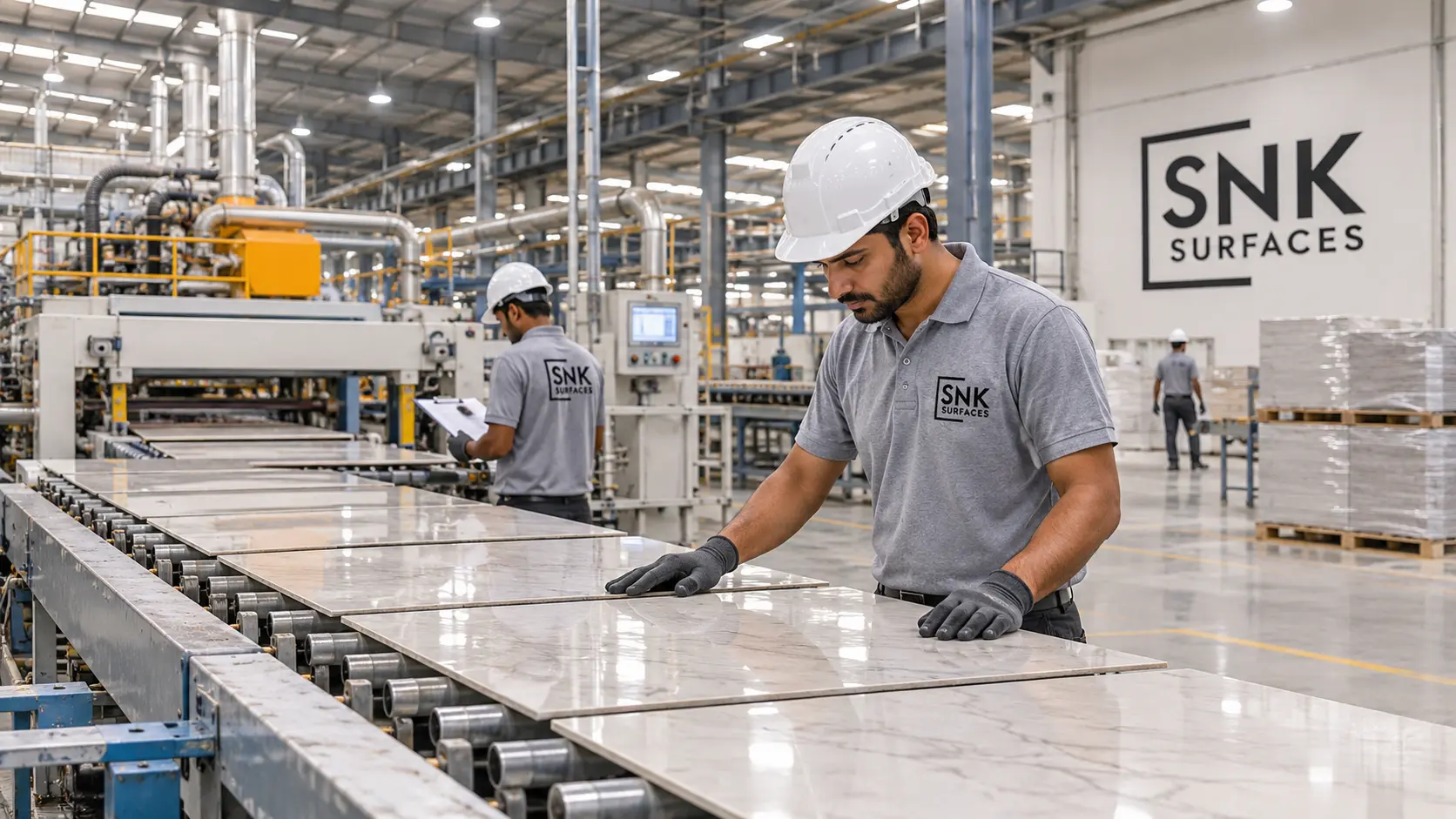
Ask whether the company owns its production facility or sources products from other factories. Request factory photographs, production videos or a live video inspection.
A genuine manufacturer should be able to explain its production process, available formats, surface finishes and quality control procedures.
2. Review its product range
Check whether the manufacturer produces the tile categories your customers need. These may include:
Polished and matt porcelain tiles.
Marble-look and stone-look tiles.
Large-format porcelain slabs.
Indoor floor and wall tiles.
Outdoor porcelain paving.
Special sizes and surface finishes.
3. Check its business experience
Ask about its experience supplying international buyers. Review its export markets, product documentation and ability to handle container shipments.
4. Request references and samples
Previous business relationships can help you understand how a supplier handles repeat orders and customer complaints. Ask for samples before approving a production run.
5. Evaluate communication
A reliable supplier should answer technical and commercial questions clearly. It should also communicate production delays, stock changes and shipping updates without waiting for repeated reminders.
Manufacturer vs Trading Company: Which Is Better?
A manufacturer and a trading company can both support international tile buyers. The right option depends on your order size, product requirements and sourcing priorities.
A manufacturer controls or manages the production process. A trading company purchases products from manufacturers and resells them to customers.
Here is a practical comparison.
Comparison factor | Manufacturer | Trading company |
Production control | Direct production oversight | Depends on factory partners |
Customisation | Often offers direct production options | Depends on factory relationships |
Pricing | Fewer intermediary costs may be involved | May include an additional margin |
Product variety | Depends on factory capabilities | Can source from multiple factories |
MOQ | May require larger orders | May offer more flexibility |
Quality management | Direct access to factory processes | Depends on supplier controls |
Repeat orders | Can plan production directly | Depends on factory availability |
When should you choose a manufacturer?
Choose a manufacturer when you need regular container orders, consistent product specifications, custom designs or direct production coordination.
When should you choose a trading company?
A trading company may be useful when you need products from several factories, smaller quantities or consolidated shipments.
Neither business model guarantees quality by itself. A trading company with strong factory relationships may provide better service than an inexperienced manufacturer.
For established importers and distributors, working directly with a capable manufacturer can improve communication and provide better visibility into production planning.
Why Are Production Capacity and Repeat-Order Availability Important?
Production capacity determines whether a manufacturer can meet your current and future requirements.
A supplier may handle one container successfully but struggle when your business needs several containers every month.
This is why buyers should evaluate manufacturing capacity before entering a long-term agreement.
Ask the manufacturer:
What is your monthly production capacity?
Which tile sizes and finishes can you produce regularly?
How much advance notice do you need for repeat orders?
Can you manage seasonal increases in demand?
Do you maintain finished stock for popular designs?
How do you handle production delays?
Also, distinguish between installed production capacity and actual available capacity. A factory may have large machinery but limited production slots because of existing orders.
A good manufacturer should explain realistic lead times and provide a production schedule.
How Can You Secure Repeat-Order Availability?
Use a documented purchasing plan.
Identify your regular product sizes, colours and finishes. Share expected quarterly or annual quantities with the manufacturer.
For important designs, discuss production reservations and stock planning. You can also agree on an advance ordering schedule to reduce the risk of shortages.
A strong Long-term tile supply partner should understand your sales patterns and help plan production around them.
How Do Manufacturers Maintain Consistent Quality, Shade and Batch Control?
Shade variation is one of the most important concerns for tile importers.
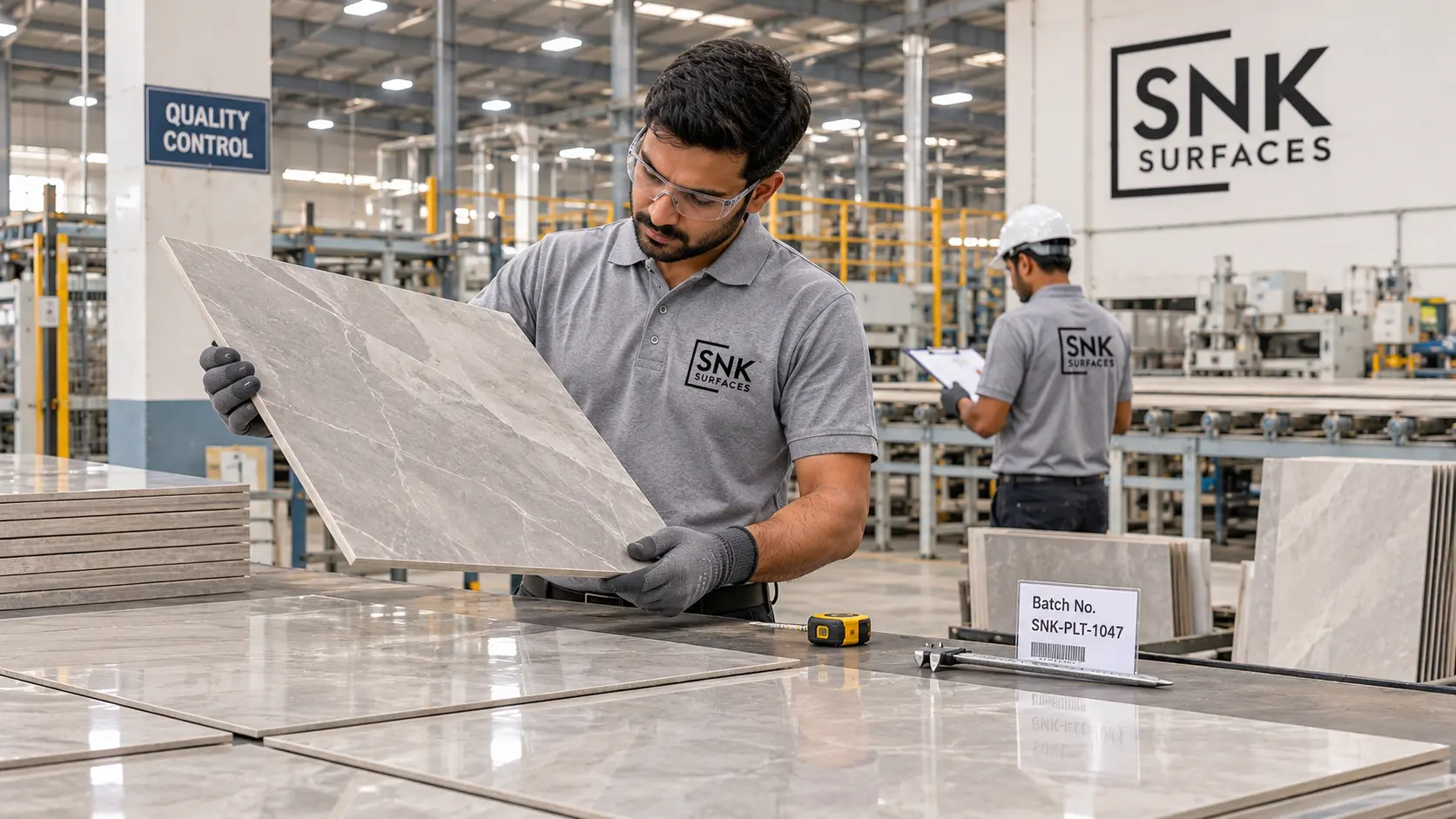
Porcelain tiles are manufactured using natural mineral-based raw materials, pigments, glazes and controlled production processes. Small production differences can affect the final appearance.
Manufacturers classify tiles using shade and calibre information. These details help buyers identify products that belong to compatible production batches.
Before placing a repeat order, confirm the following:
Shade classification and batch identification.
Tile dimensions and thickness.
Surface finish and texture.
Flatness and dimensional tolerances.
Edge quality and calibration.
Packaging and product labelling.
What Is Shade Variation in Porcelain Tiles?
Shade variation refers to differences in colour or appearance between tiles.
Some collections intentionally feature variation to create a natural stone or timber effect. Other collections aim for a more uniform appearance.
The important point is to understand the intended visual variation before approving a product.
Ask for photographs of the actual production batch. For large commercial projects, request a batch sample and confirm the acceptable variation in writing.
Why Is Calibre Control Important?
Calibre refers to the actual manufactured dimensions assigned to tiles within a specified size range.
Even when tiles share the same nominal size, their actual dimensions may differ within permitted manufacturing tolerances.
A manufacturer should explain its calibre classification and ensure that the supplied batch matches the approved specification.
This is particularly important for projects with narrow grout joints, large floor areas and detailed installation patterns.
Which Product Testing and International Certifications Should You Check?
Certifications and test reports help buyers verify whether a product or manufacturer meets relevant requirements.
However, different certificates serve different purposes. A management system certificate does not automatically prove the performance of every tile.
Ask for documents that relate to the actual product, manufacturing site and destination market.
Important standards and documents include:
ISO 13006: This international standard covers ceramic tile definitions, classifications, characteristics and marking requirements.
ISO 10545: This series provides test methods for different ceramic tile properties.
ISO 9001: This standard relates to quality management systems. It helps assess whether a company follows documented quality management processes.
EN 14411: This European standard covers ceramic tile definitions, classification, characteristics, assessment and marking.
Depending on your market and product, additional compliance documentation may be necessary.
Which Technical Tests Should Buyers Review?
Request relevant test reports for:
Water absorption.
Breaking strength and modulus of rupture.
Dimensional accuracy and surface quality.
Abrasion resistance, where applicable.
Chemical resistance.
Stain resistance.
Frost resistance for suitable outdoor applications.
Slip resistance for areas where pedestrian safety matters.
For example, a poolside paving product requires different performance considerations from a polished indoor living room tile.
The test report should identify the tested product, relevant characteristics, test method, laboratory and date.
You can consult the official ISO 13006 standard to understand the classification and marking framework for ceramic tiles.
Never assume that one certificate covers every product, finish or destination market. Check the scope and validity of the actual documents.
How Should You Compare MOQ, Pricing and Long-Term Supply Agreements?
Minimum Order Quantity (MOQ) is the smallest quantity a manufacturer accepts for a particular order.
It may vary according to tile size, colour, finish, production requirements and packaging.
A supplier may offer a lower MOQ for ready-stock products but require larger quantities for customised production.
When comparing quotations, consider more than the price per square metre.
Review these cost factors:
Ex-factory or FOB price.
Freight and insurance.
Port handling and documentation.
Packaging requirements.
Customisation charges.
Inspection costs.
Import duties and local taxes.
Currency and payment terms.
A low product price does not always mean a lower total landed cost.
What Should a Long-Term Supply Agreement Include?
A written agreement protects both the buyer and manufacturer.
It should clearly explain:
Product specifications, including size, thickness, finish and shade.
Approved samples and technical requirements.
MOQ and pricing conditions.
Payment schedule and currency.
Production and delivery timelines.
Inspection and acceptance procedures.
Packaging and shipping responsibilities.
Product complaint and replacement procedures.
Custom design ownership and confidentiality, where relevant.
Conditions for price reviews and contract renewal.
For regular purchasing, consider quarterly pricing reviews or agreed pricing periods.
This creates more predictable purchasing costs without forcing either party to accept unrealistic long-term prices.
What Should Importers Look for in a Porcelain Tile Supplier?
A Porcelain tile supplier for importers should understand international procurement, shipping documentation, product compliance and the practical challenges of selling tiles in another country.
Export experience is particularly important when your business depends on container shipments.
A supplier should be familiar with:
Commercial invoices and packing lists.
Shipping instructions and bill of lading requirements.
Certificate of origin, where required.
Product declarations and technical documents.
Destination-market compliance.
Export packaging and container loading.
Communication with freight forwarders.
Ask which international markets the supplier currently serves. Request examples of its export documentation, with confidential commercial information removed.
Also, discuss delivery terms clearly. Agree on the Incoterm, named place or port, and the responsibilities of both parties.
Why Is Export Packaging Important?
Porcelain tiles are heavy and can be damaged during handling or transportation if they are not packed properly.
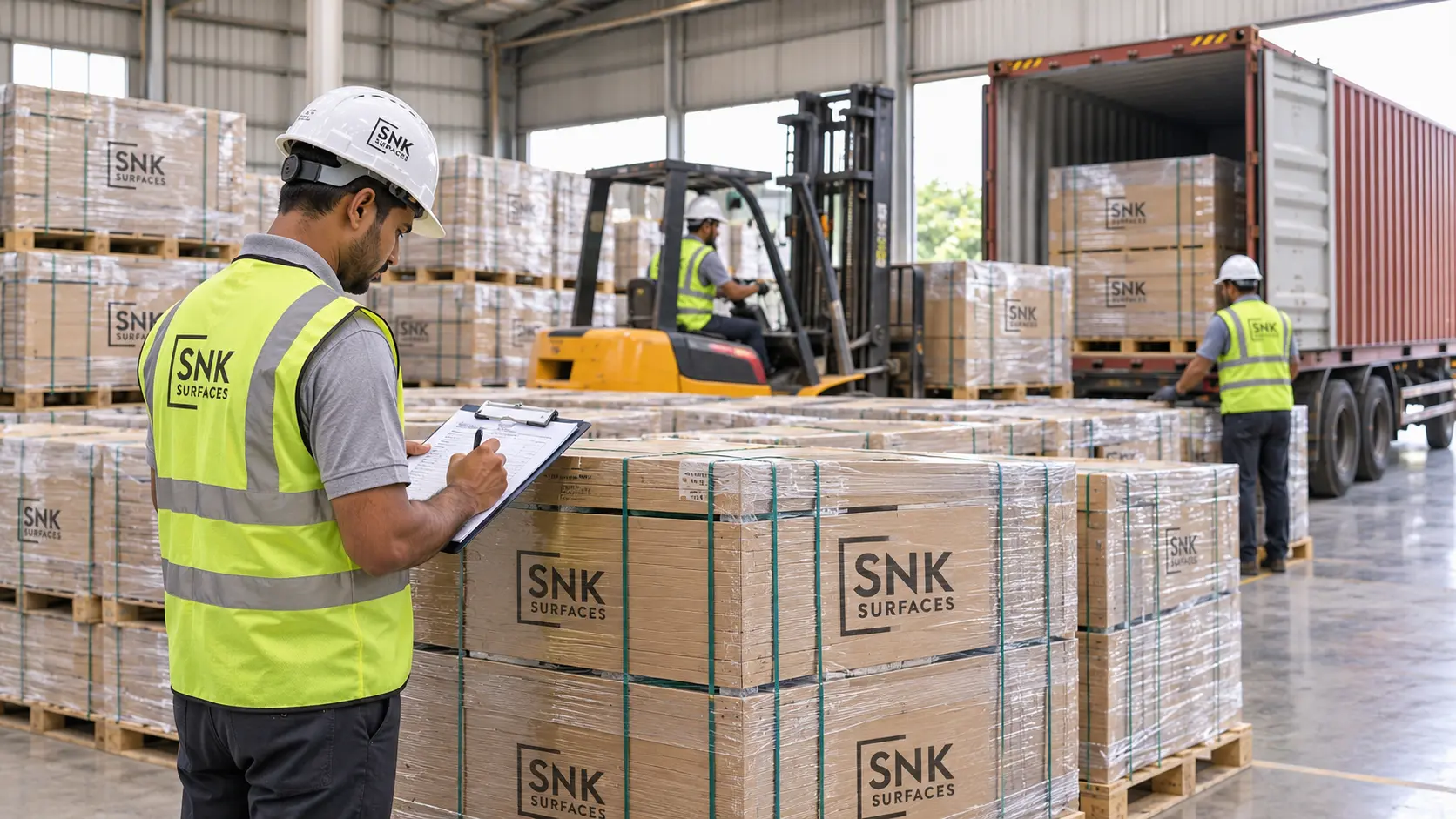
Suitable packaging may include:
Strong cartons with clear product labels.
Protective corner and edge arrangements.
Pallets suitable for the shipment.
Proper strapping and wrapping.
Moisture protection where required.
Accurate container loading plans.
For wooden pallets and packaging materials, check the applicable destination-country requirements, including ISPM 15 where relevant.
A good export partner should also provide loading photographs and shipment updates.
Why Should You Consider a Bulk Porcelain Tile Supplier?
A Bulk porcelain tile supplier should have the ability to handle larger quantities without compromising the agreed product specifications.
This is especially important for distributors, construction companies, commercial developers and businesses with recurring projects.
Before approving large orders, confirm that the manufacturer can supply the required quantity within your delivery schedule.
Consider these questions:
Can the supplier produce several designs in one order?
Can it manage mixed-container shipments?
Are the products available in repeatable specifications?
Can it reserve production capacity?
Does it have a reliable packing and dispatch process?
Can it provide documentation for every shipment?
For large projects, coordinate deliveries with construction schedules. Early planning can reduce storage costs and help avoid material shortages.
How Important Are Indoor and Outdoor Porcelain Tile Collections?
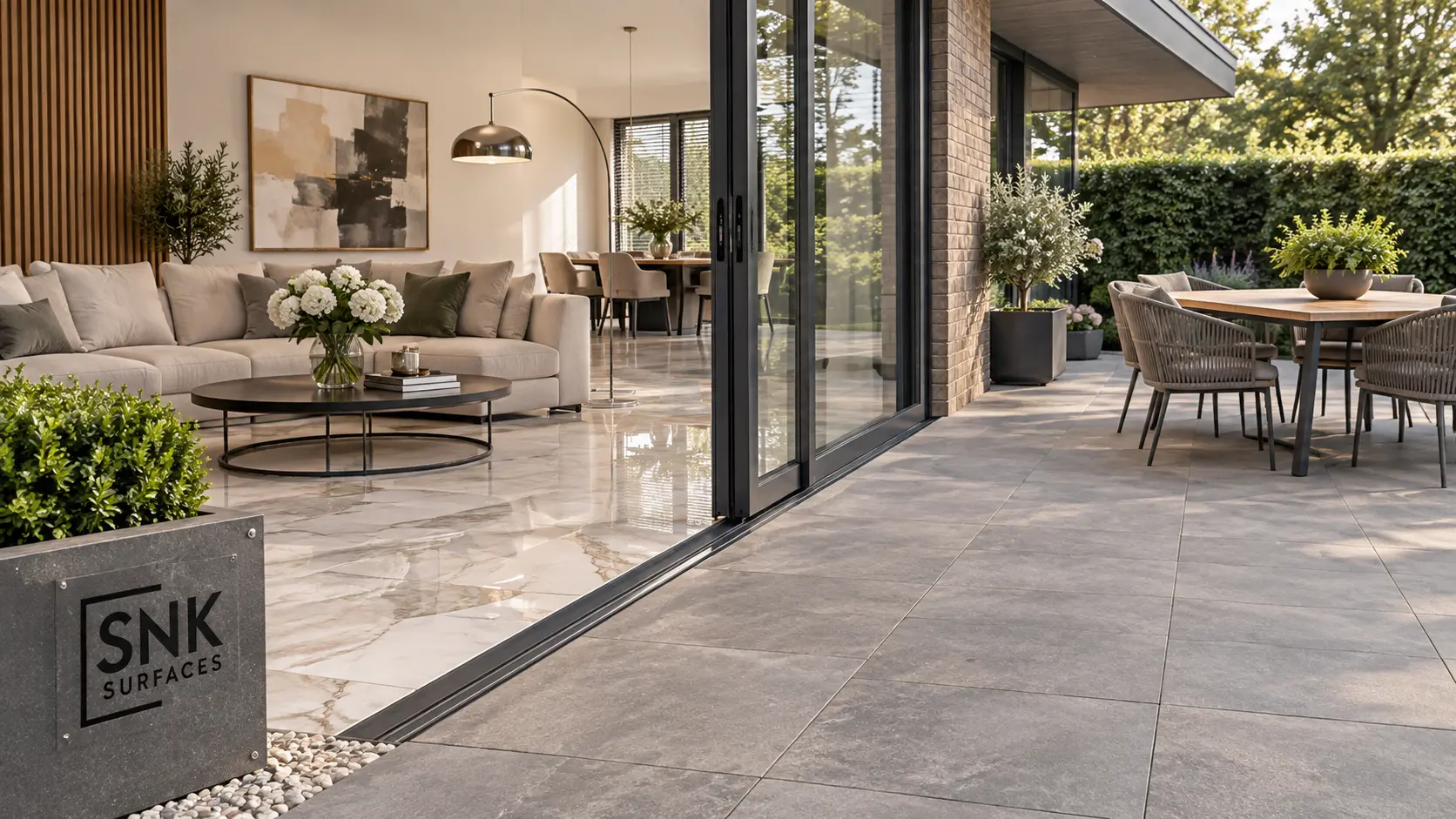
A manufacturer with a suitable indoor and outdoor product range can simplify procurement for businesses serving different project types.
However, indoor and outdoor tiles should not be selected using appearance alone. Their technical requirements and intended applications can differ.
What Should You Check When Buying Indoor Porcelain Tiles?
Indoor Porcelain Tiles are designed for interior floor and wall applications.
Popular choices include marble-look, concrete-look, stone-look and other decorative finishes.
Buyers should evaluate:
Surface finish and appearance.
Tile thickness and dimensions.
Water absorption.
Abrasion and stain resistance.
Cleaning and maintenance requirements.
Suitability for the intended floor or wall application.
Explore the Indoor Porcelain Tiles Collection at SNK Surfaces for different interior design options.
What Should You Check When Buying Outdoor Porcelain Tiles?
Outdoor Porcelain Tiles are designed for external applications such as patios, terraces, garden areas and selected commercial landscapes.
For outdoor paving, check:
Suitable thickness for the installation system.
Slip resistance under expected conditions.
Frost resistance where relevant.
Breaking strength.
Surface texture.
Installation and drainage requirements.
For example, 20 mm porcelain paving is used in certain outdoor installation systems. However, the correct installation method depends on the substrate, loading conditions and local building requirements.
Explore Outdoor Porcelain Tiles from SNK Surfaces for external landscaping and paving applications.
Can a Manufacturer Offer Private-Label and Custom Manufacturing?
Yes. Many manufacturers support custom production for businesses that want to develop their own product collections.
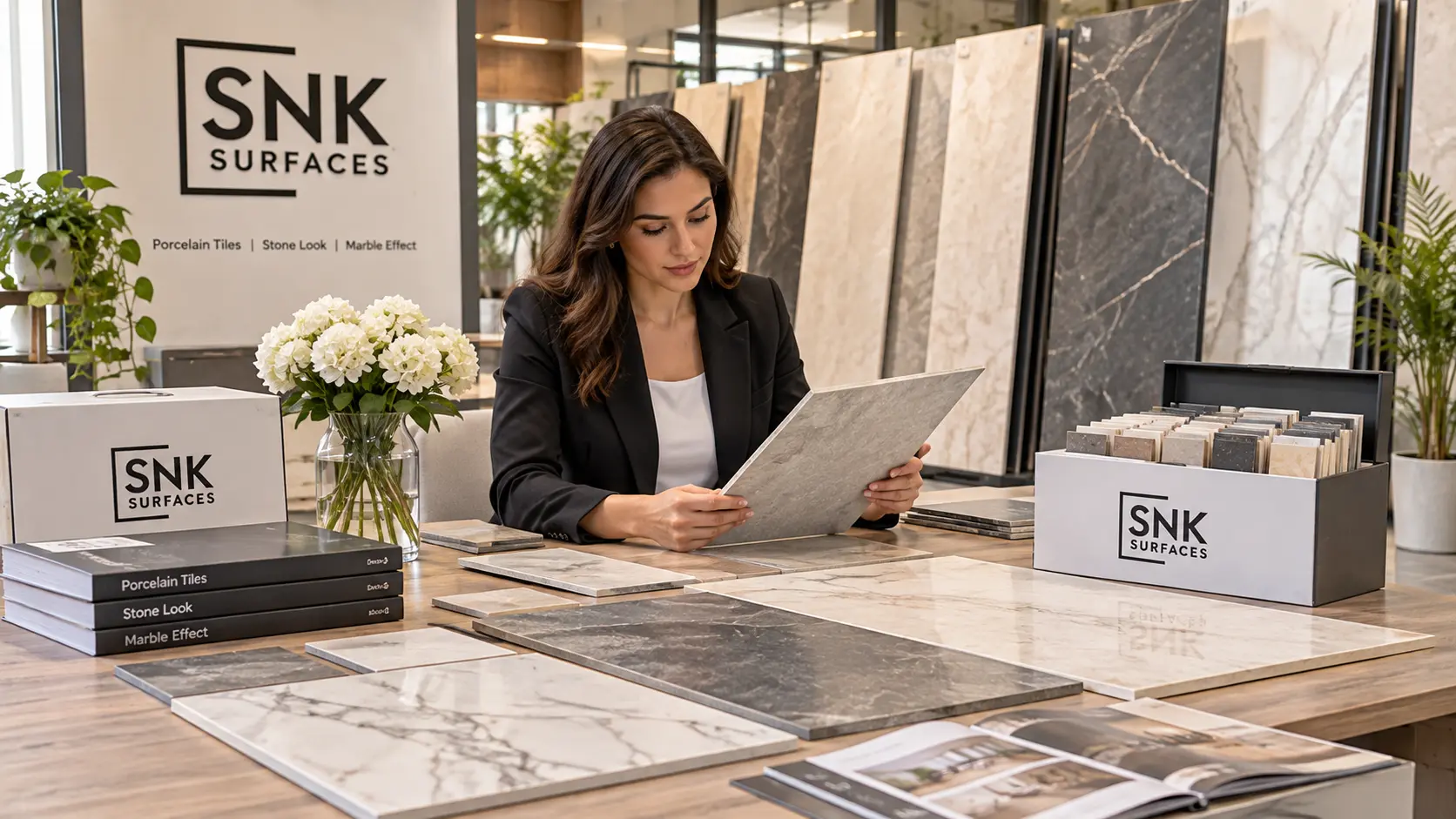
Private-label manufacturing allows an importer or distributor to sell products under its own brand, subject to agreed manufacturing and labelling arrangements.
Custom manufacturing may include:
Special tile sizes.
Custom colours and patterns.
Different surface finishes.
Exclusive product designs.
Branded cartons and packaging.
Product labels and barcodes.
Custom collections for specific markets.
Before approving custom production, confirm the development process, minimum quantities, sample approval stages and production lead times.
Discuss who owns the artwork, design files and any exclusive patterns.
Also, clarify whether the same design can be reproduced in future orders. This is essential when building a private-label collection.
What Questions Should You Ask Before Signing a Supply Agreement?
A structured supplier evaluation helps identify potential problems before they affect your business.
Use the following questions during your initial discussions.
Manufacturing and capacity
Do you manufacture the products directly?
Where is your production facility located?
What is your available production capacity?
Can you support regular repeat orders?
Quality and compliance
Which quality standards do you follow?
Can you provide product-specific test reports?
How do you manage shade and calibre differences?
What inspection process do you use?
Commercial terms
What is your MOQ for standard and custom products?
How long is the quotation valid?
What payment terms can you offer?
How do you manage price changes?
Export and delivery
Which countries do you currently supply?
What export documents can you provide?
How do you protect tiles during shipping?
What are your usual production and dispatch timelines?
After-sales support
What happens if products arrive damaged?
How do you handle quality complaints?
Can you supply replacement materials?
Who will manage communication after shipment?
The answers should be documented rather than left as informal promises.
How to Request Samples and a Manufacturer Quotation
Requesting samples is one of the most useful steps before selecting a supplier.
A sample allows you to assess colour, surface finish, texture and overall appearance. It also gives your team an opportunity to compare products from different manufacturers.
Follow this process to request a quotation efficiently.
Step 1: Share your product requirements
Mention the tile type, size, thickness, colour, finish and intended application.
Step 2: Specify your quantity
Share the estimated square metres or container quantity. Mention whether you need a one-time order or regular monthly or quarterly supply.
Step 3: Request product samples
Ask for physical samples of the selected designs. Where possible, request photographs and videos of the actual production batch.
Step 4: Ask for technical documents
Request relevant specifications, test reports and market-specific compliance documents.
Step 5: Request a detailed quotation
The quotation should mention:
Product name and reference.
Dimensions and thickness.
Finish and shade.
Price per square metre.
MOQ.
Packaging details.
Production lead time.
Delivery terms.
Payment conditions.
Step 6: Confirm the sample before production
Review and approve the sample in writing. Keep a record of the approved reference and specifications.
Step 7: Agree on inspection and dispatch
Confirm how the goods will be inspected and what information will be shared before shipment.
A complete quotation makes it easier to compare suppliers on equal terms and avoid unexpected charges.
Why Choose SNK Surfaces as Your Porcelain Tile Supply Partner?
SNK Surfaces is an Indian natural stone and porcelain tile manufacturer and exporter serving international buyers, distributors, architects, builders and project developers.
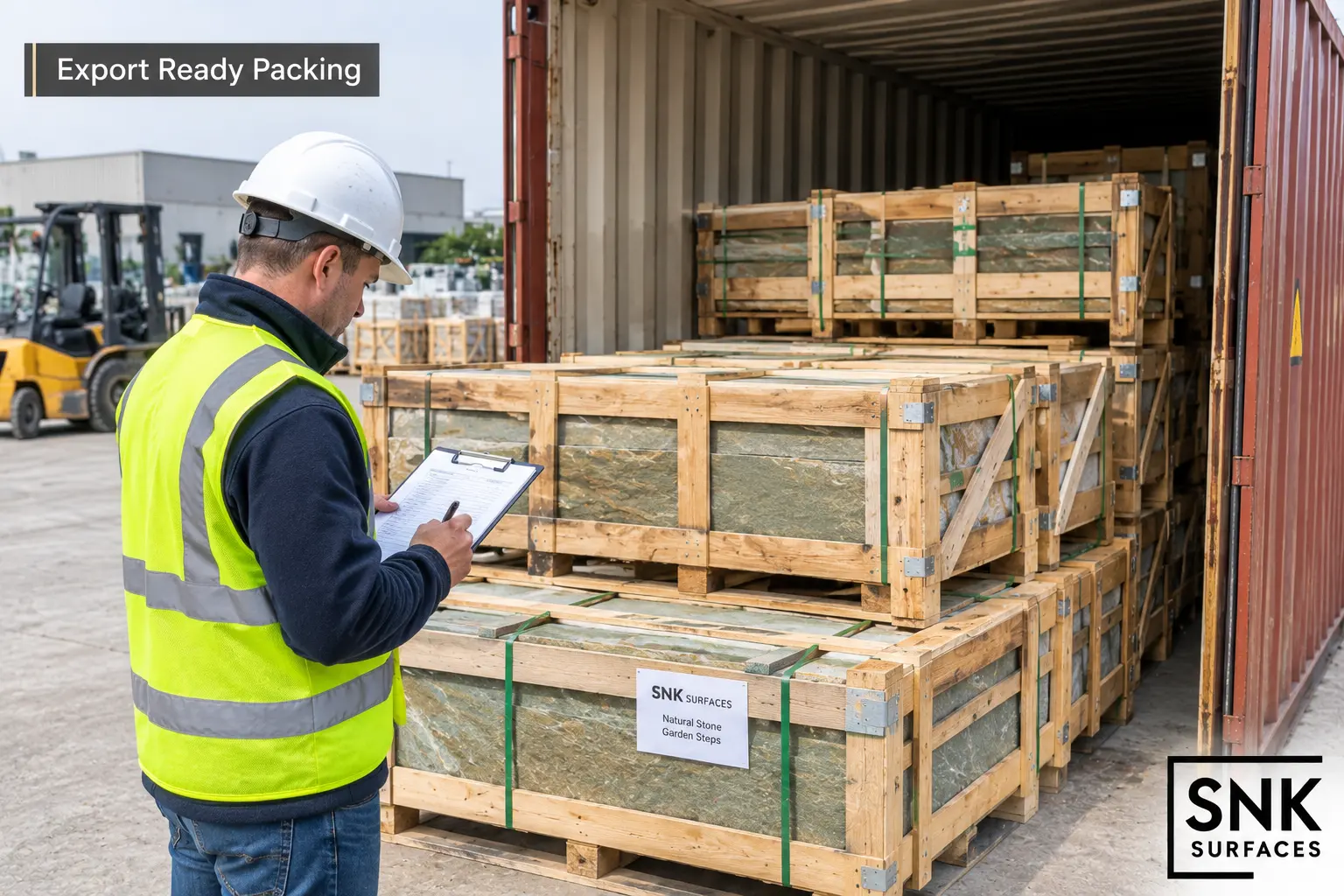
The company operates its porcelain tile manufacturing facility in Morbi, Gujarat, and supplies products to international markets.
For businesses looking for a Porcelain tile manufacturer in India, SNK Surfaces offers product selection, manufacturing coordination, sampling and export support.
Here are some reasons to consider SNK Surfaces for your sourcing requirements.
Manufacturing and export experience
SNK Surfaces has been in the surface materials business since 1991. Its operations include porcelain tile manufacturing and natural stone sourcing.
Indoor and outdoor product options
The company supplies indoor porcelain tiles, outdoor porcelain paving and large-format tile solutions for different project requirements.
Custom manufacturing
Buyers can discuss custom sizes, designs, surface finishes and private-label packaging according to their business requirements.
International compliance documentation
SNK Surfaces lists ISO 9001:2015, UKCA and CE-related compliance credentials on its website. Buyers can request current certificates and product-specific documentation for verification.
Export and logistics support
The company supports container shipments, product documentation, packaging and international delivery coordination.
Samples and product selection
Importers can discuss product samples and review available collections before confirming their orders.
For distributors and commercial buyers, these capabilities provide a starting point for evaluating a potential long-term manufacturing relationship.
The final decision should always be based on your product requirements, sample approval, verified documentation and agreed commercial terms.
Conclusion: Build a Reliable Porcelain Tile Supply Partnership
Choosing the right porcelain tile manufacturer requires more than comparing prices and product designs. You need a supplier that can maintain consistent quality, manage production capacity, provide relevant certifications and deliver orders according to agreed schedules.
Before entering a long-term agreement, verify the manufacturing facility, inspect samples, review technical documents and confirm the commercial terms in writing.
For importers, contractors, distributors and project developers, a dependable manufacturing relationship can improve purchasing efficiency and support business growth.
SNK Surfaces offers porcelain tile manufacturing, custom product options, samples and international export support from India. Explore the SNK Surfaces porcelain tile collection or contact the team to discuss your next project, container requirement or long-term supply partnership.
Frequently Asked Questions
1. How do I choose the best porcelain tile manufacturer?
Choose a manufacturer based on production capacity, product quality, technical testing, certifications, repeat-order availability, export experience and communication. Always request samples and verify documentation before placing a large order.
2. Is it better to buy porcelain tiles directly from a manufacturer?
Buying directly from a manufacturer can provide better production visibility, direct communication and more control over customisation. However, a reputable trading company may offer greater product variety and smaller order quantities. Your purchasing needs should determine the choice.
3. What certifications should a porcelain tile manufacturer have?
Look for relevant quality management and product compliance documents. ISO 9001:2015, ISO 13006-related product classification and applicable EN 14411 documentation may be relevant. Also request product-specific test reports and verify their scope.
4. How can importers ensure consistent porcelain tile quality across repeat orders?
Ask the manufacturer to document the approved sample, product specifications, shade, calibre and finish. Request batch photographs and inspection records before dispatch. Discuss repeat-production planning for popular designs.
5. What is the MOQ for bulk porcelain tile orders?
MOQ depends on the manufacturer, product size, finish, colour, packaging and whether the product is ready stock or custom manufactured. Request a product-specific quotation rather than assuming that one MOQ applies to every collection.
6. Why should international buyers consider a porcelain tile manufacturer in India?
India offers established tile manufacturing centres, including Morbi in Gujarat. International buyers can evaluate Indian manufacturers for product variety, custom manufacturing, container supply and export services. Always verify production capability, samples, compliance documents and landed costs before choosing a supplier.
7. How can I avoid quality issues when importing porcelain tiles from India?
Choose an experienced manufacturer with established quality control procedures. Always request product samples, technical specifications and relevant test reports before placing bulk orders. Check tile dimensions, thickness, finish and packaging standards to ensure the products meet your market requirements.
8. What should I do if my current porcelain tile supplier cannot maintain consistent quality and timely deliveries?
Consider switching to a manufacturer with reliable production capacity, quality checks and export experience. Evaluate production timelines, product consistency and shipping arrangements before placing an order. SNK Surfaces offers porcelain tile manufacturing and export solutions for international importers and distributors.
9. How can I find a reliable porcelain tile manufacturer that meets UK and European quality requirements?
Look for manufacturers with relevant product certifications, technical documentation and experience supplying international markets. Verify product test reports and applicable compliance requirements before ordering. SNK Surfaces manufactures porcelain tiles in Morbi, India, and supports international buyers with product specifications and export documentation.
10. What should I check before choosing a porcelain tile supplier for a long-term import business?
Check the manufacturer's production capacity, product quality, pricing, customisation options, minimum order quantities and export experience. Also discuss packaging, delivery schedules and repeat-order requirements. A supplier with consistent manufacturing capabilities can help establish a dependable long-term business relationship.
11. How can I reduce porcelain tile import costs without compromising product quality?
Source directly from manufacturers, optimise container loading and select suitable tile sizes and thicknesses for your requirements. Compare quotations based on product quality, packaging and shipping costs rather than unit price alone. Planning bulk orders in advance can also help improve sourcing efficiency.
12. How can I find a manufacturer offering customised porcelain tiles with low minimum order quantities?
Search for manufacturers offering flexible production options, customised sizes, finishes, thicknesses and designs. Discuss your required specifications and order volume directly with their sales team. SNK Surfaces provides customised porcelain tile solutions, with order quantities and feasibility discussed according to individual requirements.
13. What is the best way to find a dependable porcelain tile supplier for regular container shipments?
Choose a manufacturer with consistent production capacity, quality control, export-standard packaging and experience handling international shipments. Confirm production lead times, container loading capacity and export documentation before placing repeat orders. SNK Surfaces manufactures and exports porcelain tiles from Morbi, Gujarat, India, for international buyers.
Keep reading
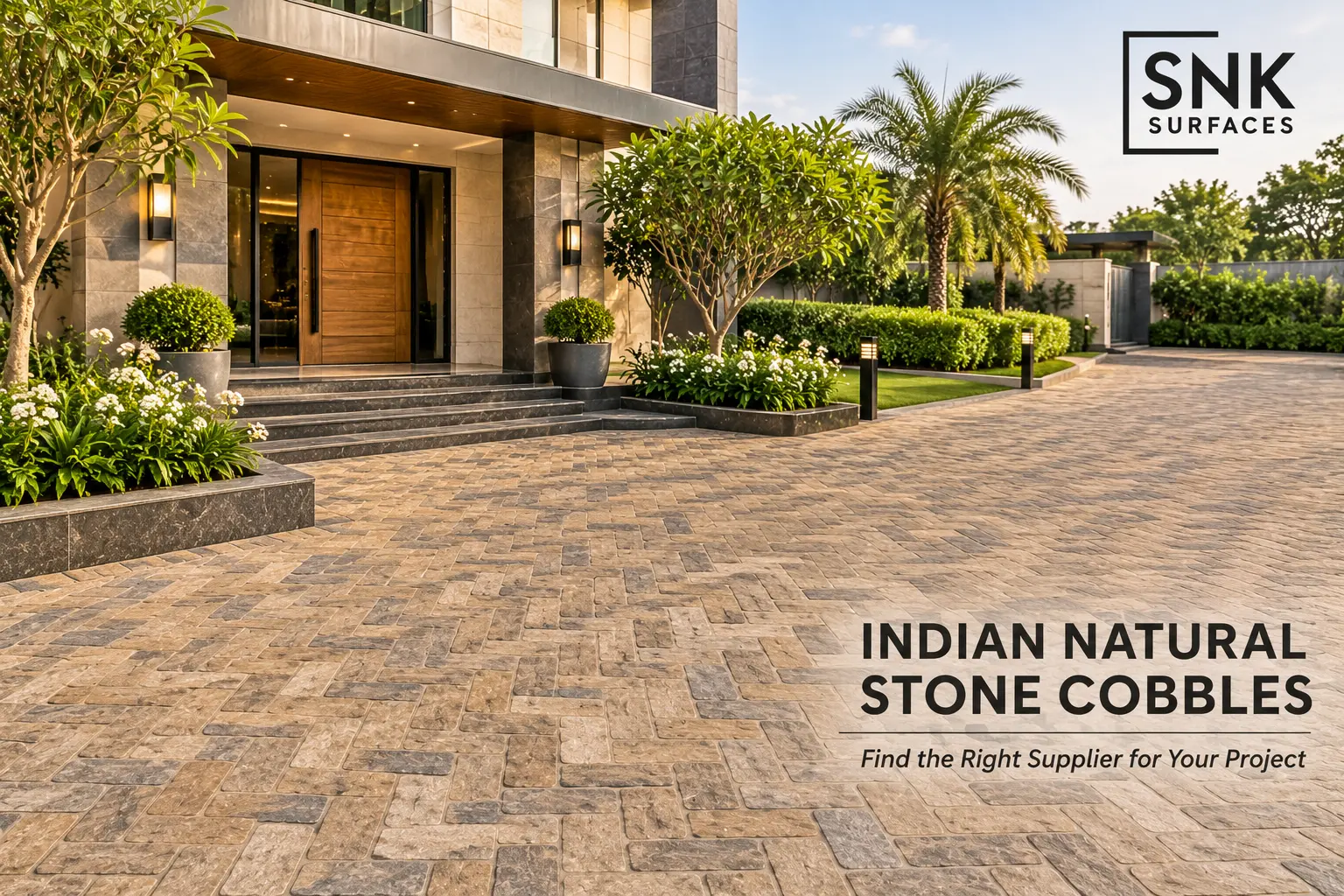
Indian Natural Stone Cobbles: Find the Right Supplier for Your Project
Discover how to choose the right Indian natural stone cobbles for driveways, patios and landscaping projects. Explore sandstone and granite cobbles, popular sizes, finishes, laying patterns, quality checks and export options. Learn what to look for in a reliable supplier and explore the natural stone cobbles collection from SNK Surfaces for your residential or commercial project.
 Read more
What Are the Best Tiles and Natural Stones for Different Commercial Spaces?
Discover the best tiles and natural stones for commercial buildings, including hotels, offices, shopping malls, hospitals, restaurants and outdoor spaces. Compare porcelain, vitrified tiles, granite, marble and sandstone based on durability, slip resistance, maintenance and performance. Explore premium commercial tile and natural stone solutions from SNK Surfaces for your next project.
 Read more
Best Paving Slabs for Every Garden: Low-Maintenance, Non-Slip & Pet-Friendly Options
Choosing the right Paving Slabs can make a big difference to your garden’s appearance, safety and maintenance needs. Every garden has different requirements. Sunlight, rain, shade, pets and daily use all affect which paving material will work best. Some homeowners want a patio that needs very little cleaning. Others need a non-slip surface for wet weather or durable paving that is comfortable for dogs. Porcelain…
 Read more
Next stepReady to plan your next paving project?
Tell us your product, size and quantity, and our team will come back with a quote and samples.
Get a quote →