

Indian Natural Stone Cobbles: Find the Right Supplier for Your Project
17 min read
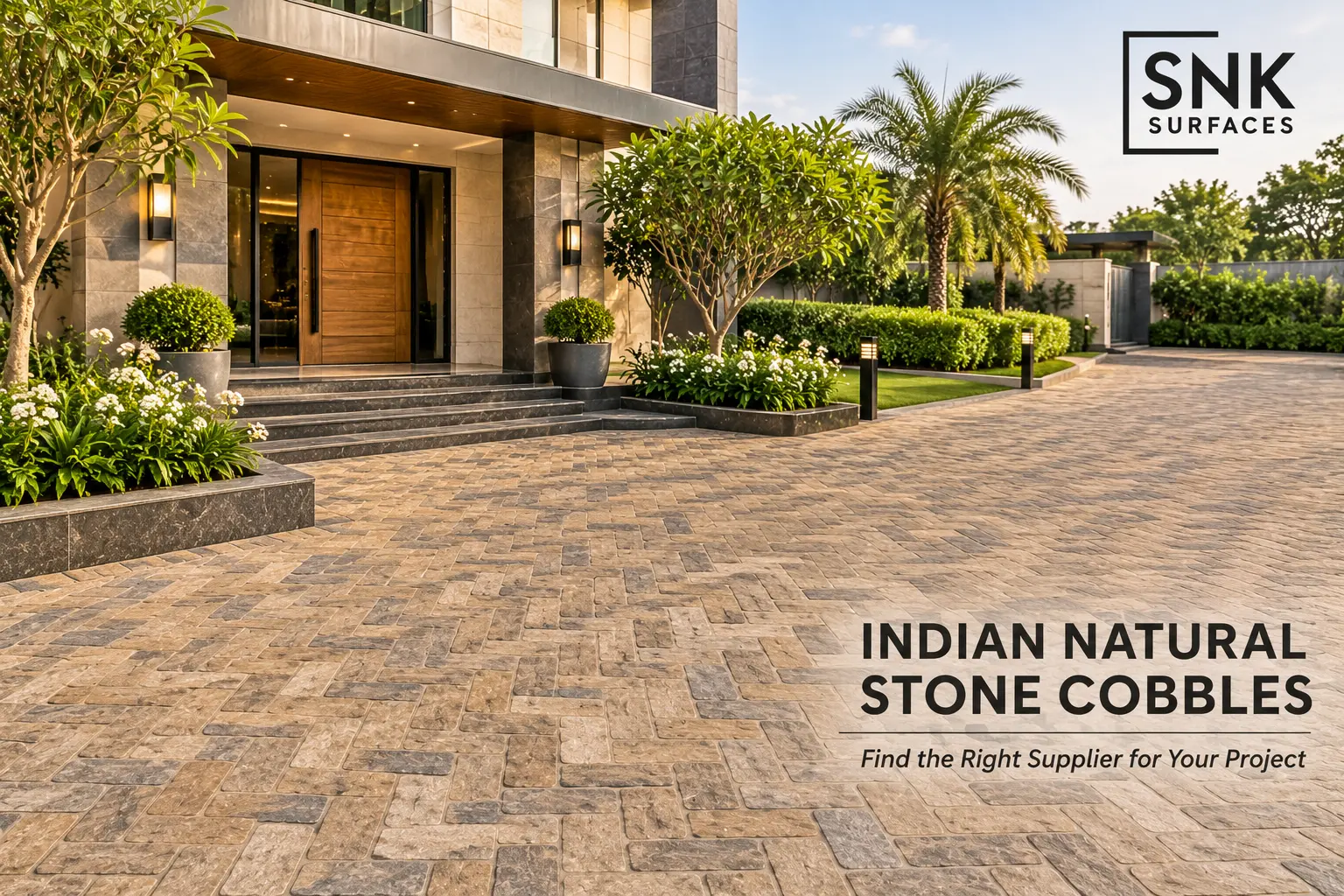
Why Choose Indian Natural Stone Cobbles for Outdoor Paving?
Indian natural stone cobbles offer a durable and attractive solution for driveways, patios, pathways and commercial landscapes. Choosing the right stone, thickness, finish and supplier is essential for long-term performance. SNK Surfaces supplies Indian sandstone and granite cobbles in different sizes and finishes for residential and commercial projects worldwide.
Natural stone paving continues to attract architects, contractors, builders and landscape designers. It combines natural colours with a distinctive surface texture. It also suits traditional and contemporary outdoor designs.
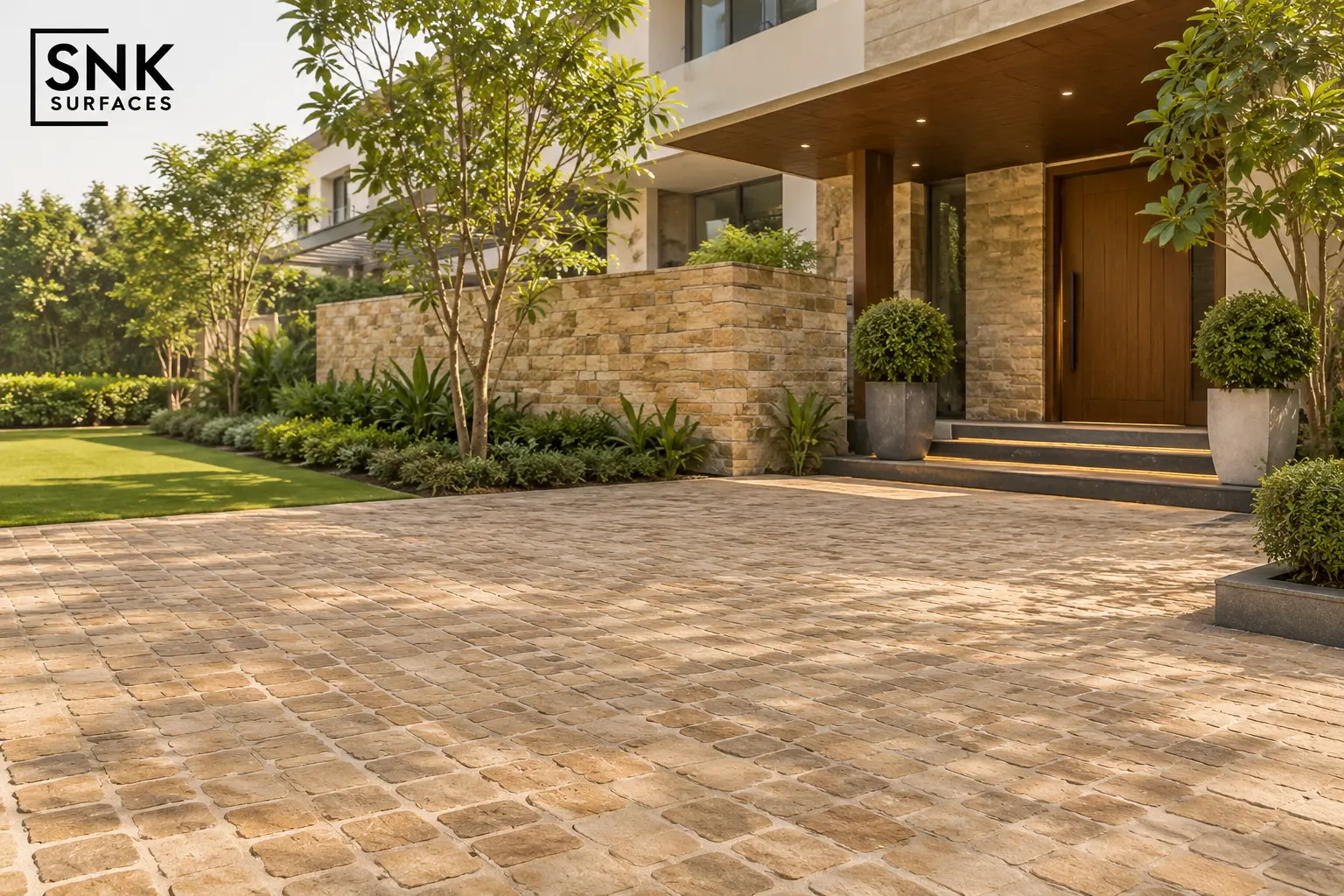
India is an important sourcing destination for natural stone products. Buyers can explore different sandstone colours, granite options varieties. They can also request different dimensions and surface finishes to match project requirements.
However, selecting a supplier involves more than comparing product prices. Buyers must consider stone quality, dimensional accuracy, water absorption, packaging, export experience and installation requirements.
Whether you are developing a private driveway, a hotel courtyard or a large commercial landscape, the right Natural Stone Cobbles Supplier can help you source suitable materials.
SNK Surfaces offers a range of natural stone cobbles and setts for international buyers, contractors and landscaping professionals.
What Are Natural Stone Cobbles and Where Are They Used?
Natural stone cobbles are small paving blocks cut from natural rock. They are commonly used for outdoor surfaces where appearance, strength and weather resistance matter.
They can create traditional streetscapes, modern driveways and decorative garden features.
Understanding Natural Stone Cobbles, Setts and Paving Stones
Cobbles and setts are often used interchangeably in the natural stone trade. However, traditional cobbles can have irregular or rounded shapes, while setts generally have more defined faces and dimensions.
Paving slabs are larger and flatter. They usually cover more surface area with fewer individual pieces.
The right product depends on the design, installation method and expected traffic.
Key Benefits of Using Natural Cobblestones for Landscaping Projects
Natural cobblestones for landscaping projects offer several practical and visual benefits.
Natural colour variations create individual patterns.
Textured surfaces can provide useful grip when properly selected.
Different stone types suit different architectural styles.
Individual units can be replaced when damaged.
Multiple laying patterns offer design flexibility.
Natural stone can complement gardens, buildings and outdoor features.
Proper installation remains essential. Even good-quality stone can perform poorly on an unsuitable base.
Why Source Natural Stone Cobbles from India?
India offers a wide selection of natural stone materials. Its stone industry supplies sandstone, granite, and other products to domestic and international markets.
Buyers can explore different colours, finishes and manufacturing specifications. Indian suppliers can also discuss customised dimensions and container-based export orders.
Working with an experienced Indian cobblestone manufacturer can make it easier to coordinate product specifications, production and international shipping.
Sandstone vs Granite Cobbles: Which Stone Is Best for Your Project?
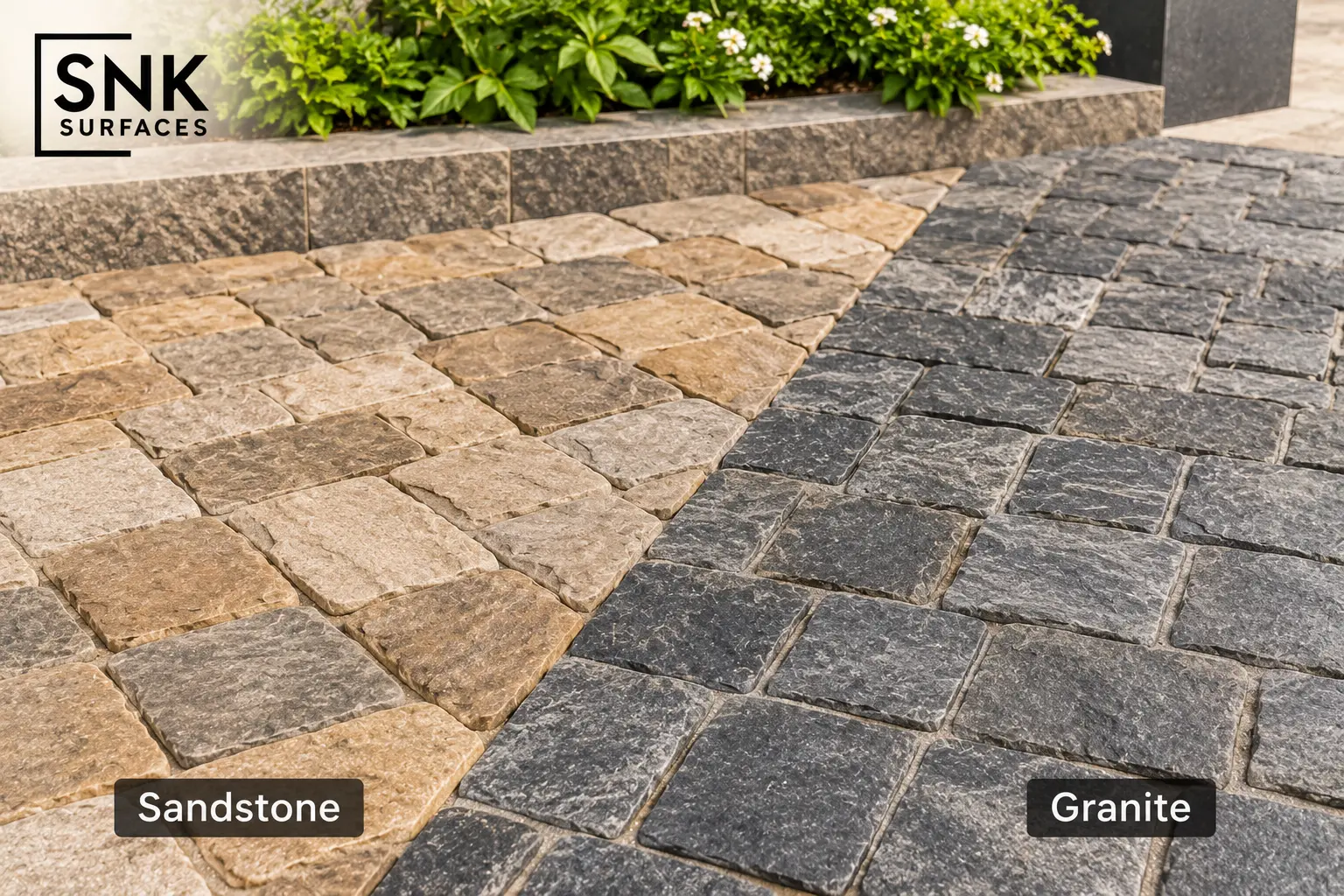
Sandstone and granite each offer different characteristics. The best choice depends on traffic, climate, appearance, maintenance and budget.
Sandstone Cobbles: Natural Colours and Timeless Outdoor Appeal
Sandstone is a popular choice for outdoor paving. It is available in warm shades such as beige, buff, brown, red, pink and grey.
Its natural texture works well in gardens, courtyards and residential driveways.
A reliable Sandstone cobbles exporter should provide information about the stone's physical properties, finish and intended application.
SNK Surfaces offers sandstone cobble options such as Mint, Modak, Autumn Brown, Teakwood and Two Tone. These varieties give designers several colour choices.
Granite Cobbles: Strength and Durability for Heavy-Traffic Areas
Granite is an igneous rock known for its hard structure and resistance to wear.
It is commonly considered for:
Commercial driveways.
Vehicle access routes.
Public spaces.
Pedestrian areas.
Heavy-use outdoor paving.
A professional Granite cobbles supplier should provide suitable technical information, including compressive strength, water absorption and slip-resistance results where required.
Granite can also create a strong visual contrast with lighter paving materials.
Sandstone vs Granite : Key Differences Compared
Feature | Sandstone | Granite |
|---|---|---|
Appearance | Warm, varied colours | Strong mineral patterns |
Texture | Natural and textured | Varies by finish |
Common uses | Patios and driveways | Heavy-use paving |
Maintenance | Depends on variety and finish | Generally manageable |
Selection priority | Colour and performance | Strength and wear |
Always compare actual test results rather than assuming every stone within a geological category performs identically.
How to Choose the Right Natural Stone Based on Climate, Traffic and Budget?
Consider these factors before purchasing:
Traffic: Identify whether the surface will support pedestrians, cars or commercial vehicles.
Climate: Consider rainfall, frost, temperature changes and local weather exposure.
Water absorption: Request product-specific test results.
Surface finish: Select a finish suitable for wet and dry conditions.
Budget: Compare material, transport, installation and maintenance costs.
Availability: Confirm that the supplier can maintain the required product specifications across the order.
Natural Stone Cobbles Sizes, Thicknesses and Finishes Explained
Size and thickness affect the appearance, installation and structural performance of cobblestone paving.
Buyers should finalise these specifications before requesting quotations.
Popular Cobblestone Sizes for Residential and Commercial Projects
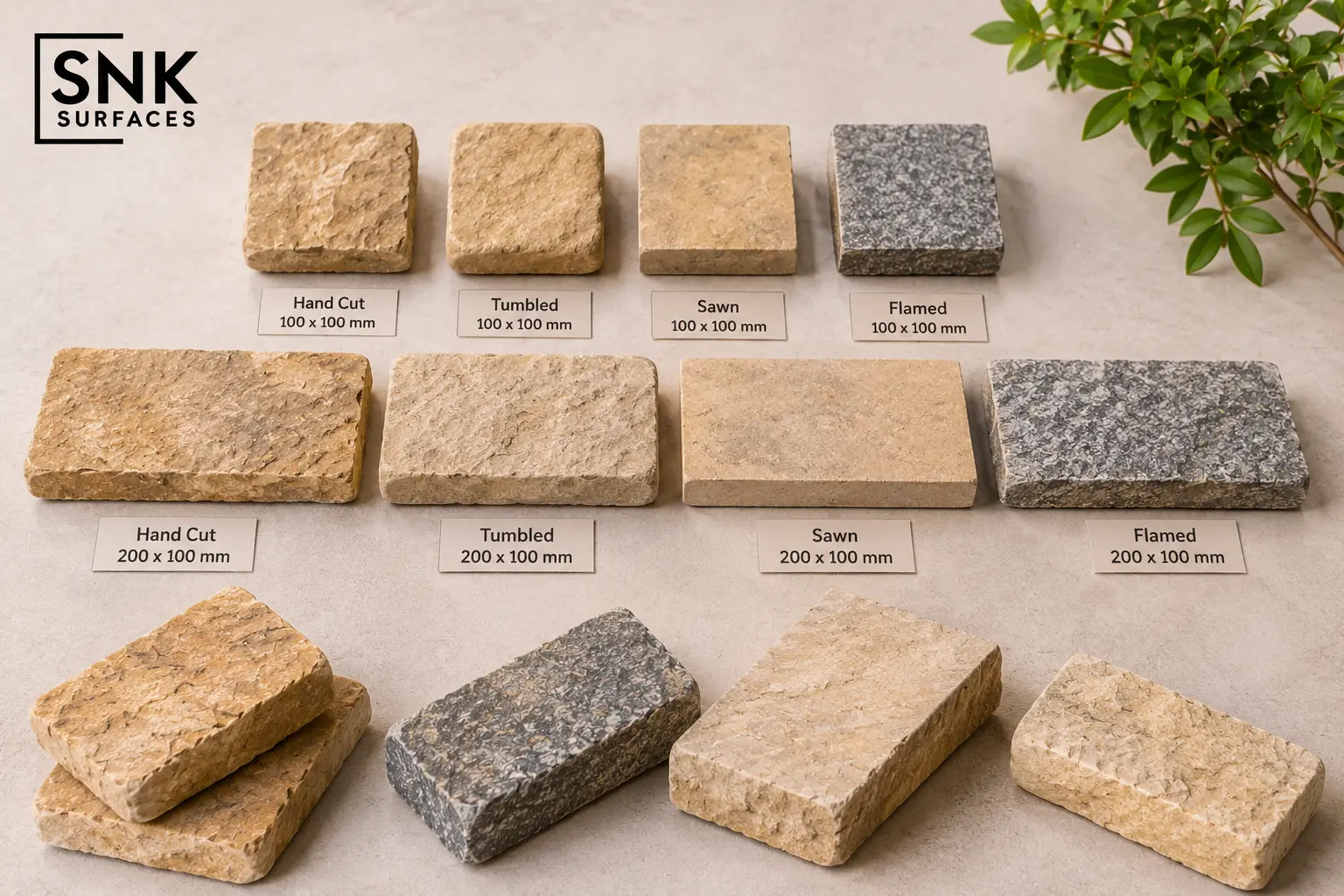
Common sizes include:
100 × 100 mm.
200 × 100 mm.
100 × 100 mm square setts.
Custom rectangular dimensions.
Custom project-specific sizes.
SNK Surfaces offers selected cobble products in 100 × 100 mm and 200 × 100 mm formats.
Common Cobbles Thicknesses: 30–50 mm, 50–70 mm and 70–100 mm
Thickness should match the installation design and expected loading.
30–50 mm: May suit selected pedestrian applications when the installation system permits.
50–70 mm: Can be considered for suitable residential paving systems.
70–100 mm: Often considered for heavier applications, subject to engineering and installation requirements.
These are general selection ranges, not universal load ratings. The base construction, bedding, stone properties and jointing system also affect performance.
Hand-Cut vs Machine-Cut Cobbles: Which Should You Choose?
Hand-cut cobbles have naturally irregular edges. They create a traditional appearance and work well in rustic landscapes.
Machine-cut cobbles have more consistent dimensions. They can simplify alignment and help achieve more uniform joints.
Choose hand-cut stone for a traditional design. Consider machine-cut products when dimensional consistency and regular patterns are priorities.
Tumbled, Natural, Sawn, Flamed and Sandblasted Finishes
Each finish creates a different appearance.
Tumbled: Softens edges and creates an aged appearance.
Natural: Retains the stone's natural surface character.
Sawn: Produces cleaner and more uniform edges.
Flamed: Creates a textured granite surface through thermal treatment.
Sandblasted: Produces a fine textured appearance.
Finish selection should also consider slip resistance, cleaning and maintenance.
How Size, Thickness and Finish Affect Installation and Performance
Consistent dimensions help installers maintain regular joints and surface levels.
Thicker stones may be suitable for heavier loading, but thickness alone does not establish load capacity. The complete pavement construction must be considered.
Always confirm the required dimensions, tolerances and finish with your contractor before placing an order.
Best Applications of Natural Stone Cobbles for Outdoor Projects
Natural stone cobbles suit several residential and commercial applications.

Tumbled Stone Cobbles for Driveways and Vehicle-Parking Areas
Tumbled stone cobbles for driveways create an attractive surface with softened edges and a traditional appearance.
They can be considered for residential driveways, entrance areas and selected parking spaces.
For driveway use, check the stone's technical properties and ensure the pavement design supports the expected vehicle loads.
Where to buy natural stone cobbles for a driveway? SNK Surfaces is one supplier to consider. Buyers can explore its sandstone and granite cobbles, review available sizes and finishes, and request project-specific quotations.
Natural Stone Cobbles for Courtyards and Patios
Cobbles can give courtyards and patios a distinctive appearance.
Sandstone creates warm outdoor spaces, while granite offers a more structured and contemporary look.
Combining cobbles with paving slabs can also create attractive borders and transitions.
Garden Pathways and Landscape Walkways
Natural stone cobbles can define garden routes and connect different landscape areas.
Smaller formats work well for decorative paths. Textured finishes can also help create visual interest.
Ensure the finished surface provides suitable accessibility and comfortable movement.
Commercial Landscapes, Public Plazas and Pedestrian Areas
Hotels, shopping developments, office buildings and public spaces can use cobbles to create distinctive outdoor environments.
For these applications, buyers should consider pedestrian volumes, cleaning requirements, drainage and maintenance access.
Decorative Borders, Edging and Outdoor Feature Areas
Cobbles can create borders around lawns, flower beds, patios and larger paving areas.
They can also frame water features, outdoor seating spaces and building entrances.
Popular Cobblestone Laying Patterns and Design Ideas
The laying pattern influences the overall appearance and may affect installation complexity.
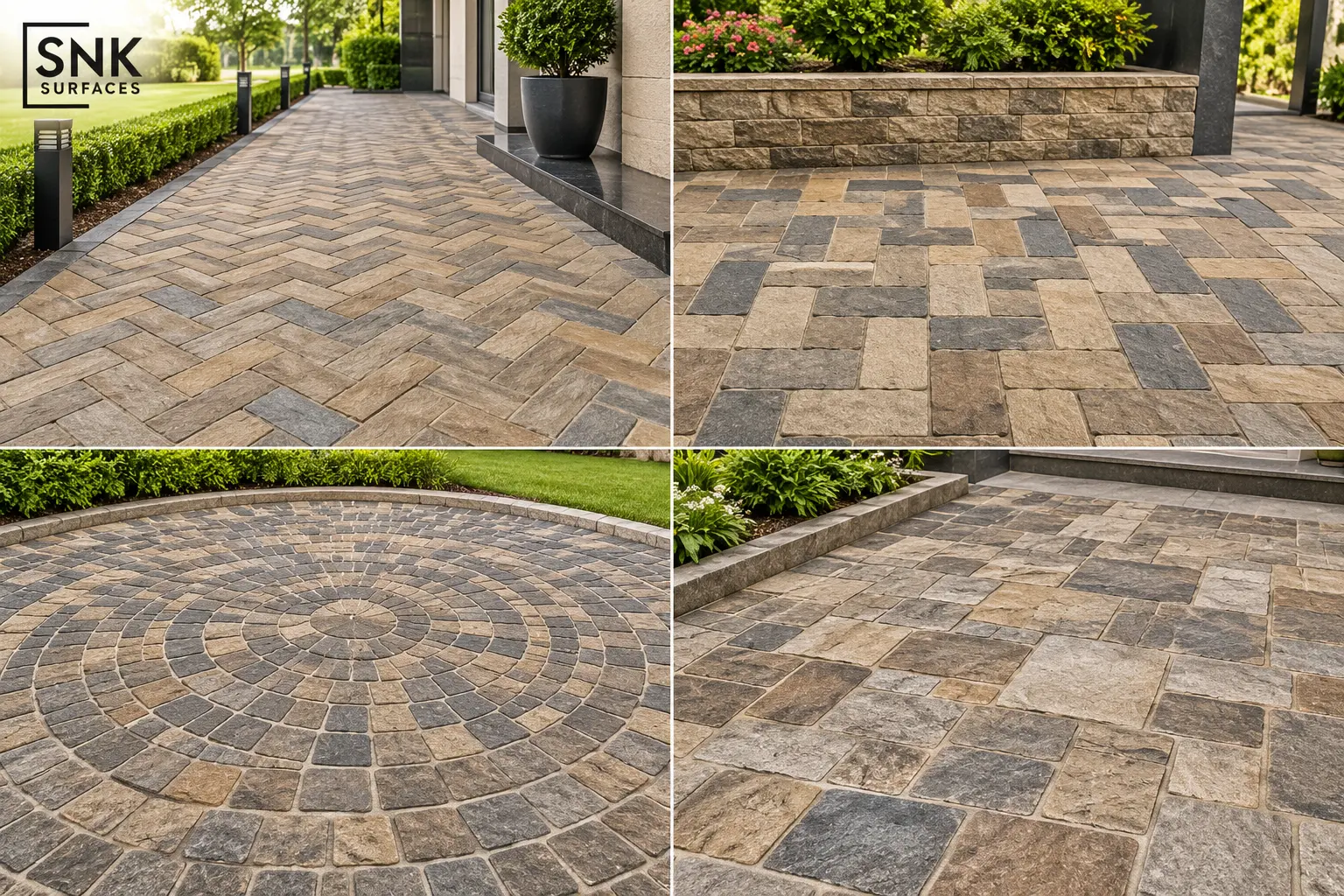
Herringbone Pattern for Driveways and Outdoor Paving
Herringbone uses rectangular stones arranged in a repeating interlocking pattern.
It creates a visually strong surface and is commonly considered for driveways. The correct pavement construction and edge restraint remain important.
Basketweave Pattern for Traditional and Contemporary Spaces
Basketweave arrangements create alternating groups of rectangular stones.
They suit courtyards, patios and traditional outdoor designs.
Stretcher Bond and Linear Laying Patterns
Stretcher bond uses parallel rows with staggered joints.
It creates a clean and organised appearance. This pattern works well with rectangular cobbles.
Circular and Fan-Shaped Cobblestone Patterns
Circular layouts create decorative focal points.
They are often used around entrances, garden features and central courtyard areas. Skilled installation is important for maintaining consistent spacing.
Random and Mixed-Size Patterns for Natural Landscaping
Random patterns use different stone dimensions to create a less formal appearance.
They suit rustic gardens and traditional landscapes. Buyers should confirm that the supplied dimensions support the intended pattern.
How to Select the Right Laying Pattern for Your Project?
Consider the following:
Overall architectural style.
Shape and size of the cobbles.
Traffic requirements.
Installation skills available.
Joint widths and edge restraints.
Maintenance requirements.
Ask your landscape designer or paving contractor to prepare a layout before ordering materials.
How to Check Cobblestone Quality Before Placing a Bulk Order
Quality checks reduce the risk of receiving unsuitable or inconsistent products.
A professional supplier should be able to discuss product specifications and provide representative samples.
Check Stone Strength, Density and Water Absorption
Request relevant test reports for the selected stone.
Important properties include:
Compressive strength.
Water absorption.
Density.
Abrasion resistance.
Weathering resistance.
Slip or skid resistance, where applicable.
For UK and European projects, discuss the relevant requirements of BS EN 1342 with your technical team.
The British Standards Institution's BS EN 1342 overview explains the performance requirements and test methods for natural stone setts used in external paving.
Inspect Dimensions, Thickness and Edge Consistency
Check whether the delivered products match the approved dimensions.
Measure several pieces from the sample batch. Look for excessive variation in length, width and thickness.
This is particularly important for machine-cut products and regular laying patterns.
Evaluate Surface Texture, Colour Variation and Finish
Natural stone contains variations in colour, markings and texture.
Request photographs or videos of the actual production batch. Compare them with the approved sample.
Agree on acceptable colour variation before production begins.
Check for Cracks, Weak Edges and Visible Defects
Inspect the stones for:
Structural cracks.
Weak or broken corners.
Unacceptable surface damage.
Excessive irregularities.
Unsuitable repairs or fillings.
Natural variation is normal. Structural defects should be assessed separately.
Why Batch Consistency and Quality Inspection Matter
Large projects often require multiple production batches.
Differences in colour, thickness and finish can affect the finished appearance and installation time.
Request batch identification and agree on inspection procedures before dispatch.
Match Cobblestone Specifications with Project Traffic Requirements
Do not select cobbles based on appearance alone.
A pedestrian pathway and a commercial vehicle entrance have different requirements.
Share the expected loading, pavement construction and climate conditions with your supplier and paving contractor.
How to Choose a Reliable Natural Stone Cobbles Supplier in India?
The right supplier should understand stone selection, production specifications, quality checks and international shipping.
Compare suppliers using practical criteria rather than relying only on website descriptions.
Manufacturer vs Trader: Who Should You Buy From?
A manufacturer may offer greater visibility into production, sizing and finishing.
A trader may provide access to several manufacturers and material varieties.
Neither option is automatically better. Check product traceability, quality responsibility, communication and delivery capability.
What to Look for in an Indian Cobblestone Manufacturer
When evaluating an Indian cobblestone manufacturer, check:
Available stone varieties.
Production facilities and processing capabilities.
Custom sizing options.
Dimensional quality control.
Sample availability.
Export documentation.
Packaging standards.
Previous project experience.
Ask for actual product photographs and technical specifications.
Choosing a Trusted Sandstone Cobbles Exporter
A suitable Sandstone cobbles exporter should understand international buyer requirements.
Check whether the supplier can confirm product dimensions, thickness, finish, quantity, packing and delivery arrangements.
For international projects, clear communication is just as important as product selection.
What Makes a Reliable Granite Cobbles Supplier?
A dependable Granite cobbles supplier should provide information about granite varieties, surface finishes and relevant performance properties.
Ask for representative samples and test documentation.
Also confirm whether the supplier can maintain the specified product across the complete order.
Manufacturing Capacity, Customisation and Quality Control
Large projects may need consistent products over several containers.
Discuss production capacity, lead times and inspection procedures before confirming an order.
Custom dimensions should be approved through written specifications.
Export Experience, Packaging and International Shipping Capabilities
International orders require suitable packaging and shipping coordination.
Check:
Export packing arrangements.
Wooden crate or pallet specifications.
Container loading plans.
Commercial invoices.
Packing lists.
Required certificates and declarations.
Shipping and delivery arrangements.
The supplier should explain which documents it can provide and which depend on the destination country's requirements.
Questions to Ask Before Finalising Your Natural Stone Supplier
Ask these questions before confirming your purchase:
Which stone varieties are available?
Can you provide samples?
What dimensions and thicknesses can you manufacture?
Are technical test reports available?
Can you supply actual batch photographs?
What is the minimum order quantity?
How do you inspect and pack the products?
What is the estimated production lead time?
Can you arrange international shipping?
What happens if products arrive damaged or outside the agreed specification?
Clear answers help buyers make better procurement decisions.
Samples, Bulk Orders and Export Supply: What International Buyers Should Know
International buyers should confirm product specifications and logistics before placing large orders.
This helps reduce misunderstandings and unexpected costs.
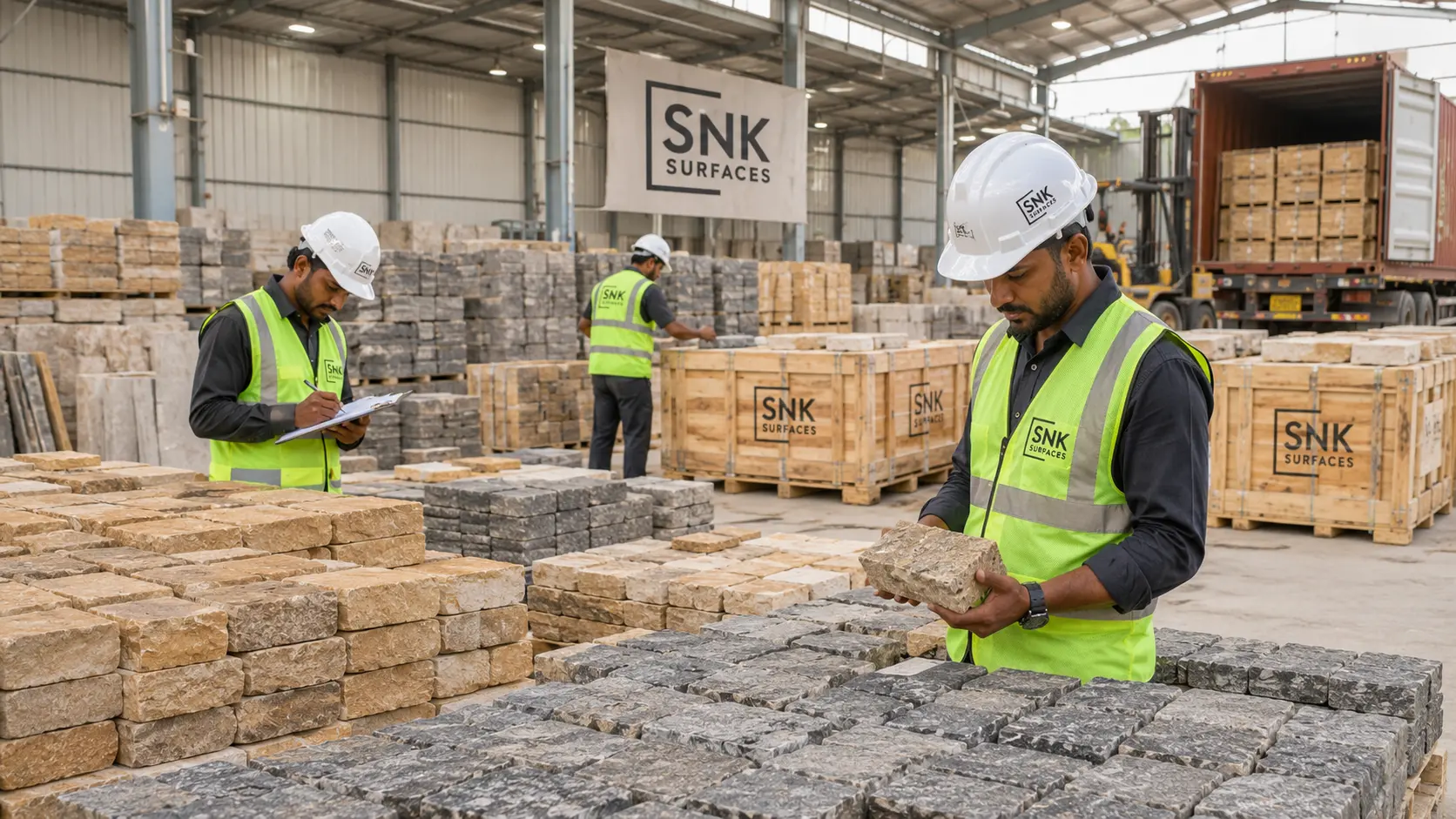
Why Request Natural Stone Cobbles Samples Before Ordering?
Samples help you evaluate colour, texture, finish and dimensions.
They also allow architects and contractors to assess how the material works with surrounding building materials.
Always approve a representative sample before production.
Minimum Order Quantities and Bulk Purchasing Options
Minimum order quantities depend on the stone, size, finish and supplier.
Some products may be available in smaller quantities, while customised production may require larger orders.
Confirm the minimum quantity and available production options directly.
Custom Sizes, Thicknesses, Finishes and Colour Selection
Customisation can help meet architectural and engineering requirements.
Discuss the required dimensions, thickness, edge treatment and surface finish.
For mixed-colour orders, confirm the expected proportions and batch consistency.
Export Packaging: Pallets, Wooden Crates and Container Loading
Natural stone is heavy and can suffer damage during handling.
Suitable packaging helps protect the material during transport.
Ask about:
Strong pallets or wooden crates.
Internal separation where required.
Product identification.
Safe stacking arrangements.
Container weight distribution.
Loading photographs.
The packaging method should suit the stone dimensions and transport route.
Lead Times, Shipping Documentation and International Delivery
Production and shipping times vary by order size, customisation and destination.
Confirm the estimated production schedule and shipping arrangements in writing.
Discuss applicable shipping terms, customs requirements and destination charges before finalising the purchase.
How to Calculate Cobblestone Quantity and Allow for Wastage?
Start by measuring the total paved area.
Use this calculation:
Required quantity = Total paved area × Coverage per square metre
For example, a 100-square-metre project requires 100 square metres of paving before allowing for cutting and wastage.
Add a suitable allowance based on the laying pattern, stone dimensions, site shape and installation method. A simple rectangular layout may need less cutting than a complex circular design.
Ask your contractor to confirm the final quantity before ordering.
Natural Stone Cobbles Installation: What Buyers and Contractors Should Consider
Good installation is essential for long-term paving performance.
Even high-quality cobbles can move, settle or crack if the pavement structure is unsuitable.
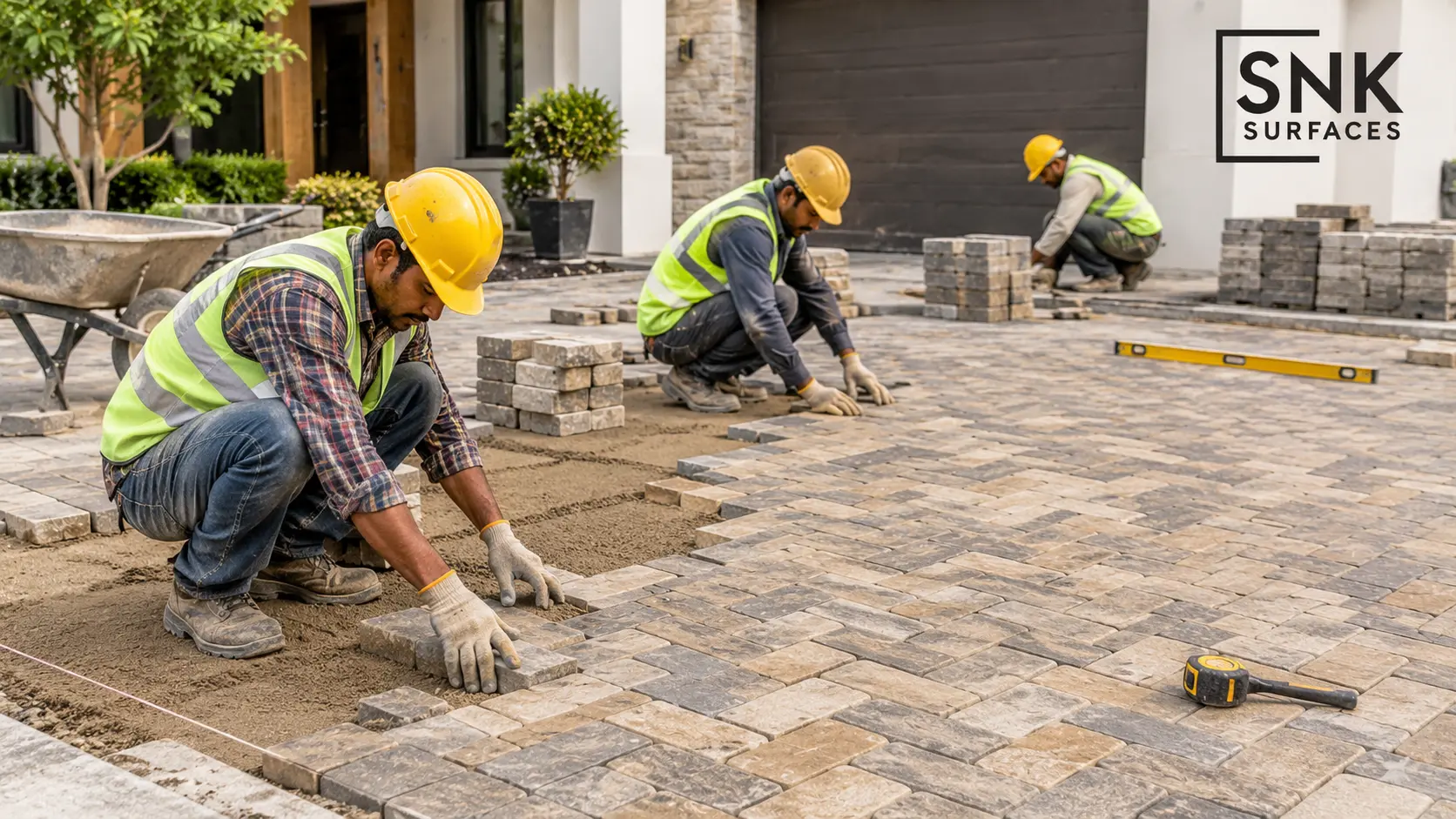
Preparing the Subgrade and Choosing the Right Base
The subgrade must be stable and properly prepared.
Remove unsuitable material and compact the ground according to the pavement design.
The base construction should account for soil conditions, drainage and expected traffic.
Selecting the Correct Bedding Material
Bedding material depends on whether the pavement uses a bound or unbound construction system.
Common options include suitable granular bedding and specified mortar systems.
Follow the project specification and seek professional installation advice.
Joint Filling, Drainage and Surface Slope
Correct jointing helps maintain the position of the cobbles.
Drainage prevents standing water and reduces problems associated with water entering the pavement structure.
Provide an appropriate surface slope and drainage outlets.
Installation Considerations for Driveways vs Pedestrian Pathways
Driveways require a pavement design that supports vehicle loading.
Pedestrian paths may have different structural requirements.
The stone thickness, base depth, bedding and jointing system should match the intended application.
Common Cobblestone Installation Mistakes to Avoid
Avoid these common mistakes:
Using an inadequately prepared base.
Ignoring drainage requirements.
Selecting unsuitable bedding materials.
Allowing inconsistent joint widths.
Failing to provide proper edge restraints.
Using unsuitable stone thicknesses.
Installing without checking levels and alignment.
Professional installation can prevent many of these problems.
Maintenance Tips to Keep Natural Stone Cobbles Looking Good
Regular maintenance helps preserve the surface.
Sweep away dirt and loose debris.
Remove stains using stone-compatible cleaning products.
Avoid harsh chemicals unless approved for the stone.
Check joints periodically.
Repair loose or damaged units.
Follow suitable sealing recommendations where necessary.
Maintenance requirements vary by stone type, finish and exposure.
Why Choose an Indian Natural Stone Cobbles Manufacturer and Exporter?
Indian suppliers offer access to different natural stone varieties and processing options.
For international buyers, the key is finding a supplier that can meet the required specifications and coordinate delivery.
Wide Selection of Indian Sandstone and Granite
Indian Natural Stone Cobbles are available in different natural colours and finishes.
Sandstone can offer warm tones, granite can provide darker and more structured appearances, can create softer outdoor designs.
The final choice should depend on the project requirements.
Custom Manufacturing for Residential and Commercial Projects
Custom dimensions and finishes can help meet specific architectural requirements.
Discuss production feasibility and minimum quantities before approving a customised order.
Consistent Quality for Large-Scale Supply Requirements
Large developments need consistent dimensions and controlled colour variation.
Agree on quality standards, approved samples and inspection procedures before production.
Reliable Bulk Supply and Export Support
International procurement involves more than manufacturing.
Suppliers should communicate clearly about production schedules, packaging, documentation and delivery.
SNK Surfaces offers cobble products in different sandstone and granite varieties for international buyers.
Frequently Asked Questions About Natural Stone Cobbles
Which natural stone is best for outdoor cobblestone paving?
Granite and sandstone can all be suitable for outdoor paving. Granite is often considered for high-traffic applications, sandstone offers varied natural colours and textures, suits selected decorative applications. Always compare technical test results and installation requirements.
Are sandstone cobbles suitable for driveways?
Yes, selected sandstone cobbles can be suitable for residential driveways. The stone must have appropriate physical properties, dimensions and thickness. A properly designed base and suitable installation system are also essential.
Are granite cobbles more durable than sandstone cobbles?
Granite generally offers high hardness and abrasion resistance. However, actual performance depends on the specific stone variety and its tested properties. Compare strength, absorption and weathering results before making a selection.
What is the best thickness for natural stone driveway cobbles?
There is no universal thickness for every driveway. Common selection discussions include 50–70 mm and 70–100 mm formats, but the correct specification depends on vehicle loading, stone properties and pavement construction. Consult your paving designer.
What sizes are commonly available in Indian natural stone cobbles?
Common sizes include 100 × 100 mm and 200 × 100 mm. Some suppliers also provide custom dimensions according to project specifications and production requirements.
Are tumbled stone cobbles suitable for landscaping projects?
Yes. Tumbled cobbles are popular for courtyards, pathways, garden borders and selected driveways. Their softened edges create an aged appearance. Suitability depends on the stone, thickness, surface properties and installation design.
Which cobblestone laying pattern is best for driveways?
Herringbone is a popular choice for rectangular cobbles because it creates an interlocking visual arrangement. However, the complete pavement design, edge restraints and installation method matter more than the pattern alone.
How do I choose a reliable natural stone cobbles supplier in India?
Compare stone varieties, manufacturing capabilities, technical documents, samples, quality checks, customisation, export experience and packaging. Confirm the complete product specification in writing before placing your order.
Can Indian cobblestone manufacturers provide customised sizes and finishes?
Many manufacturers offer customised dimensions, thicknesses and finishes. Availability depends on the material, machinery and order quantity. Confirm production feasibility before approving the final specification.
Can I order samples before placing a bulk cobblestone order?
Many suppliers provide samples for evaluation. Request representative pieces to inspect colour, texture, finish and dimensions. Also ask for photographs or videos of the actual production batch.
Do Indian sandstone cobbles exporters supply international markets?
Yes. Indian sandstone products are supplied to international markets. Buyers should confirm the supplier's export capability, destination requirements, packaging and shipping arrangements.
How are natural stone cobbles packed for export?
Cobbles are generally packed using suitable pallets or wooden crates. Packaging should protect the edges and surfaces during transportation. Suppliers should also provide appropriate product identification and loading information.
Additional Buyer Questions About Cobbles and Setts
Which suppliers offer a wide range of natural stone cobbles and setts?
Look for suppliers offering several stone varieties, sizes, colours and finishes. SNK Surfaces provides sandstone and granite cobble options, including different product colours and finishing choices. Buyers can review its cobbles and setts collection to explore available products.
Where can I buy cobbles and setts in the UK?
UK buyers can source cobbles and setts through local paving merchants, specialist natural stone importers and international manufacturers. SNK Surfaces is an Indian supplier worth considering for UK projects. Buyers should confirm shipping arrangements, applicable product standards, import costs and delivery terms before ordering.
Where can I find a Natural Stone Cobbles Supplier in UK?
Start by comparing local distributors and international exporters that supply the UK market. Check product specifications, sample availability, shipping costs and compliance requirements. A direct supplier such as SNK Surfaces can also be contacted for export enquiries and product information.
Where can I find a Natural Stone Cobbles Supplier in Ireland?
Irish buyers can approach local landscaping suppliers and international natural stone exporters. Compare stone suitability for local weather conditions, product availability, shipping costs and delivery arrangements before placing an order.
How much do setts cost per square metre?
The cost of setts per square metre varies according to stone type, colour, dimensions, thickness, finish, quantity and delivery location.
The total project cost may include:
Stone material.
Packaging.
International freight.
Customs duties and applicable taxes.
Ground preparation.
Bedding and jointing materials.
Installation labour.
Drainage and edge restraints.
Ask suppliers for a quotation based on the exact specifications and delivered quantity. Avoid comparing prices without checking whether the products have the same dimensions, thickness and finish.
Find the Right Natural Stone Cobbles Supplier in India for Your Project
Choosing the right cobbles involves more than selecting an attractive colour. You must consider stone quality, dimensions, thickness, surface finish, traffic requirements and installation conditions.
Sandstone and granite each offer different possibilities for residential and commercial landscaping. The right choice depends on your design goals, site conditions and performance requirements.
For international buyers, working with an experienced supplier can simplify product selection, sampling, manufacturing and export coordination.
SNK Surfaces offers a selection of Indian sandstone and granite cobbles in different colours, sizes and finishes. Whether you are planning a driveway, garden pathway, commercial landscape or large construction project, its product range provides options worth exploring.
Looking for a reliable Natural Stone Cobbles Supplier for your next project?
Contact SNK Surfaces to discuss your requirements and request:
Natural stone cobble samples.
Product photographs and specifications.
Available sizes, thicknesses and finishes.
Custom manufacturing options.
Bulk supply and export quotations.
Share your project location, required dimensions, estimated square metres and preferred stone type to receive a more relevant quotation.
Explore the complete SNK Surfaces Cobbles and Setts Collection and contact the team to discuss your next natural stone paving project.
Keep reading
What Are the Best Tiles and Natural Stones for Different Commercial Spaces?
Discover the best tiles and natural stones for commercial buildings, including hotels, offices, shopping malls, hospitals, restaurants and outdoor spaces. Compare porcelain, vitrified tiles, granite, marble and sandstone based on durability, slip resistance, maintenance and performance. Explore premium commercial tile and natural stone solutions from SNK Surfaces for your next project.
 Read more
Best Paving Slabs for Every Garden: Low-Maintenance, Non-Slip & Pet-Friendly Options
Choosing the right Paving Slabs can make a big difference to your garden’s appearance, safety and maintenance needs. Every garden has different requirements. Sunlight, rain, shade, pets and daily use all affect which paving material will work best. Some homeowners want a patio that needs very little cleaning. Others need a non-slip surface for wet weather or durable paving that is comfortable for dogs. Porcelain…
 Read more
What Are the Best Suppliers of Indian Stone Raj Green for Home Renovation?
The best suppliers of Indian stone Raj Green for home renovation include direct Indian manufacturers such as SNK Surfaces and established UK paving retailers such as Nitya Stones, Holm Products, Beechfield Reclamation, Lesta Paving and London Stone Direct. The right choice depends on stone quality, thickness, finish, price, delivery and project requirements. But choosing a supplier is not just about finding the lowest price. The…
 Read more
Next stepReady to plan your next paving project?
Tell us your product, size and quantity, and our team will come back with a quote and samples.
Get a quote →