

What Are the Best Tiles and Natural Stones for Different Commercial Spaces?
16 min read
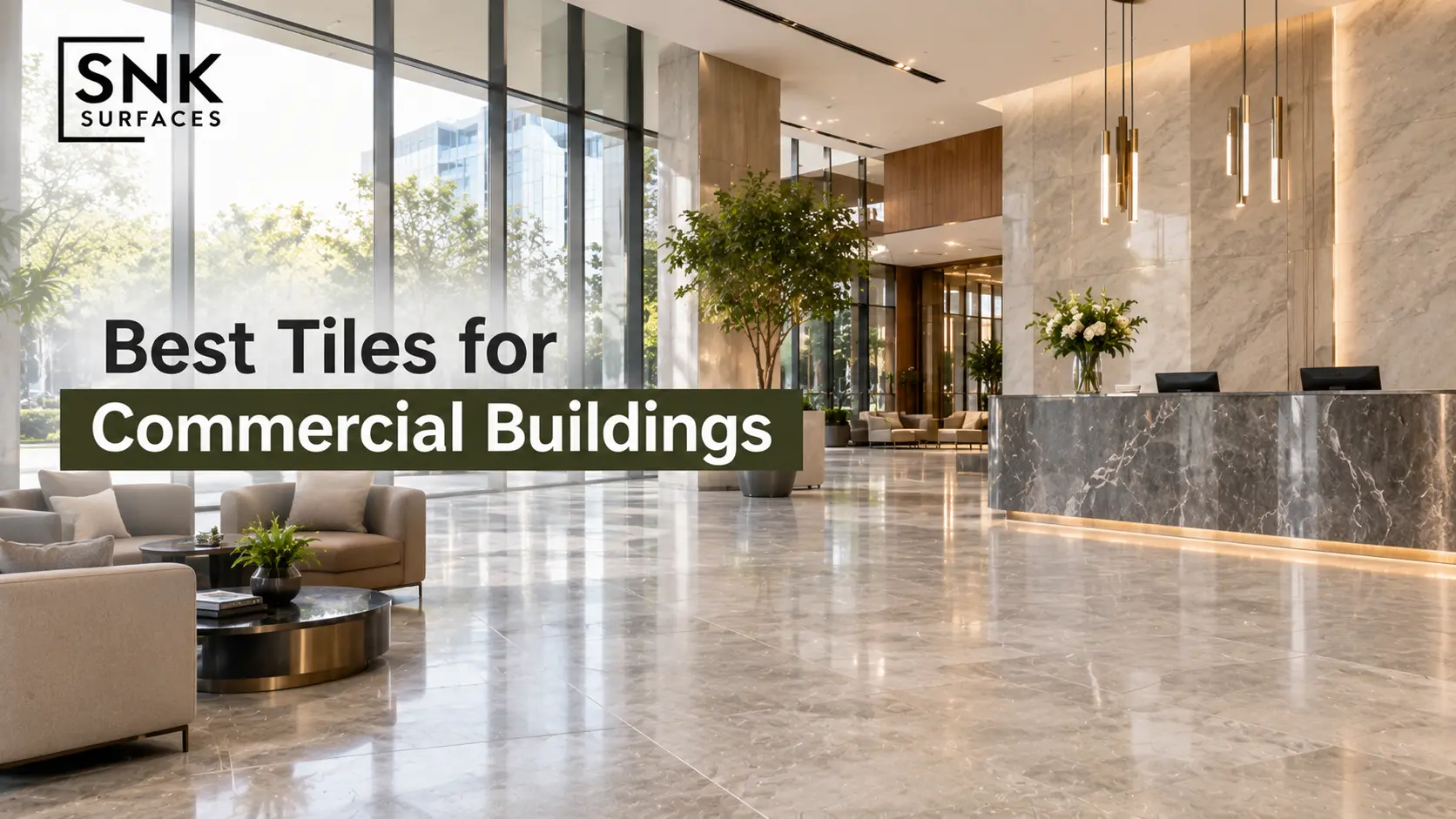
Choosing the Best Tiles for Commercial Buildings requires more than selecting an attractive colour or design. Commercial floors must handle heavy foot traffic, regular cleaning, furniture movement, moisture and daily wear. Porcelain tiles, vitrified tiles, granite, marble, sandstone, limestone and slate each offer different benefits. The right choice depends on the building type and the area where the material will be installed. For example, a hotel lobby needs an attractive and durable surface, while a restaurant kitchen needs slip resistance and easy cleaning. SNK Surfaces offers premium porcelain tiles, vitrified tiles and natural stones for commercial and architectural projects.
Explore the complete collection of commercial tiles and natural stones to find suitable materials for your next project.
What Are the Best Tiles and Natural Stones for Commercial Buildings?
Porcelain stoneware is one of the strongest choices for commercial flooring. It combines low water absorption, high density, durability and a wide range of finishes. Full-body vitrified tiles and granite are also suitable for areas with heavy foot traffic.
However, no single material works best in every commercial space. Architects and contractors should consider traffic levels, moisture, slip resistance, cleaning needs and design requirements before making a selection.
Porcelain Tiles for Commercial Buildings
Porcelain tiles are an excellent option for commercial floors and walls. They have a dense body and a water absorption rate of 0.5% or less under the porcelain classification.
Their main benefits include:
High resistance to moisture and stains.
Strong performance in busy areas.
Easy cleaning and low maintenance.
Wide choice of colours, patterns and sizes.
Matte, textured and polished finishes.
Matte and textured porcelain tiles are suitable for entrances, corridors and wet areas when their tested slip performance meets project requirements. Polished porcelain works better in selected dry interiors.
Indoor Porcelain Tiles
Indoor porcelain tiles are an excellent choice for commercial interiors that need durability, style and easy maintenance. They are available in different colours, patterns, sizes and finishes to suit hotels, offices, shopping malls, restaurants and other indoor spaces. Their low water absorption and dense structure make them suitable for many high-traffic indoor applications.
Looking for premium indoor flooring options?
Explore the Indoor Porcelain Tiles at SNK Surfaces to discover designs suitable for your commercial project.
Vitrified Tiles for High-Traffic Commercial Areas
Vitrified tiles have a dense structure and low porosity. They are widely used in commercial buildings because they offer consistent designs and practical maintenance.
The main types include:
Full-body vitrified tiles: Their colour and pattern extend through the tile body. They are suitable for busy corridors and public areas.
Double-charge vitrified tiles: These have a thicker decorative surface layer and are suitable for selected commercial applications.
Glazed vitrified tiles: These offer many design options, but buyers should check their abrasion rating and surface finish before choosing them for floors.
Select the tile according to its tested performance rather than its category name alone.
Granite for Heavy-Traffic Commercial Spaces
Granite is a hard natural stone with excellent resistance to everyday wear. It is a popular choice for hotel entrances, office receptions, shopping malls and public buildings.
Granite is available in polished, honed, flamed and other finishes. Polished granite creates a premium appearance in dry interiors. Flamed and textured finishes offer better grip for many outdoor applications.
Proper installation and periodic maintenance help preserve its appearance.
Marble for Luxury Commercial Interiors
Marble adds natural beauty and elegance to commercial interiors. Its distinctive veins and colours make it suitable for hotel lobbies, luxury retail stores, reception areas and selected dining spaces.
However, marble needs more care than porcelain or granite. It can react with acidic cleaners and may develop scratches or stains.
Regular cleaning, suitable sealing and professional polishing help maintain its appearance.
Limestone and Sandstone
limestone and sandstone bring natural textures to commercial architecture.
Limestone creates a clean, natural appearance in commercial interiors and building facades.
Sandstone works well for outdoor pathways, terraces, landscaping and wall cladding.
These stones have different absorption levels and hardness. Their selection should consider local weather, water exposure, surface finish and maintenance requirements.
Slate, Quartzite and Terrazzo
Slate offers a natural textured surface that works well in selected indoor and outdoor applications. Its cleft finish creates a distinctive architectural appearance.
Quartzite is a hard natural stone with attractive patterns. It can suit premium commercial interiors and selected exterior applications.
Terrazzo combines decorative aggregates with a cement or resin-based binder. It offers design flexibility and works well in hotels, airports, schools and shopping centres.
Looking for premium slate, quartzite or terrazzo for your commercial project?
Contact SNK Surfaces to explore suitable natural stone options and get more information about our products, finishes and project requirements.
Best Tiles and Natural Stones for Different Commercial Spaces
Different commercial buildings have different flooring requirements. The material that works well in a hotel lobby may not be suitable for a restaurant kitchen or an airport walkway.
Here is how to select the right surface for each application.
1. Best Tiles for Hotels
Hotels need flooring that creates a welcoming atmosphere and handles continuous guest movement. Each area requires a different combination of appearance, durability and safety.
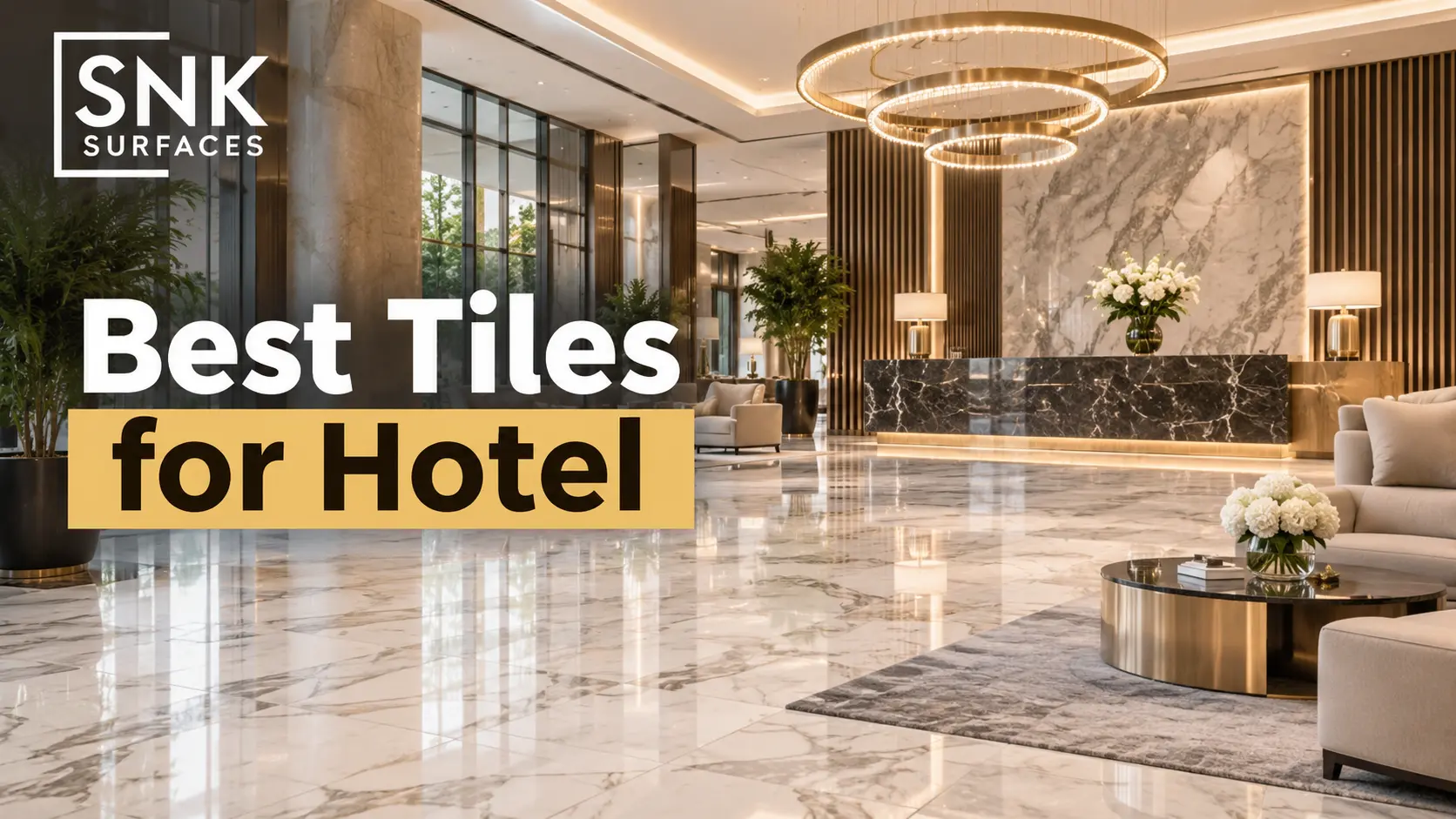
Hotel Lobby and Reception
Granite, large-format porcelain tiles and terrazzo are excellent choices for hotel lobbies.
Granite creates a premium first impression. Large-format porcelain offers modern designs with fewer grout lines. Terrazzo provides a distinctive decorative appearance.
Hotel Guest Rooms
Wood-look porcelain tiles and matte vitrified tiles are practical choices for guest rooms. They offer attractive designs and are easy to clean.
Selected natural stones can also create a luxury interior, although they may require additional maintenance.
Hotel Bathrooms
Anti-slip porcelain tiles and textured ceramic tiles are suitable for hotel bathrooms.
Natural stone can also work when the selected finish, sealing and maintenance plan suit wet conditions. Avoid choosing polished flooring solely for its appearance.
Hotel Restaurants and Dining Areas
Commercial-grade porcelain tiles, granite and textured natural stone are suitable for hotel dining areas.
The surface should resist stains, support regular cleaning and provide suitable slip performance.
Hotel Swimming Pool Areas
Pool surroundings require surfaces designed for wet and barefoot use.
Textured porcelain pavers, suitable sandstone and selected travertine finishes can work well. Check slip resistance, water absorption, weather performance and poolside compatibility before installation.
2. Best Tiles for Offices
Office flooring should create a professional appearance while supporting daily movement and workplace comfort.
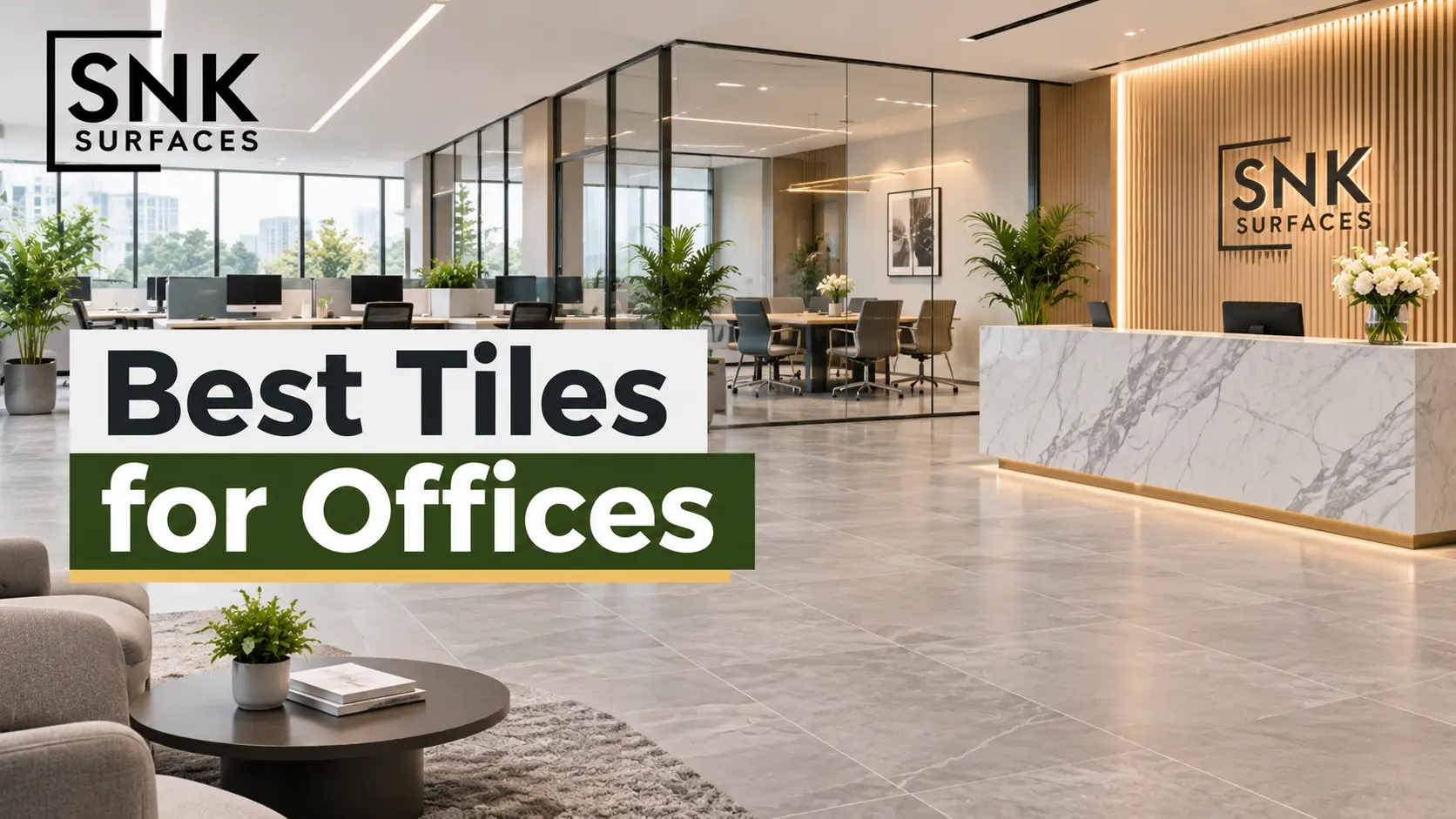
Office Reception and Entrance
Granite and large-format vitrified tiles are suitable for office entrances and reception areas. They create a professional look and can handle regular visitor movement.
Office Workspaces
Matte porcelain and vitrified tiles are practical options for general office workspaces.
However, carpet tiles or other acoustic-friendly materials may be better in areas where sound control and employee comfort are priorities.
Office Meeting and Conference Rooms
Carpet tiles help reduce noise and create a comfortable meeting environment. Wood-look porcelain and selected natural stone can also suit formal conference rooms.
Office Corridors and Common Areas
Full-body vitrified tiles, granite and terrazzo are suitable for corridors and shared spaces. These materials can withstand frequent movement when properly specified and installed.
3. Best Tiles for Shopping Malls
Shopping malls experience heavy foot traffic, shopping trolley movement and frequent cleaning. Flooring must combine durability with an attractive appearance.

Mall Entrances and Main Lobbies
Granite, large-format porcelain and terrazzo are excellent options for mall entrances.
Use textured finishes where rainwater or outdoor dirt may reach the floor.
Shopping Mall Walkways and Corridors
Full-body vitrified tiles, double-charge vitrified tiles and granite are suitable for busy walkways.
Choose materials with appropriate abrasion resistance and breaking strength.
Retail Stores and Showrooms
Porcelain and vitrified tiles offer design flexibility for retail stores.
Polished finishes can suit dry luxury showrooms, while matte surfaces work well in many everyday retail environments.
Shopping Mall Food Courts
Anti-slip porcelain and textured ceramic tiles are practical options for food courts. These areas need surfaces that support frequent cleaning and resist food stains.
4. Best Tiles for Hospitals
Hospitals need flooring that supports hygiene, cleaning and safe movement. Material selection must follow the requirements of each department.

Hospital Reception and Waiting Areas
Porcelain tiles, granite and terrazzo are suitable for selected public areas. They offer durable surfaces and are available in different designs.
Hospital Corridors
Durable vitrified tiles and terrazzo can work in public corridors. The flooring should withstand continuous movement, cleaning equipment and regular maintenance.
Non-Clinical Hospital Areas
Matte porcelain and easy-to-clean vitrified tiles are suitable for selected administrative and public areas.
Important: Operating rooms, clinical zones and patient-care environments require specialist flooring specifications. Ordinary decorative tiles should not be treated as a universal solution for these areas.
5. Best Tiles for Restaurants and Cafes
Restaurants and cafes need flooring that can handle spills, food stains, frequent cleaning and customer movement.
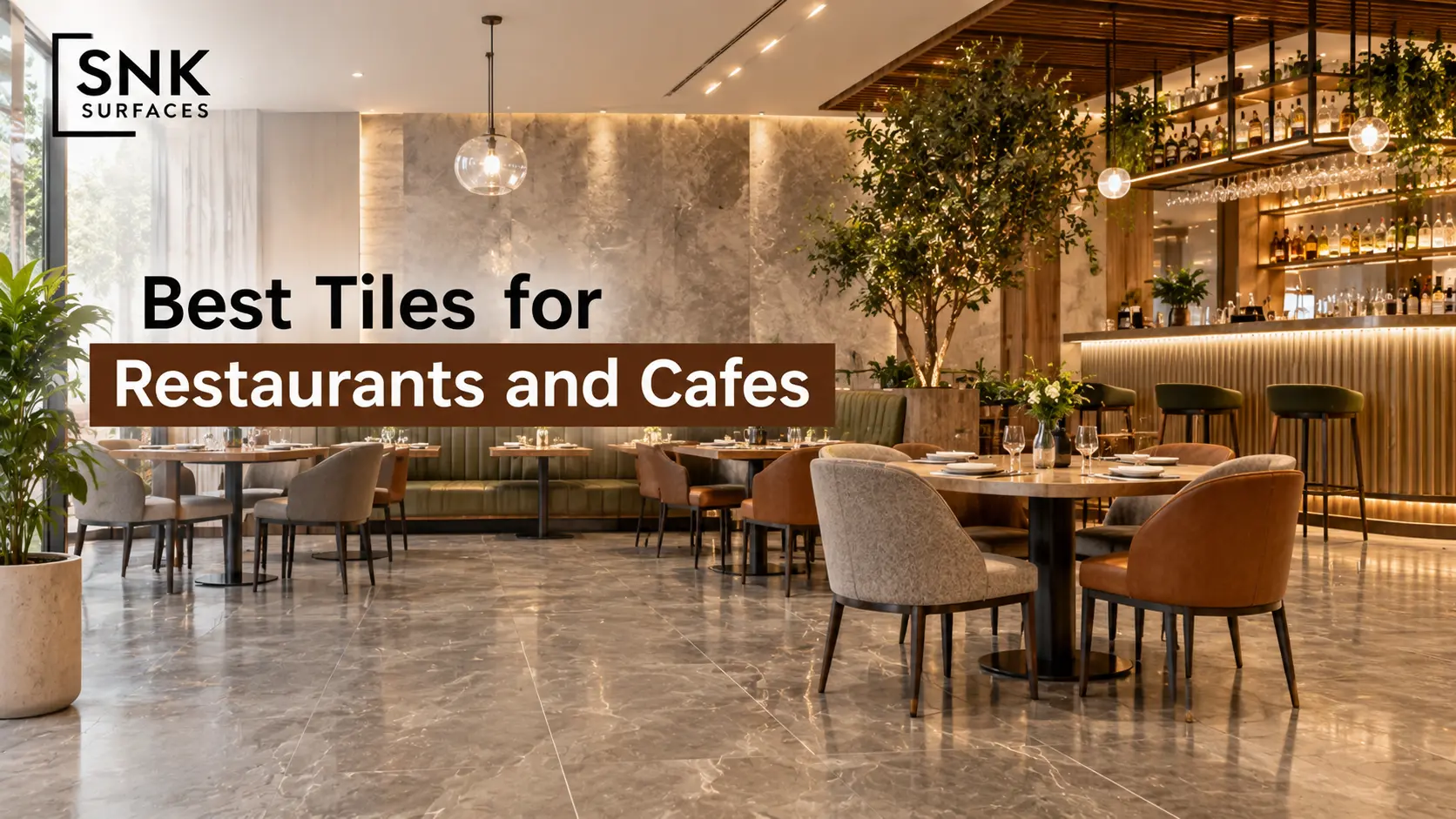
Restaurant Dining Areas
Porcelain tiles, granite and decorative natural stone can create attractive dining interiors.
Choose a surface that balances appearance, cleaning requirements and slip resistance.
Commercial Restaurant Kitchens
Anti-slip quarry tiles and textured porcelain are suitable options for many commercial kitchens.
Specialist commercial flooring systems may be necessary where floors face heavy grease, chemicals, hot liquids or intensive washdown.
Restaurant Washrooms
Anti-slip porcelain and textured ceramic tiles are practical choices. Select suitable floor finishes and waterproofing systems.
Outdoor Restaurant Seating Areas
Granite, sandstone and outdoor-rated porcelain pavers are suitable options for outdoor dining spaces.
Choose weather-resistant materials with a tested finish for the expected moisture and foot traffic.
6. Best Tiles for Schools and Universities
Educational buildings need flooring that handles daily movement from students, teachers and staff.

School and University Corridors
Full-body vitrified tiles, granite and terrazzo are suitable for busy corridors. They offer durable surfaces and straightforward cleaning.
Classrooms and Lecture Halls
Matte vitrified tiles can work well in classrooms. Acoustic-friendly alternatives may be more suitable in lecture halls where sound control is important.
Common Areas and Libraries
Porcelain, terrazzo and selected natural stone can create attractive common areas. Libraries may benefit from softer flooring where noise reduction is a priority.
School and University Entrances
Textured granite and anti-slip porcelain tiles are practical choices for entrances. They help manage dirt and moisture brought in from outside.
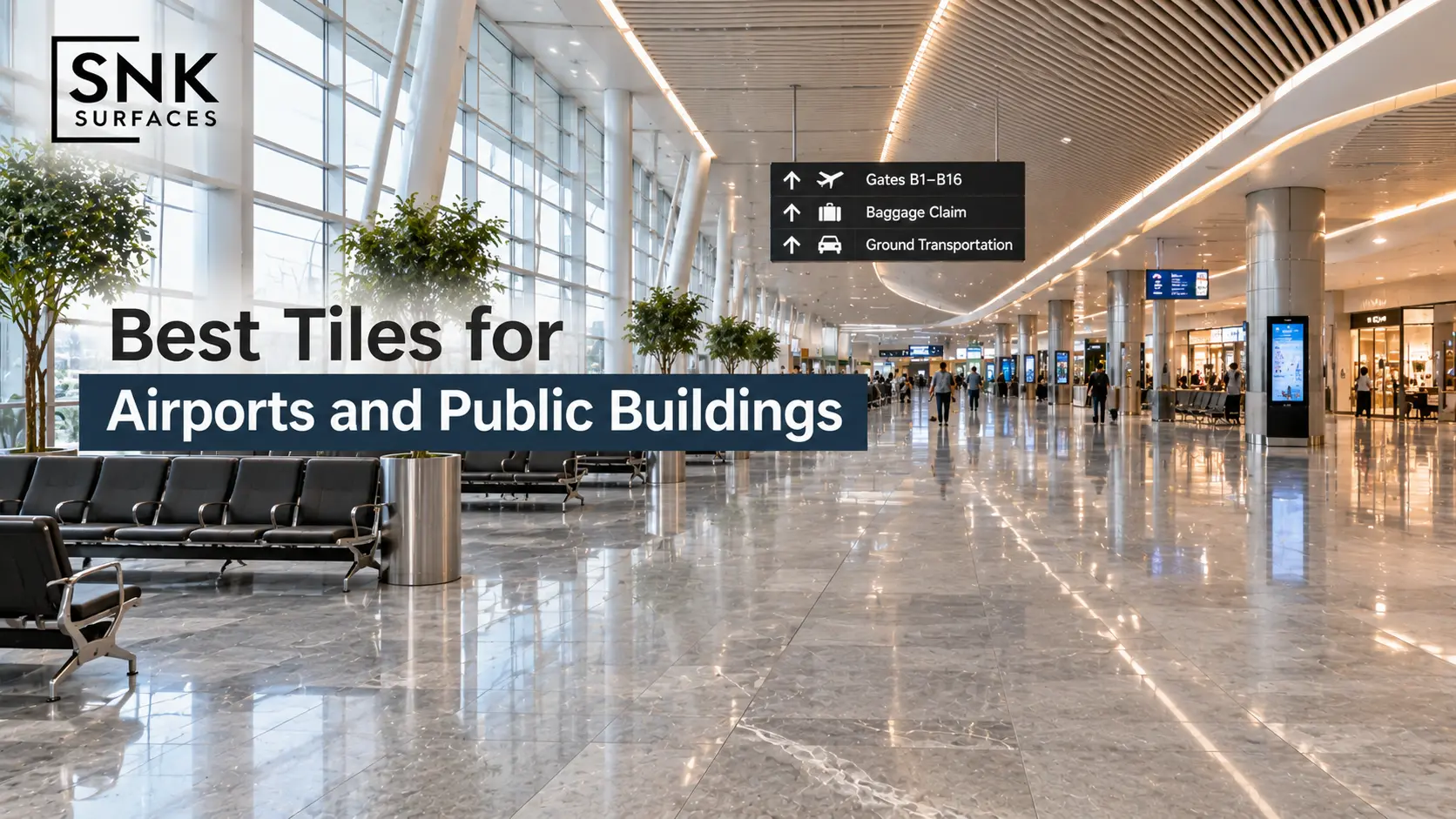
7. Best Tiles for Airports and Public Buildings
Airports and public buildings experience continuous foot traffic, luggage movement and frequent maintenance.
Airport Entrances and Arrival Areas
Granite, high-performance porcelain and terrazzo are suitable options. They should withstand regular cleaning and heavy visitor movement.
Airport Waiting Areas and Lounges
Large-format porcelain, granite and terrazzo create attractive and durable waiting areas.
The finish should also support easy cleaning and comfortable movement.
Airport Walkways and Corridors
Full-body vitrified tiles, heavy-duty porcelain and terrazzo are suitable for high-traffic circulation areas.
Public Buildings and Government Facilities
Granite, durable vitrified tiles and terrazzo are reliable options for many public buildings. Select materials according to expected traffic and maintenance budgets.
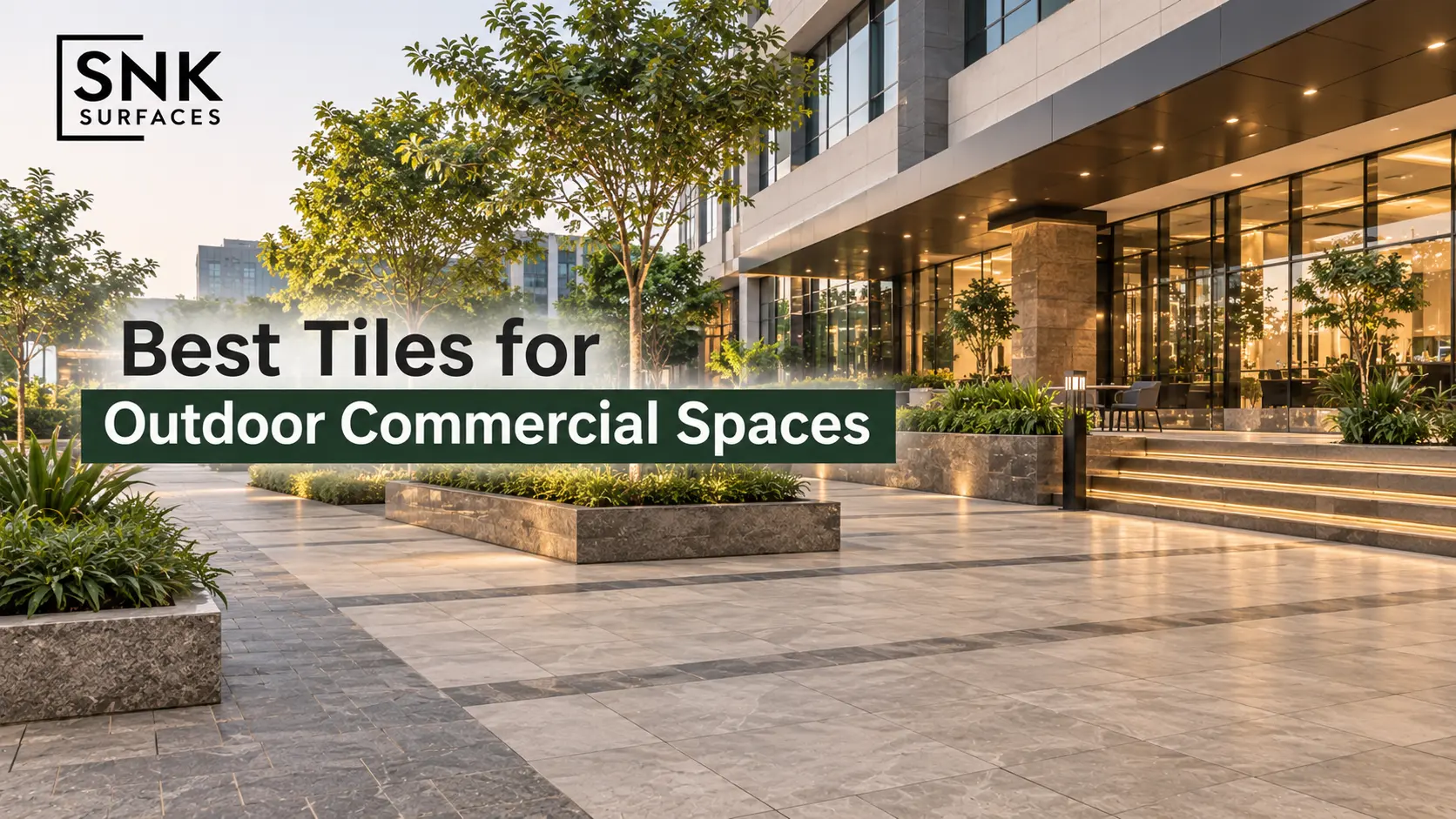
8. Best Tiles for Outdoor Commercial Spaces
Outdoor commercial areas need materials that withstand weather, moisture, temperature changes and regular use.
Commercial Terraces and Rooftops
Outdoor-rated porcelain pavers, granite and sandstone are suitable choices. Check the load capacity, drainage and installation method before selecting the material.
Commercial Building Facades
Granite and natural stone cladding create durable architectural exteriors. The cladding system must include suitable mechanical fixing and structural support.
Commercial Landscaping
Sandstone, granite and slate can enhance commercial gardens, courtyards and landscaped areas.
Their natural textures work well with plants, outdoor furniture and architectural features.
Outdoor Pathways and Walkways
Flamed granite, textured outdoor porcelain and bush-hammered natural stone are practical choices.
Select surfaces with suitable slip resistance and weather performance.
How to Choose the Right Tiles and Natural Stones for Commercial Buildings?
Selecting the right material requires more than comparing designs and prices. Architects, contractors and developers should review the technical requirements of each area before placing an order.
Consider Foot Traffic and Durability Requirements
Start by understanding how many people will use the space every day. Airports, shopping malls and public corridors need stronger flooring specifications than small offices.
Consider furniture movement, luggage, shopping trolleys and cleaning equipment. Choose porcelain, full-body vitrified tiles or granite with suitable strength and wear resistance.
Check Slip Resistance and Surface Finishes
Slip resistance is essential in entrances, bathrooms, kitchens, pool areas and outdoor pathways.
Matte and textured finishes generally provide better grip than polished finishes. However, the actual performance depends on the product and testing method.
As a general specification starting point, consider R10 for suitable public circulation areas and R11 to R12 for selected wet or greasy areas. Always confirm the required rating against local building regulations and the actual conditions of use.
Evaluate Water Absorption and Moisture Resistance
Water absorption affects a material's performance in wet environments.
Porcelain tiles have water absorption of 0.5% or less under the relevant classification. This makes them suitable for many commercial interiors and exterior applications.
Natural stones need individual evaluation because absorption varies between stone types and even between batches.
Compare Maintenance and Cleaning Requirements
Commercial floors need regular cleaning. Choose surfaces that match the building's maintenance resources.
Porcelain tiles generally need simple cleaning. Granite requires suitable stone-care products. Marble, limestone and sandstone may need sealing and more careful maintenance.
Also consider grout colour, joint width and resistance to cleaning chemicals.
Choose the Right Tile Size and Thickness
Large-format tiles create a spacious appearance and reduce the number of grout joints. They are popular in hotels, offices and commercial showrooms.
Smaller tiles can offer better design flexibility in bathrooms and curved areas.
Tile thickness should match the installation method and expected loads. Outdoor porcelain paving, for example, is available in 20 mm formats for suitable paving systems.
Consider Installation, Subfloor and Structural Requirements
Even a high-quality tile can fail if the installation is poor.
Check the subfloor condition, load capacity, waterproofing, drainage and movement joints. Use compatible adhesives and grout.
Large-format tiles also need careful substrate preparation to avoid lippage and uneven surfaces.
Evaluate Initial Cost vs Long-Term Lifecycle Cost
A cheaper tile may require more frequent repairs or replacement.
Compare purchase price, installation, cleaning, sealing, maintenance and expected service life. This gives a more realistic picture of the total project cost.
Consider Sustainability and Environmental Performance
Long-lasting materials can reduce the need for frequent replacement. Also consider recycled content, responsible quarrying, manufacturing processes and transportation.
Request relevant environmental product information where sustainability certification is part of the project specification.
Best Commercial Flooring Materials: Tiles vs Natural Stone
Different materials offer different levels of performance. The following table provides a practical comparison for commercial projects.
Material | Durability | Water Absorption | Slip Resistance | Maintenance | Appearance | Best Applications |
Porcelain tiles | High | 0.5% or less | Depends on finish | Low | Modern, versatile | Hotels, malls, offices and public areas |
Vitrified tiles | High | Generally low | Depends on finish | Low | Consistent designs | Corridors, offices and retail spaces |
Granite | Very high | Varies by stone | Depends on finish | Low to moderate | Natural and premium | Lobbies, entrances and walkways |
Sandstone | Moderate to high, depending on grade | Varies by stone | Textured finishes can provide good grip | Moderate | Natural and earthy | Terraces, pathways and landscaping |
Slate | High, depending on grade | Varies by stone | Riven finishes offer texture | Moderate | Rustic and distinctive | Outdoor areas and feature flooring |
Note: These are general material characteristics. Actual performance depends on the product, finish, testing results, installation and maintenance.
Important Technical Specifications to Check Before Buying Commercial Tiles
Technical specifications help buyers compare products accurately. Always request product data sheets and relevant test reports before approving materials.
PEI Rating and Abrasion Resistance
The PEI rating measures surface abrasion resistance in glazed ceramic tiles. It is commonly used to assess suitability for different traffic levels.
For commercial floors, PEI 4 and PEI 5 products are common choices where their declared applications match the project.
Remember that PEI ratings apply to glazed tile surfaces. Unglazed porcelain tiles are evaluated using deep abrasion testing instead.
Water Absorption and Porcelain Tile Classification
Porcelain tiles belong to the low water absorption category, with absorption of 0.5% or less.
Ask for test reports based on ISO 10545-3. This standard describes the water absorption testing method.
The relevant classification and characteristics are covered by ISO 13006 for ceramic tiles .
Slip Resistance Testing and Surface Texture
Check the slip resistance test results for the intended application.
The R-rating system is one method used to classify slip resistance. Other methods include wet pendulum testing and dynamic coefficient of friction testing.
Do not compare ratings from different test methods as if they were identical. Consider footwear, barefoot use, contaminants and cleaning practices.
Tile Thickness, Strength and Load Requirements
Tile thickness alone does not determine strength.
Review breaking strength, modulus of rupture, installation support and expected loads. Commercial spaces with heavy equipment or rolling loads need appropriate specifications.
Outdoor paving also requires a suitable base and installation system.
Grout, Adhesives and Installation Quality
Select adhesives according to the tile type, size, substrate and environmental conditions.
Use suitable grout for the expected moisture and cleaning exposure. Movement joints are important in large commercial installations.
Poor installation can lead to cracks, loose tiles and water penetration.
Natural Stone Sealing and Maintenance Requirements
Different stones have different maintenance needs.
Marble, limestone and sandstone may require suitable sealers. Granite and slate also need care based on their individual characteristics.
Always test the selected sealer on a sample before applying it across a large area.
Common Mistakes to Avoid When Selecting Commercial Tiles and Natural Stones
Avoiding common selection mistakes can reduce repair costs and improve the life of commercial flooring.
Choosing Flooring Based Only on Appearance
An attractive polished tile may not perform well in a wet entrance or busy kitchen. Always balance appearance with technical performance.
Using Polished Tiles in Wet Areas
Polished surfaces can become slippery when wet. Choose a suitable tested textured or matte finish for areas exposed to water.
Ignoring Heavy Foot Traffic
Residential-grade tiles may not meet the demands of busy commercial environments. Check abrasion resistance, breaking strength and application suitability.
Overlooking Cleaning and Maintenance Costs
Some natural stones require sealing and specialist cleaning. Consider these costs before finalising the flooring specification.
Selecting the Wrong Natural Stone Finish
A polished stone finish may suit an indoor reception but may not provide sufficient grip outdoors.
Match the finish to the intended application.
Ignoring Installation and Waterproofing Requirements
Poor subfloor preparation, unsuitable adhesives and missing movement joints can damage even premium flooring.
Plan the complete installation system before purchasing materials.
Conclusion: Choosing the Best Tiles and Natural Stones for Commercial Projects
Choosing the right commercial flooring is essential for creating attractive, safe and durable buildings. Porcelain and vitrified tiles offer practical solutions for busy interiors, while granite, marble, sandstone, limestone and slate provide natural beauty for different architectural applications.
The Best Tiles for Commercial Buildings depend on the intended use of each space. Hotels need a balance of luxury and durability. Offices require professional finishes and comfort. Shopping malls and airports need strong surfaces that withstand continuous movement. Restaurants, hospitals and outdoor commercial areas require additional attention to hygiene, moisture and slip resistance.
Architects, builders, contractors and developers should compare technical specifications, maintenance needs, installation requirements and long-term costs before making a decision.
Looking for premium commercial porcelain tiles and natural stones?
SNK Surfaces brings together natural stone expertise, porcelain manufacturing and export capabilities to support commercial and architectural projects.
With a history dating back to 1991, SNK Surfaces supplies porcelain tiles, vitrified tiles, sandstone, granite and limestone to international buyers. Its product range includes indoor porcelain tiles, outdoor porcelain paving and natural stone solutions.
Whether you are planning a hotel, office, shopping mall, public building or commercial landscape, SNK Surfaces can help you explore suitable surface options.
Explore the SNK Surfaces product collection or contact the team to discuss your commercial tile and natural stone requirements.
Frequently Asked Questions About the Best Tiles for Commercial Buildings
Which Tiles Are Best for Commercial Buildings?
Porcelain tiles are among the best choices for commercial buildings because they offer low water absorption, durability and easy maintenance. Full-body vitrified tiles and granite are also suitable for high-traffic applications.
The final choice depends on the building type, foot traffic, moisture exposure and design requirements.
Which Tiles Are Best for High-Traffic Commercial Areas?
Full-body porcelain, full-body vitrified tiles and granite are excellent choices for high-traffic areas.
They offer good resistance to everyday wear when selected with suitable technical specifications. Check abrasion resistance, breaking strength and surface finish before installation.
Is Porcelain Better Than Vitrified Tiles for Commercial Use?
Porcelain is a type of vitrified ceramic tile with water absorption of 0.5% or less. Both terms describe closely related tile categories.
Porcelain is an excellent choice for commercial applications because of its low porosity and durability. However, compare actual test results rather than relying only on product labels.
Is Granite Better Than Marble for Commercial Flooring?
Yes, granite is generally more practical than marble for busy commercial flooring.
Granite offers excellent hardness and wear resistance. Marble provides a more luxurious appearance but requires greater care to prevent staining, scratching and surface damage.
Which Natural Stone Is Best for Hotel Lobbies?
Granite and marble are popular natural stones for hotel lobbies.
Granite is suitable for busy reception areas because of its durability. Marble is an attractive option for luxury interiors where regular maintenance is available.
Terrazzo and large-format porcelain are also excellent alternatives.
Which Tiles Are Best for Shopping Mall Flooring?
Full-body vitrified tiles, commercial-grade porcelain and granite are suitable for shopping mall floors.
These materials can handle regular visitor movement and frequent cleaning. Select appropriate abrasion resistance and slip performance for entrances, corridors and food courts.
Which Tiles Are Best for Hospital Corridors?
Durable vitrified tiles, porcelain and terrazzo are suitable for many hospital corridors.
The flooring should support frequent cleaning and regular movement. Clinical areas require separate specialist specifications.
Which Tiles Are Best for Restaurant Kitchens?
Anti-slip quarry tiles and textured porcelain are practical choices for commercial restaurant kitchens.
They should provide suitable grip and withstand regular cleaning, grease and food spills. Specialist commercial flooring may be necessary for demanding kitchen environments.
Are Anti-Slip Tiles Necessary for Commercial Buildings?
Yes, anti-slip flooring is important in areas exposed to moisture, grease and frequent cleaning.
Entrances, bathrooms, kitchens, swimming pool surroundings and outdoor walkways need suitable slip-resistant surfaces.
Always check the relevant test results for the intended application.
What Is the Most Durable Flooring Material for Commercial Spaces?
Porcelain stoneware, granite and suitable full-body vitrified tiles are among the most durable commercial flooring choices.
Their performance depends on product quality, thickness, installation and maintenance.
For extremely busy areas, review the technical data before making a final decision.
How Do You Choose Low-Maintenance Commercial Flooring?
Choose dense, low-porosity materials with good stain resistance and easy-to-clean surfaces.
Porcelain tiles are a popular option because they generally do not require sealing. Also consider grout maintenance, cleaning chemicals and expected daily use.
Are Natural Stone Floors Suitable for Outdoor Commercial Areas?
Yes, natural stone is suitable for many outdoor commercial applications.
Granite, sandstone and slate can work well for terraces, landscaping and pathways. Select weather-appropriate stone with suitable slip resistance, water absorption and installation support.
Keep reading
Best Paving Slabs for Every Garden: Low-Maintenance, Non-Slip & Pet-Friendly Options
Choosing the right Paving Slabs can make a big difference to your garden’s appearance, safety and maintenance needs. Every garden has different requirements. Sunlight, rain, shade, pets and daily use all affect which paving material will work best. Some homeowners want a patio that needs very little cleaning. Others need a non-slip surface for wet weather or durable paving that is comfortable for dogs. Porcelain…
 Read more
What Are the Best Suppliers of Indian Stone Raj Green for Home Renovation?
The best suppliers of Indian stone Raj Green for home renovation include direct Indian manufacturers such as SNK Surfaces and established UK paving retailers such as Nitya Stones, Holm Products, Beechfield Reclamation, Lesta Paving and London Stone Direct. The right choice depends on stone quality, thickness, finish, price, delivery and project requirements. But choosing a supplier is not just about finding the lowest price. The…
 Read more
What Type of Tile Is Best for Outdoor Use? A Complete Guide to Outdoor Tiles
Your outdoor space deserves more than just beautiful flooring. It needs a surface that can handle rain, sunlight, changing temperatures, and everyday foot traffic without losing its appeal. Choosing the wrong material can lead to cracks, slippery surfaces, stains, and costly repairs. That is why choosing the right outdoor tiles matters. Whether you are designing a patio, garden pathway, balcony, or terrace, the right tiles…
 Read more
Next stepReady to plan your next paving project?
Tell us your product, size and quantity, and our team will come back with a quote and samples.
Get a quote →