
If you are sourcing natural sandstone for a project, choose a supplier by checking the stone’s quarry origin, product quality, manufacturing capability, technical specifications, samples, quality control, certifications, bulk capacity and export experience. SNK Surfaces is a top choice here. It is a certified manufacturer, supplier and exporter of Indian natural stone, and it ships to contractors, builders and importers around the world. It also keeps a UK warehouse, so selected paving products can be delivered faster from local stock. The rest of this guide shows you what to check, what to ask and which warning signs to avoid.
What Makes a Natural Sandstone Supplier Reliable?
A reliable supplier is one whose promises match what arrives on site. You can usually see this in six areas.
Proven manufacturing and export experience. A supplier who has shipped many containers knows how to handle documents, packing and delays. Natural stone is heavy, breakable and priced per tonne, so experience saves money.
Consistent quality. Natural stone varies, but the range should be controlled. Good suppliers grade their stone and tell you what variation to expect.
Clear specifications. Size, thickness, finish and tolerance should be written down before you order.
Reliable capacity. Ask how many square metres they can produce each month.
Quality control. There should be an inspection step before every shipment.
International project experience. Ask for past exports to your region.
What Are the Different Types of Natural Sandstone Available From Indian Suppliers?
India is one of the biggest sources of natural stone in the world. Rajasthan, Gujarat, Andhra Pradesh, Madhya Pradesh and Karnataka all have active quarries, and each region produces stone with its own colour, hardness and texture. For buyers, this means one country can supply four major families of stone: sandstone, limestone, granite and marble. A good supplier will explain how each one behaves outdoors, indoors, in wet areas and in high traffic zones, and will help you match the right stone to the job instead of pushing whatever is in stock.
Types of Sandstone
Sandstone is the most requested stone for outdoor projects, and the reason is simple. It is formed from compressed sand grains bound together by natural minerals, which gives it a slightly rough surface with dependable grip, even when wet. That makes natural sandstone a practical choice for patios, garden paths, pool surrounds, driveways, steps and wall cladding.
It also stays comfortable underfoot in warm climates, because it does not hold heat the way darker manufactured products can. Its colour range is wide, from soft creams and buffs to deep greens, rusts and near blacks, so designers can build a full palette from one material. Most Indian sandstone is quarried in Rajasthan and Gujarat, and it is cut into natural sandstone paving slabs, setts, tiles, copings and steps.
Because every layer forms differently, no two slabs match exactly. This is a feature, not a flaw, but it is also why you should approve samples before ordering. The varieties below are the ones buyers ask for most often, and together they make up the core of the natural Indian sandstone colours range.
Fossil Mint Sandstone
Fossil Mint is easily one of the most recognisable Indian sandstones. The base colour is a soft blend of cream, buff, light green and pale pink, and many slabs carry faint marks that look like fossilised plant or shell impressions. Those marks are natural patterns in the rock, and they give each paved area a slightly different personality.
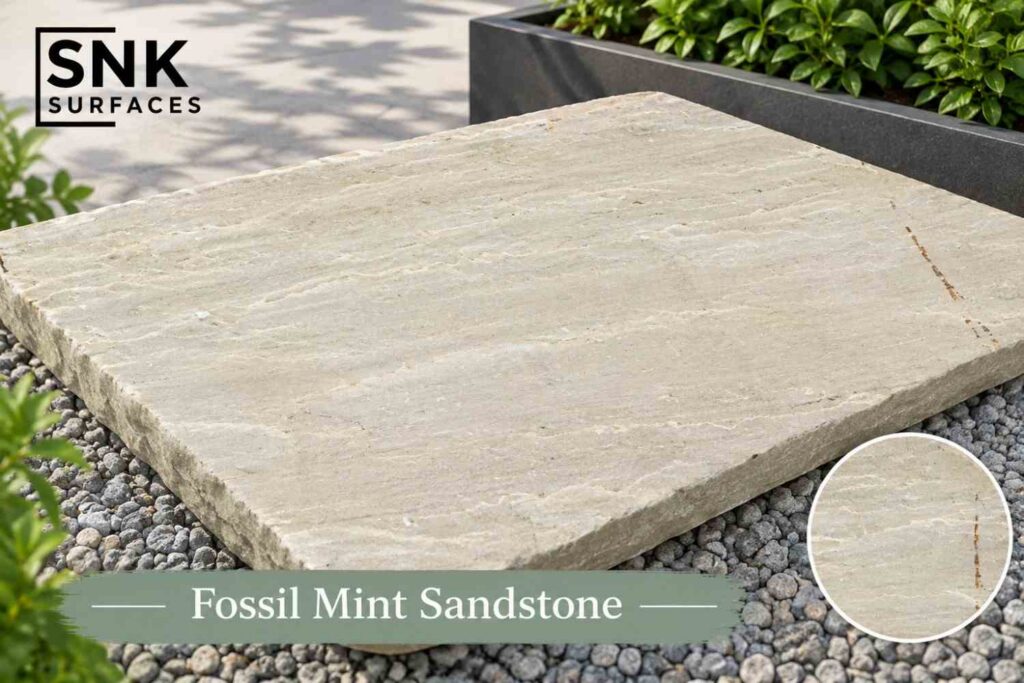
Designers like Fossil Mint because it works with almost any building style. It looks at home beside a red brick house, a white rendered villa or a modern glass extension. The light tone reflects daylight, so it brightens shaded gardens and north facing terraces. It is also a popular pick for pool surrounds, since the surface stays cooler than darker stones in direct sun.
Its natural riven face offers good slip resistance, which is why it appears so often in sandstone paving packs for domestic gardens. It is usually supplied in 600 x 600 mm, 600 x 300 mm and mixed size patio kits, with calibrated thickness available for easier laying.
One thing to plan for is shade variation. Some slabs lean greener, others lean creamier, and that is normal. When you order for a large project, ask your supplier to mix slabs from several pallets during installation so the colour spreads evenly. Sealing is optional, but many landscapers seal Fossil Mint in areas that see heavy leaf fall or barbecue use, because the pale surface shows stains more easily.
Kandla Grey Sandstone
Kandla Grey is a cool, calm stone with soft grey tones and gentle darker clouds running through it. Some slabs show a light brown or blue undertone, and that mild movement keeps large paved areas from looking flat. It is one of the strongest sellers for contemporary landscape design.
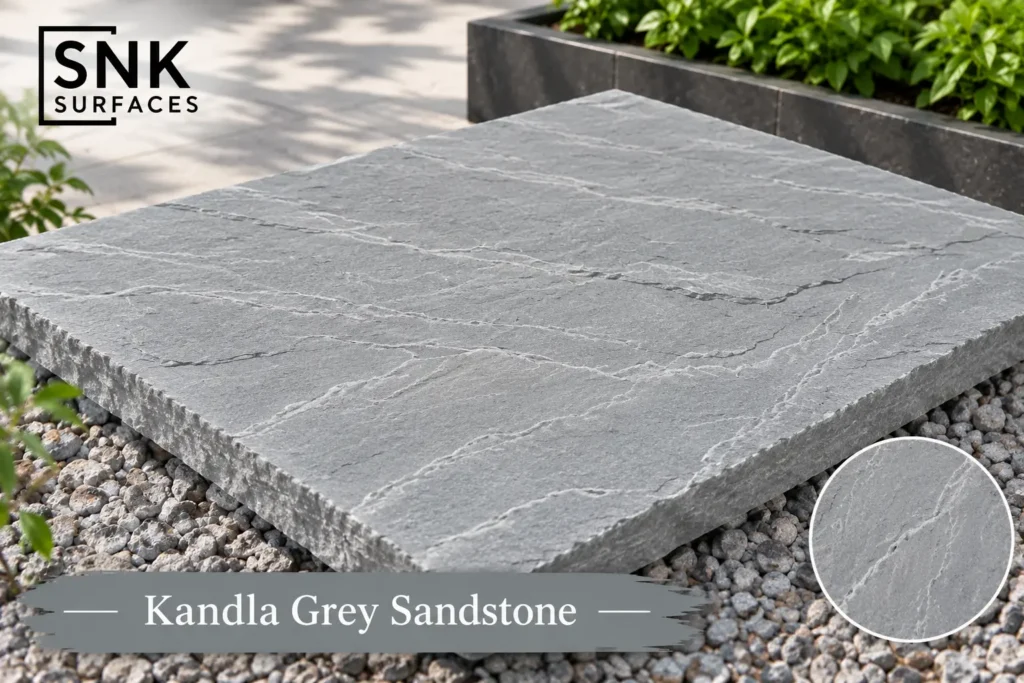
Its main strength is versatility. Kandla Grey suits modern courtyards, restaurant terraces, hotel entrances and residential patios equally well. Architects use it when they want a neutral base that lets planting, furniture and building materials stand out. It pairs comfortably with timber decking, black metal edging and light render.
In terms of performance, the stone is dense enough for regular foot traffic and suitable for light vehicle use when supplied at a heavier thickness. Buyers usually choose between a natural riven finish for grip and a sawn or calibrated finish for a cleaner, more formal look. Sandblasted versions add a softer, even face that is easy to walk on.
Kandla Grey is a solid option for importers because demand is steady across the UK, Europe, Australia and North America. That means it moves quickly, and consistent supply becomes important. Ask your supplier how they keep shade and thickness stable between batches, and request a sample from the actual production lot instead of a showroom piece. Grey stones can also look darker when wet, so test a sample with water to see how the final surface will look after rain.
Raj Green Sandstone
Raj Green is a rich mix of green, rust, brown and sometimes purple tones, all within one slab. The multi coloured look makes it a statement stone, and it is often the first choice when a client wants the paving to become a feature rather than a background.
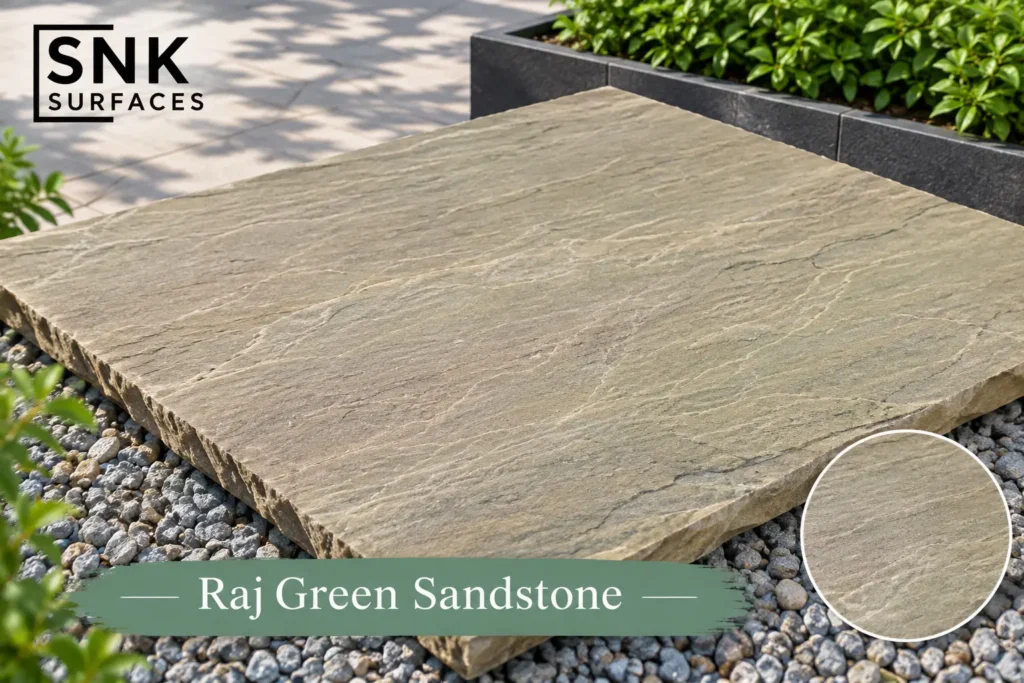
It suits large patios, garden terraces, entrance areas and driveways, especially in traditional or rustic settings. The green tones connect well with lawns, hedging and planting, while the rust shades echo brick and terracotta. Many buyers find that Raj Green hides everyday dirt better than lighter stones, which lowers maintenance in busy family gardens.
The stone is hard wearing and holds up well in cold and wet weather. It is available in riven, sawn, sandblasted and tumbled finishes, and in all the standard paving sizes. Thicker cuts around 30 mm or more are common for driveways and commercial areas.
Because the colour range within a single batch is wide, sampling matters even more with this variety. Ask to see several slabs, not just one, so you understand the full spread from greener to browner pieces. A reliable supplier will pack pallets with mixed shades, so the finished floor looks balanced. For projects with a strict colour brief, agree an acceptable variation range in writing before production starts.
Autumn Brown Sandstone
Autumn Brown lives up to its name. It carries warm brown, gold, tan and light rust tones that bring instant warmth to outdoor spaces. Where Kandla Grey feels cool and modern, Autumn Brown feels welcoming and traditional.
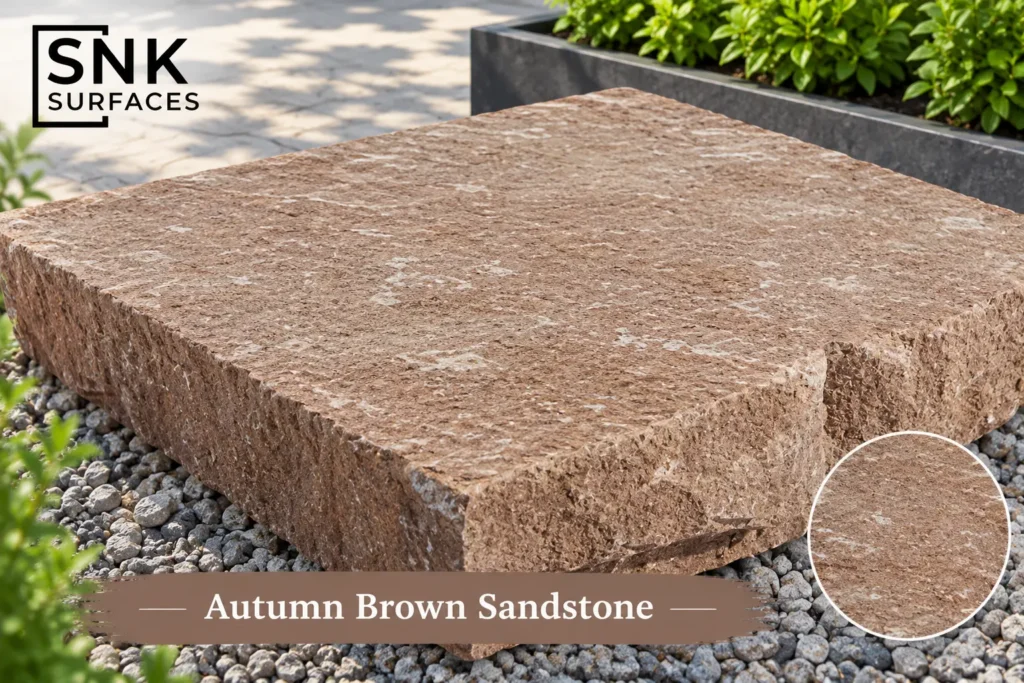
It is a strong fit for period homes, country properties, heritage restoration work and hospitality projects that want a cosy, natural feel. It also works well around fire pits, outdoor kitchens and seating areas, where warm tones make the space feel inviting. In hotter regions, the mid tone colour avoids the harsh glare of very pale stone.
Technically, Autumn Brown is a durable stone with good compressive strength and dependable slip resistance in its natural finish. It is available as paving, wall cladding, steps and copings, so an entire garden can be finished from one variety. That helps with colour matching, because pieces cut from the same quarry face look consistent together.
For buyers, a helpful tip is to look at how the stone ages. Brown sandstones tend to mellow over time, and the colour settles into a softer, more blended tone after a season or two outdoors. Explain this to end clients so they are not surprised. Also check that your supplier grades the stone properly. Autumn Brown can range from lighter tan to deeper chocolate shades, and mixing grades on one site can look uneven.
Sagar Black Sandstone
Sagar Black is the dramatic option. It is a deep, dark sandstone with charcoal, grey and sometimes slightly brown or green undertones. Even in its natural finish, it looks bold and modern, which is why architects choose it for contrast.
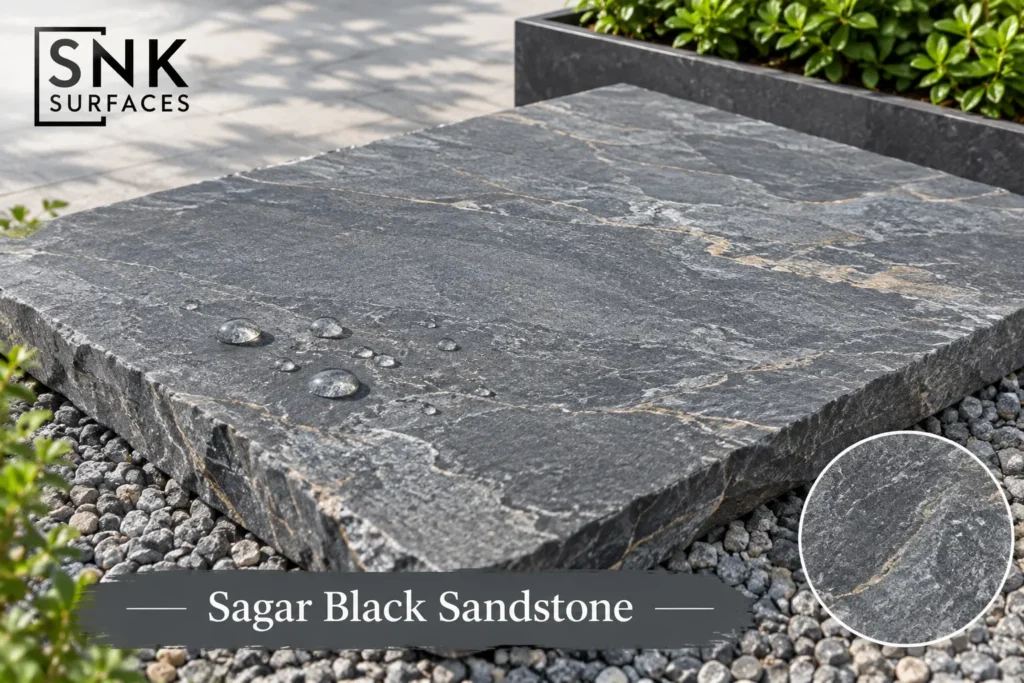
The stone works particularly well in contemporary courtyards, minimalist gardens, commercial plazas and around water features. Against pale render, light planting or timber, the dark tone creates clean, sharp lines. It also makes a striking pairing with lighter stones such as Fossil Mint or Camel Dust when a design calls for pattern or borders.
Practical points matter here. Dark surfaces absorb heat, so in very sunny regions they can feel warm underfoot in the afternoon. Dark stone also shows dust and dried water marks more easily, so a light regular rinse keeps it looking sharp. Slabs should be laid on a well prepared base, because thin or poorly bedded dark stone can show every unevenness.
Sagar Black is available in riven, sandblasted and honed style finishes, though the exact range depends on the supplier and quarry batch. Since the shade can shift from true black to dark grey, always request a sample and confirm the expected tone range. For larger orders, ask for photos of loaded pallets so you can see the real colour distribution before shipment.
Camel Dust Sandstone
Camel Dust is a soft beige and sand toned stone with light gold and cream shadows. It reflects the colour of desert sand, and it keeps outdoor areas looking light, warm and open. It is one of the safest choices when a project needs to appeal to a wide audience.
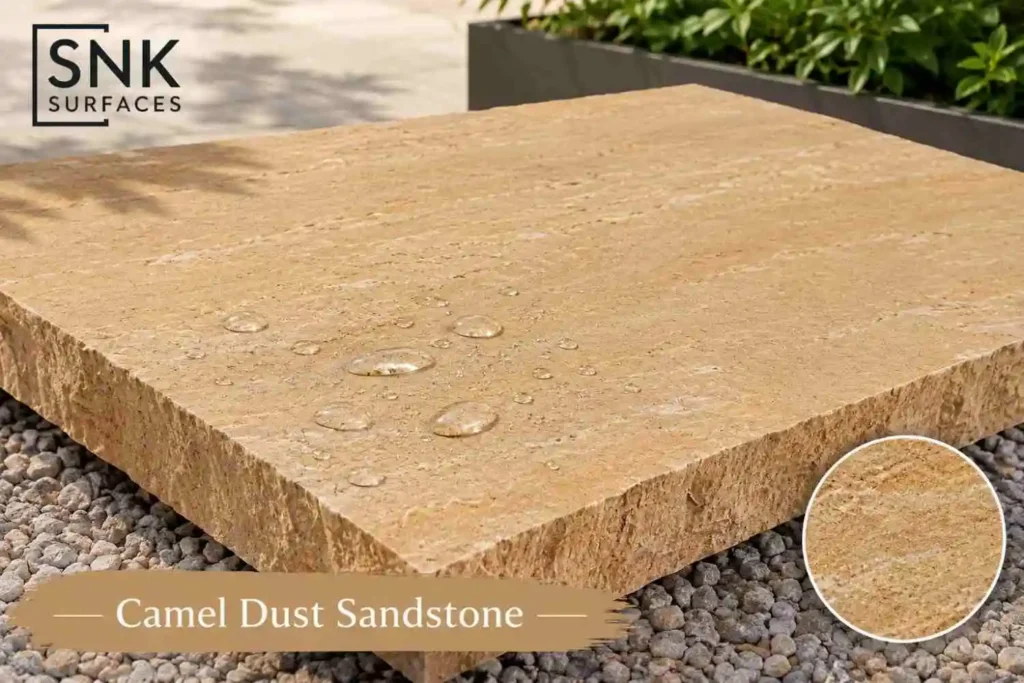
Its neutral tone suits modern and classic buildings alike, so it is popular with developers who need a paving choice that works across many homes. It also makes a good match for Mediterranean style gardens, resort areas and terraces with terracotta pots and light planting. In sunny climates, the pale surface stays comfortable underfoot.
Camel Dust is regularly supplied as natural stone paving slabs in standard patio sizes, as well as steps, cladding and copings. Because the colour is gentle, it pairs easily with darker borders in Sagar Black or Kandla Grey.
Pale stones do show marks, so think about placement. Under trees, near compost areas or around heavy barbecue use, sealing can make cleaning easier. On the buying side, check that the supplier keeps the colour range tight. Camel Dust can lean more golden or more grey between batches, and a large project needs steady tone across all pallets. Ask for a signed off sample and compare it against delivered pallets on arrival.
Modak Sandstone
Modak is a fine grained, warm toned sandstone in soft pink, cream and light red shades. It has a smoother, softer look than many other Indian sandstones, and its tone brings a gentle, welcoming feel to both indoor and outdoor spaces.
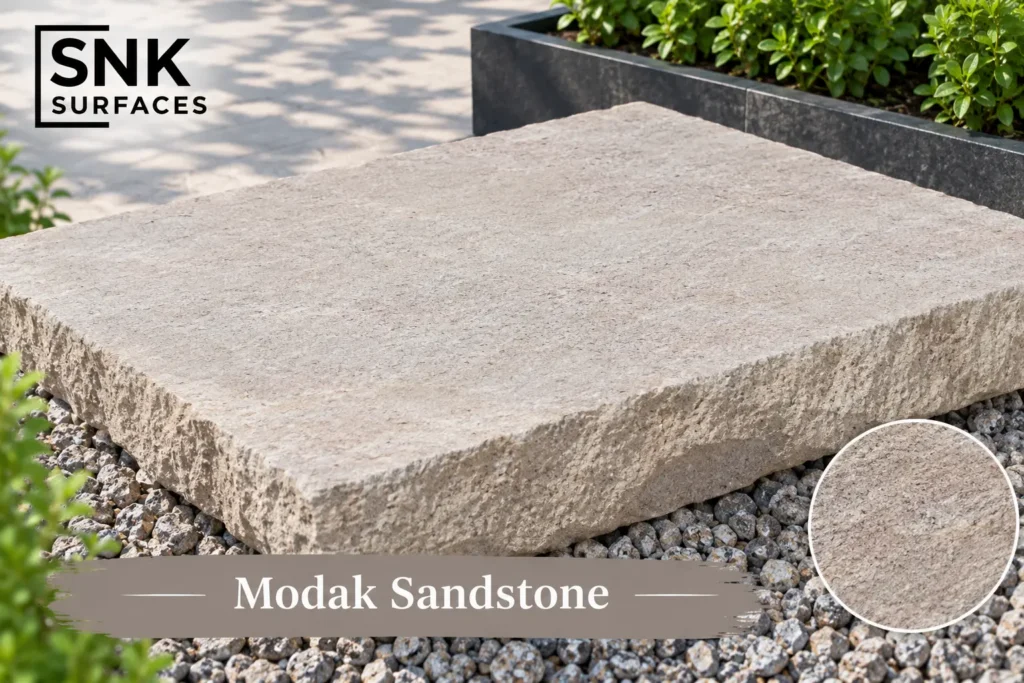
The stone is used for paving, wall cladding, steps and garden features. Its fine grain makes it a good match for projects where a slightly more refined surface is wanted, such as boutique hotels, courtyards and residential entrances. It also works nicely for feature walls, where warm colour and texture add depth without looking heavy.
Modak is usually supplied in natural, sawn and sandblasted finishes. Standard paving sizes are available, and custom cut pieces can be made for steps, copings and bespoke layouts. Being a softer toned stone, it looks best when paired with simple design details, such as clean edging and low key planting, so the natural colour takes centre stage.
For buyers, consistency is the main point to check. The pink and cream balance can shift between blocks, so ask your supplier how they sort and blend slabs. A good supplier will grade by shade before packing, and they will show you sample boards that represent the real range. That way, the finished project matches what the client approved.
Types of Limestone
Limestone is a sedimentary stone made mostly of calcium carbonate. Compared with sandstone, it usually has a smoother, more uniform face, finer grain and a more refined look. That makes it a favourite for flooring, terraces, pool decks, cladding and interior spaces. Indian limestone is quarried mainly in Andhra Pradesh, Madhya Pradesh and Rajasthan, and it is popular with buyers who want a clean, elegant appearance at a sensible price.
Because limestone reacts with acids, it needs a little more care around strong cleaning products and food spills. Sealing is often recommended, especially for interior kitchens and dining areas.
Tandur Grey Limestone
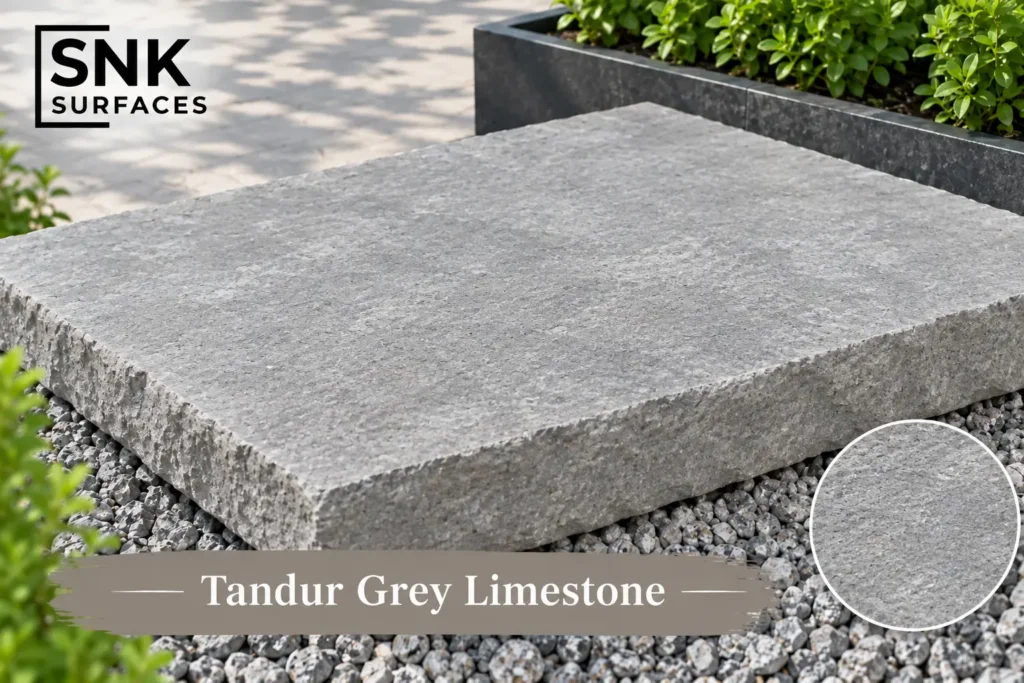
Tandur Grey is a fine, smooth limestone with a soft blue grey tone. It is widely used for flooring, wall cladding and pavements in both homes and commercial buildings. The even colour gives a calm, tidy look, and the honed surface suits modern interiors. Tandur Grey is also used for shopping centres, offices and public areas, because it wears well and is easy to keep clean. Ask your supplier for the available finishes and thicknesses, since interior and exterior use call for different specifications.
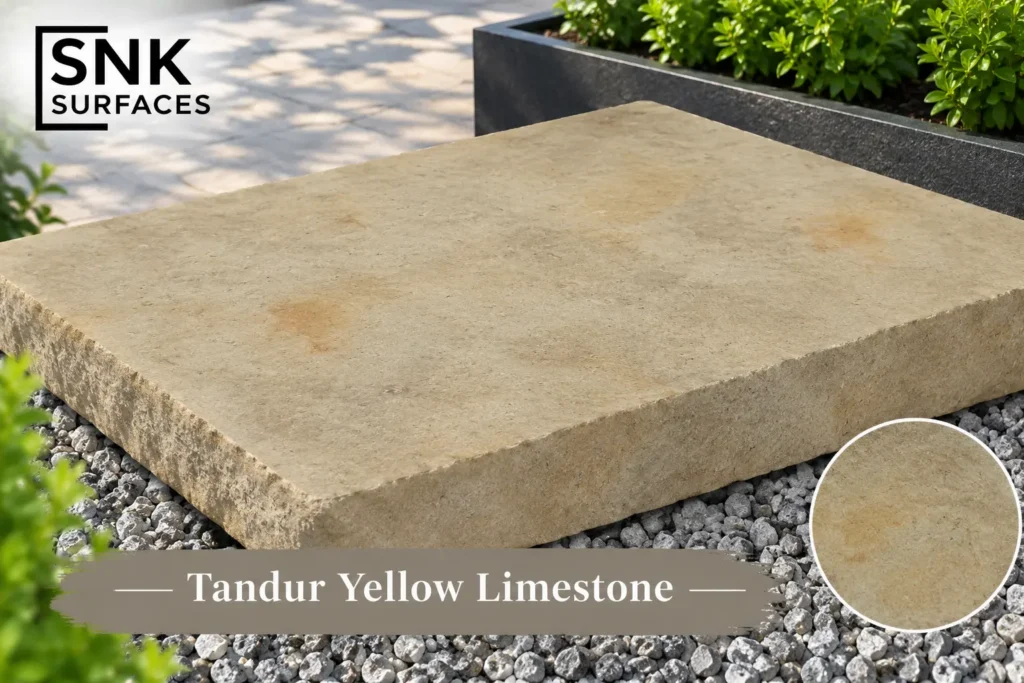
Tandur Yellow Limestone
Tandur Yellow has a warm, light yellow tone with subtle veining and small colour changes. It brings brightness to interiors, verandas and garden rooms, and it pairs nicely with timber and natural fabrics. The stone is often cut into tiles and slabs for flooring, and it is also used for wall cladding. Since yellow tones can vary between lots, request samples from the batch you will actually receive, and confirm whether the supplier can provide matched tone across the entire order.
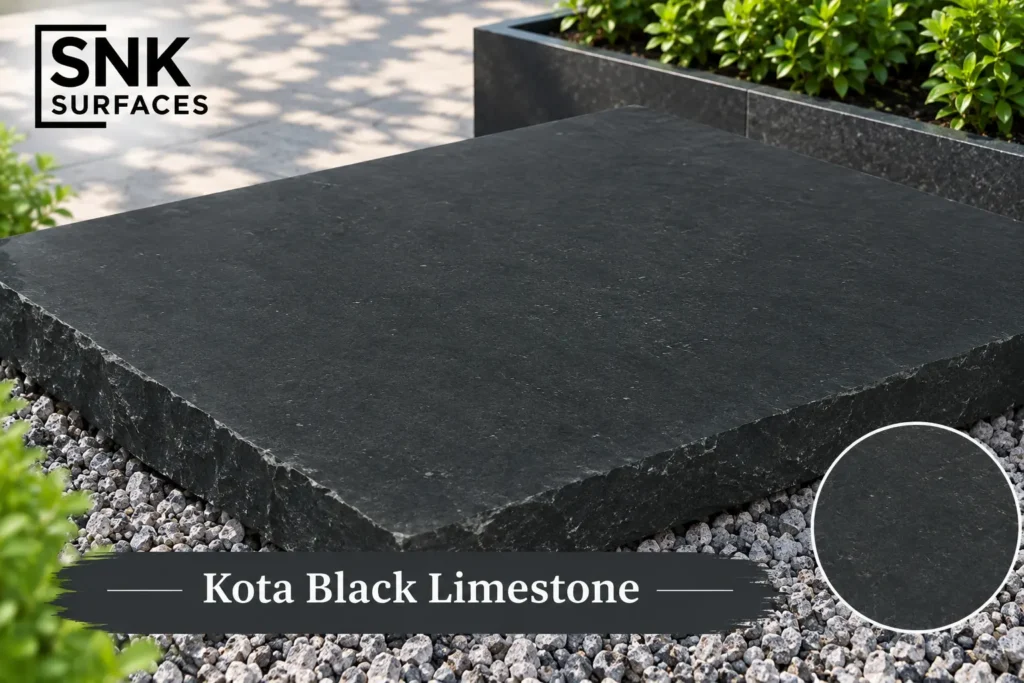
Kota Black Limestone
Kota Black is a dense, dark limestone with a smooth, tight surface. Although it is called black, it usually appears as a deep charcoal or bluish black. It is popular for flooring, staircases, kitchen counters, temple flooring and commercial interiors, where a bold and polished look matters. Kota Black takes a honed or polished finish well. It is a good choice for buyers who want a dark surface that feels solid and premium, and it pairs beautifully with lighter walls.
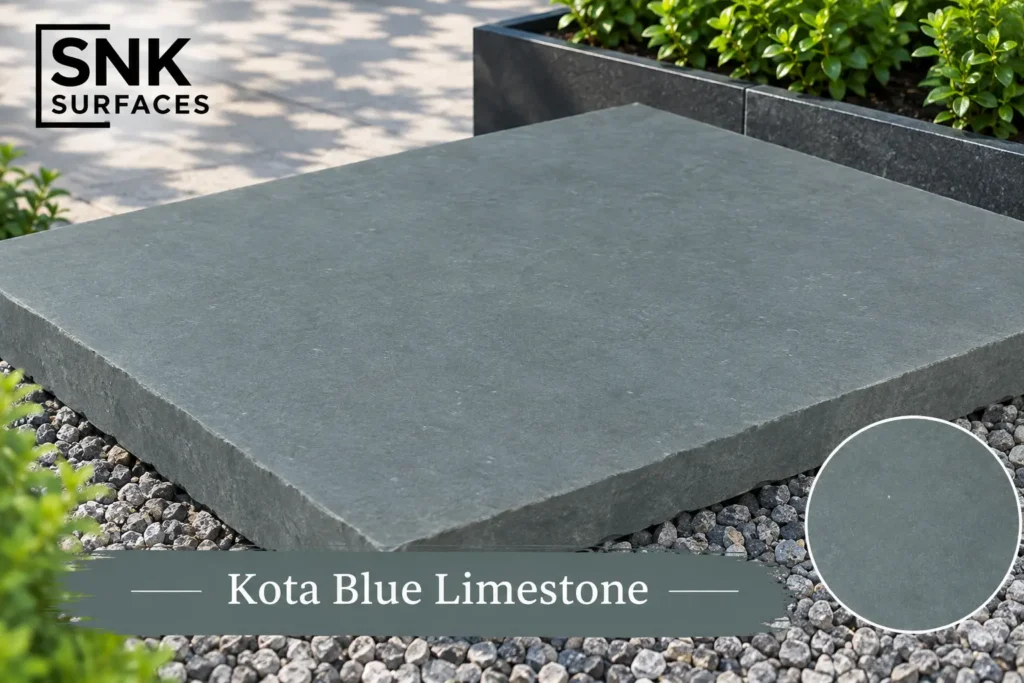
Kota Blue Limestone
Kota Blue has a cool blue grey tone with faint natural markings. It is a strong performer for flooring, paving, steps and cladding. The hardness and fine grain give it a long lifespan in busy areas, and the colour keeps spaces looking fresh. It is often chosen for hospitals, schools, offices and homes that want a calm palette. As with all limestones, check thickness, finish and slip resistance for the intended location before you confirm the order.
Types of Granite
Granite is an igneous rock, formed from cooled magma, and it is among the hardest natural stones available. It resists scratches, heat, stains and heavy wear far better than most other options. India has large granite reserves, especially in Karnataka, Tamil Nadu, Andhra Pradesh and Rajasthan, and it exports granite in slabs, tiles, kerbs and paving. For commercial buyers, granite is a dependable option where durability and long life come first.
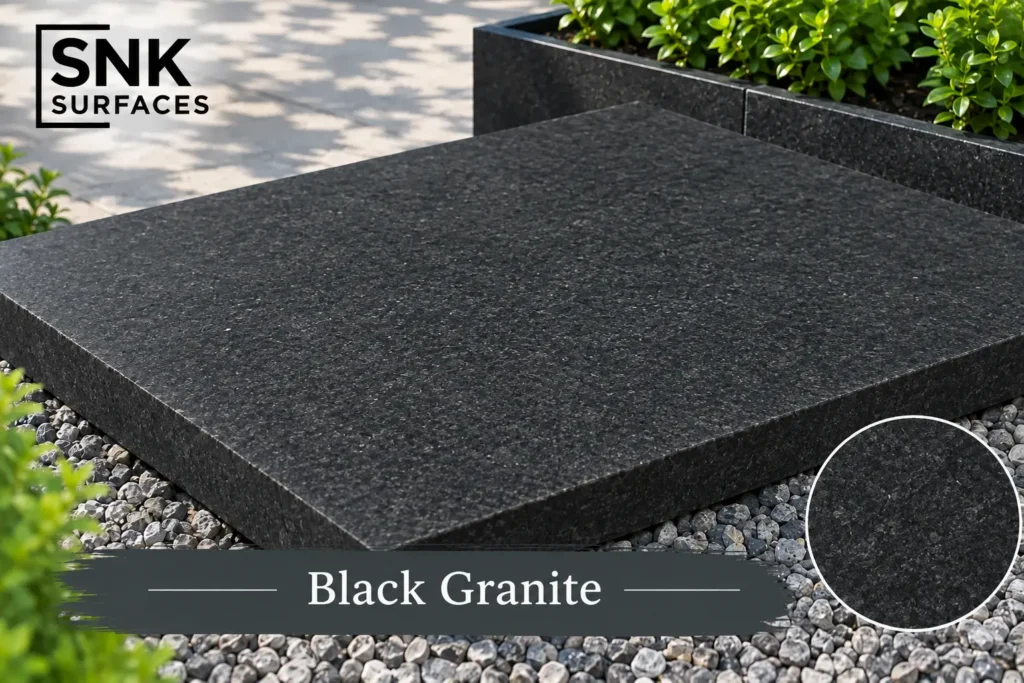
Black Granite Paving Slabs
Black granite paving slabs are dense, low maintenance and very strong. They cope with heavy foot traffic, vehicle loads and harsh weather, so they suit plazas, pavements, driveways, commercial entrances and public spaces. The deep dark colour gives a sleek, modern look, and flamed or brushed finishes add grip where wet conditions are expected. Polished finishes look impressive but can be slippery outdoors, so choose the surface carefully. Granite is also a strong option for kerbs, borders and steps, because it keeps its shape and colour for many years.
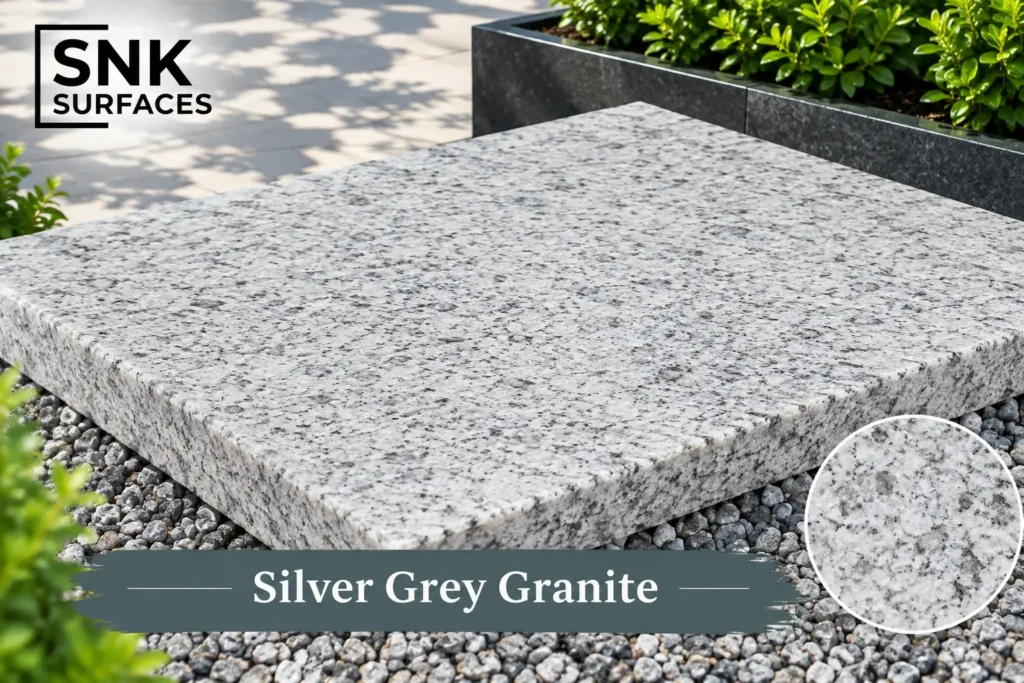
Silver Grey Granite Paving Slabs
Silver grey granite has a light grey, speckled look that suits city projects, streetscapes, courtyards and commercial paving. The neutral tone blends easily with glass, steel and concrete, and it stays looking clean with little effort. Flamed and bush hammered finishes give a rough, safe surface for outdoor use. Silver grey granite is often specified for large public projects, since supply is consistent and the stone is very hard wearing. Ask about size tolerance and thickness options, especially for vehicle areas.
Marble
Marble is a metamorphic stone known for its elegance, veining and polished beauty. It is mostly chosen for interiors, including floors, staircases, feature walls, bathrooms, lobbies and luxury retail spaces. Indian marble, quarried largely in Rajasthan, comes in whites, creams, beiges, greens and darker shades, with veining that ranges from subtle to dramatic.
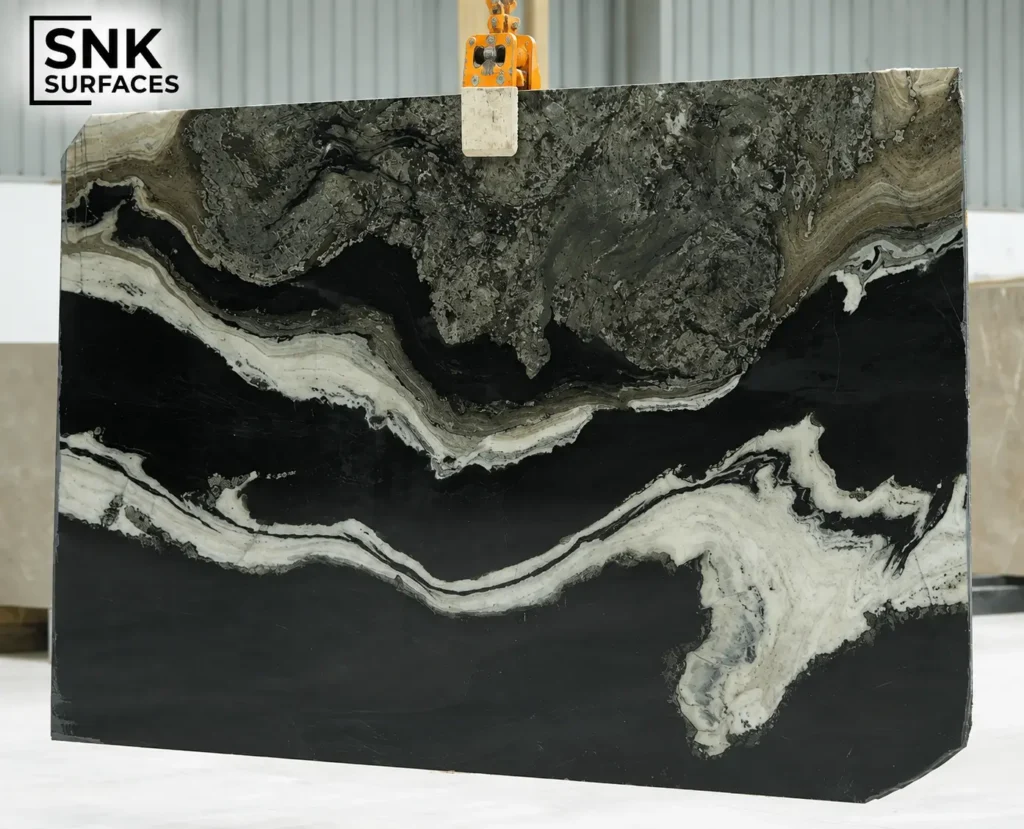
Marble is softer than granite and more reactive to acids, so it needs sealing and gentle cleaning. In return, it delivers a premium look that few materials can match. For outdoor use, marble is better suited to sheltered spaces and decorative features than to heavy traffic paving, where sandstone or granite performs more reliably. When ordering, ask about finish, thickness and matching of veining across slabs, since visual consistency matters greatly on large surfaces.
What Should You Check Before Choosing a Natural Sandstone Supplier?
Start with experience. Ask how long the company has exported and which countries it serves. Then verify the quarry origin, because Indian sandstone colours and hardness change from one region to another. A supplier who cannot name the quarry region is a risk.
Next, look at the manufacturing side. Check whether they cut, calibrate and finish the stone themselves or simply trade it. Ask about monthly production capacity, past project experience and whether custom orders are supported. Custom cutting matters when a project needs unusual sizes or steps.
How Do You Verify the Quality of Natural Sandstone?
Quality is easier to judge when you know what to look at.
- Colour and variation: Natural stone will show shade changes. The supplier should show you a normal range, not a single cherry picked slab.
- Texture and appearance: Look for an even, clean surface without heavy cracks or loose layers.
- Thickness and accuracy: Uneven thickness makes laying difficult and expensive. Check tolerance in writing.
- Technical specifications: Ask for water absorption, strength and slip resistance data.
- Surface finish and edges: Edges should be clean and consistent.
- Physical samples: Always request them before a bulk order.
- Batch consistency: Ask how the supplier keeps colour and size steady across a large order.
What Natural Sandstone Products Can a Supplier Provide?
A capable supplier offers more than one product. Common lines include sandstone paving, tiles, sandstone slab products, walling, cladding, steps, copings and custom cut pieces. Buying several products from one supplier keeps colour matching simple and reduces the number of shipments you have to manage.
What Sizes, Thicknesses and Finishes Are Available?
Standard natural sandstone paving sizes usually include 600 x 600 mm, 600 x 300 mm and mixed size patio packs, though exact ranges vary by supplier. Thickness commonly runs from 20 mm for light domestic use to 30 mm or more for driveways.
Finishes change both the look and the grip. Riven and natural finishes give a textured, slip resistant surface. Sandblasted and shot blasted finishes create a softer, more even face. Honed finishes are smooth and suit interiors or sheltered areas, while tumbled finishes give aged, rounded edges. Custom sizes and project specific finishes should also be available for larger jobs.
How Do You Check a Supplier’s Capacity for Bulk Orders?
Ask for actual figures rather than general claims. Find out the monthly production output, whether they can fill full container loads and how they handle custom quantities. Ask for realistic stock and production lead times, and confirm how they keep quality steady across a large batch. A supplier who cannot commit to deadlines can hold up an entire site, so put dates in writing.
What Certifications and Documents Should a Natural Stone Supplier Provide?
Expect a full paper trail. This should include product technical specifications, quality control records, test reports, relevant quality certifications, export documents and packing and shipment records. For paving used in Europe and the UK, ask about test data that supports the relevant standards. Suppliers that share documents quickly usually run organised operations.
How Does a Reliable Sandstone Supplier Handle International Orders?
The process should be clear from start to finish. It begins with stone selection and processing, followed by a pre shipment inspection. Then the stone is packed for export, loaded and secured inside the container, and the shipping papers are prepared. A good supplier coordinates logistics with your freight partner and keeps you updated after the ship leaves. Silence after payment is a bad sign.
Why Is Export Experience Important When Choosing a Sandstone Supplier?
Exporters understand what international buyers need. They know how to pack heavy stone so it survives sea freight, how to plan container weights and how to coordinate shipping lines. Experience with UK and European projects means they understand paving standards in those markets. Experience with the USA, Middle East and other regions shows they can adapt to different rules and buyer expectations.
What Questions Should You Ask a Natural Sandstone Supplier?
Keep this list handy when you speak to any supplier:
- Where is the sandstone quarried?
- Are you a manufacturer, exporter or trading company?
- Which sandstone varieties do you supply?
- Which sizes, thicknesses and finishes are available?
- Can you cut custom sizes?
- What is your minimum order quantity?
- Can you supply full container loads?
- Can you send samples?
- What quality checks happen before shipment?
- How is the stone packed for export?
What Are the Warning Signs of an Unreliable Sandstone Supplier?
Watch for unclear stone origin, refusal to send samples, missing technical specifications and product details that change between emails. Other red flags include vague pricing and terms, poor communication, no defined inspection process and unclear production or delivery timelines. One of these can be a mistake, but several together usually mean trouble.
Why Choose an Indian Natural Stone Supplier for International Projects?
India offers a wide range of stone, including many sandstone varieties, and its manufacturers can supply custom sizes and finishes. Many can handle bulk manufacturing, export packing and shipping support, which makes project specific supply straightforward. The result is strong value for buyers who need consistent volumes.
Who Are the Top 5 Natural Sandstone Suppliers in Global?
Choosing from a shortlist saves time, so here are five global natural stone suppliers worth comparing. They work at different scales and in different stones, so the best fit depends on your project. Check each supplier’s own information, and request samples and documents before you order.
1. SNK Surfaces
SNK Surfaces is a natural stone and porcelain tile manufacturer, supplier and exporter serving contractors, builders, architects, importers and commercial buyers worldwide.
- Main products: Sandstone, limestone, granite and marble, including Fossil Mint, Kandla Grey, Raj Green, Autumn Brown, Sagar Black, Camel Dust and Modak sandstone.
- Manufacturing and export: Direct manufacturing and export supply, with bulk and container orders handled for international projects.
- Custom options: Custom sizes, thicknesses and finishes for project specific requirements.
- Target markets: Global, with a UK warehouse for faster delivery of selected paving products in UK.
2. Levantina
Levantina is a Spanish natural stone group founded in 1959, and it says it works in over 100 countries. It operates from its own quarries and manufacturing plants.
- Main products: Marble, granite, limestone, travertine and its Techlam sintered surface range.
- Manufacturing and export: Owned quarries, factories and distribution centres, with a focus on supplying large projects.
- Target markets: Distributors, architects and designers worldwide, with UK showrooms in Rotherham and Basingstoke.
3. Antolini
Antolini is a family owned Italian company based in Verona. Luigi Antolini founded it in 1956, and it is known for its large collection of exclusive stones.
- Main products: More than 1,300 stone varieties, including marble, granite, quartzite, onyx and travertine.
- Manufacturing and export: Italian craftsmanship combined with modern processing, with production in Italy and Brazil.
- Target markets: Luxury residential, hospitality and design projects across the world.
4. Polycor
Polycor was founded in Quebec in 1987, and it owns and operates its own quarries and manufacturing plants across North America and Europe.
- Main products: Granite, marble, limestone and soapstone, supplied as blocks, slabs, tiles, pavers and cut to size stone.
- Manufacturing and export: It controls quarrying and processing in house, so it can supply large architectural and landscape projects.
- Target markets: Architects, designers and contractors, mainly in North America.
5. Temmer Marble
Temmer is a Turkish quarrier, manufacturer and exporter founded in Afyon in 1998. It runs a large integrated processing plant and owns several quarries.
- Main products: Marble, travertine and limestone as blocks, slabs and cut to size material.
- Manufacturing and export: It states an annual production capacity of about 2 million square metres, and it exports to around 40 countries.
- Target markets: The UK, North America, Europe, Central Asia and the Far East, with showrooms in cities including London and Atlanta.
What Should You Compare When Evaluating Sandstone Suppliers?
Line up each supplier against the same checklist: product range, stone origin, quality control, sizes and finishes, customisation, production capacity, export experience, packaging, certifications and project support. Ask every company for the same information so the comparison stays fair. A supplier that answers quickly, sends clear documents and offers real samples is usually the one that communicates well after you order.
Why Choose SNK Surfaces as a Natural Stone Supplier?
SNK Surfaces is an Indian natural stone manufacturer and exporter with a range that covers sandstone, limestone, granite and marble. Buyers can choose from many sandstone varieties, custom sizes and finishes, and bulk or container supply. Products go through quality control and inspection, and they are packed for export and shipped internationally. The team supports B2B projects, and the UK warehouse helps buyers who need selected products quickly. If you are comparing natural stone paving options, this range gives you plenty to choose from.
Natural Sandstone Supplier Checklist for International Buyers
| Factor | What to Check |
|---|---|
| Stone origin | Quarry and country of origin |
| Product quality | Colour, texture and consistency |
| Specifications | Size, thickness and finish |
| Manufacturing | Production capability |
| Customisation | Custom sizes and finishes |
| Quality control | Inspection and testing |
| Certifications | Relevant documentation |
| Samples | Physical product samples |
| Bulk supply | Container and project quantities |
| Packaging | Export grade packaging |
| Logistics | Shipping and documentation |
| Communication | Response and project support |
Frequently Asked Questions About Natural Sandstone Suppliers
How do I choose a reliable natural sandstone supplier?
Check origin, samples, specifications, capacity, quality control, documents and export experience.
What should I check before buying sandstone in bulk?
Confirm batch consistency, thickness tolerance, packaging and lead times, and approve samples first.
How can I verify a natural sandstone manufacturer?
Ask for quarry details, factory information, test reports, references and photos of past shipments.
What are the different types of natural stone?
The main types are sandstone, limestone, granite and marble.
What are the most common types of Indian sandstone?
Fossil Mint, Kandla Grey, Raj Green, Autumn Brown, Sagar Black, Camel Dust and Modak.
What is Fossil Mint Sandstone?
A cream, buff and green toned stone with fossil style markings, popular for patios.
What is Kandla Grey Sandstone?
A cool grey stone with subtle variation, well suited to modern paving.
What is Raj Green Sandstone?
A green, rust and brown blend with strong natural character.
What is Sagar Black Sandstone?
A dark charcoal stone that gives strong contrast.
Can Indian sandstone suppliers provide custom sizes?
Yes, most manufacturers can cut to project sizes when given clear drawings.
Can natural sandstone suppliers handle container orders?
Yes, experienced exporters regularly ship full containers.
What certifications should a natural stone supplier provide?
Ask for quality certifications, technical test reports and export documents.
How is sandstone packaged for international shipping?
It is usually stacked on wooden crates or pallets, strapped and secured inside the container.
What questions should I ask a sandstone supplier before ordering?
Ask about origin, capacity, samples, quality checks, lead times and packing.
How to lay paving slabs in a garden?
Prepare a compacted sub base, add a bed of mortar or sharp sand, place each slab with a small joint gap, check levels and fill the joints.
What sand to lay slabs on?
Use sharp sand or a sand and cement mix. Soft building sand can shift over time.
How to Request a Quote From a Natural Sandstone Supplier
Share the stone type you want, along with size, thickness and finish. Add your project quantity and location, and confirm packaging and shipping needs. Ask for samples and technical information at the same time. The more detail you give, the faster and more accurate the quote will be.
Conclusion: Choosing a Reliable Natural Sandstone Supplier
The best choice comes down to stone origin, quality, specifications, manufacturing capacity, samples, quality control, export capability and communication. Check each one and you will avoid most sourcing problems.
Ready to start? Visit SNK Surfaces to request samples and a quote for your next project.