

Choosing the right stone for a patio, driveway, or commercial project isn’t easy. There are dozens of colours, a dozen suppliers all claiming to be “the best,” and no simple way to check who’s actually telling the truth about where the stone comes from. If you’ve been searching for mint sandstone paving, you’ve probably noticed the same problem: plenty of listings, but very little honesty about sourcing.
At SNK Surfaces, we want to change that. We’re going to walk through everything worth knowing about this stone, including its real colour, its most requested finish, the sizes buyers actually order, and how to care for it. Most importantly, we’ll explain why this is the one colour in our range we quarry ourselves rather than buy in. By the end, you’ll know exactly what you’re looking at, and exactly what questions to ask any supplier before you place an order.
What Is Mint Sandstone, Really?
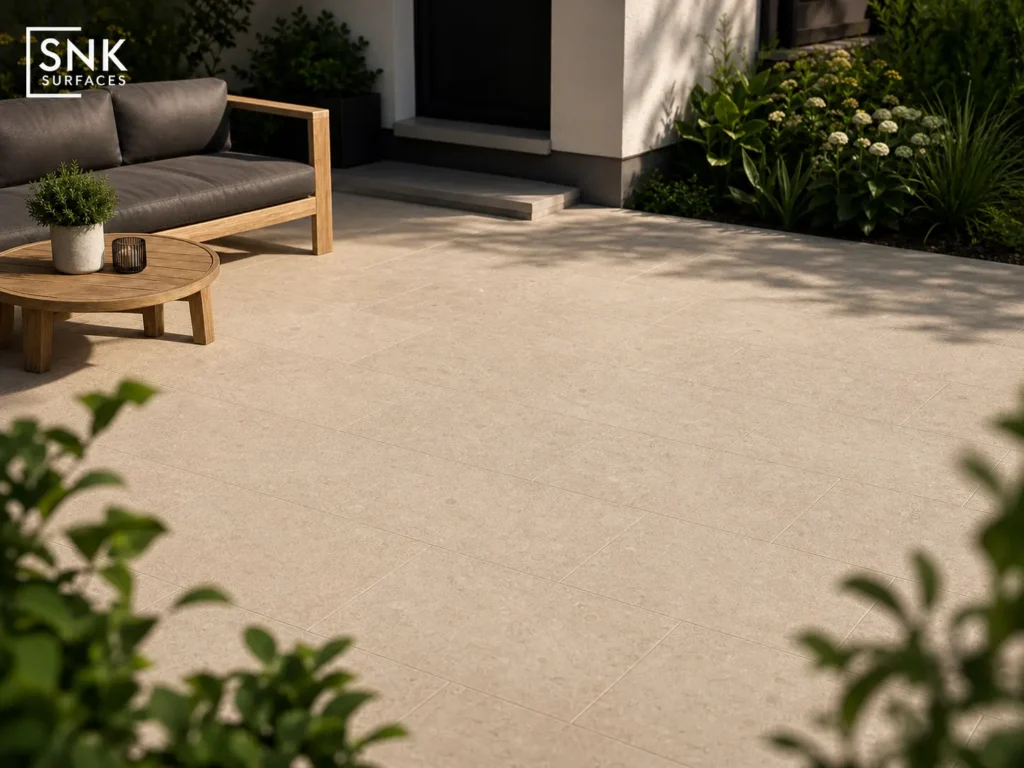
Let’s clear up the name first, because shopping for mint sandstone paving causes real confusion. Despite being called “mint,” this is not a green stone. Mint Indian sandstone is a soft, creamy material, closer to a beige Indian sandstone than anything resembling mint-green. The name comes from a faint, cool undertone that shows up in certain lighting, not from the base colour of the slab itself.
You’ll also see it sold under a different regional name: Gwalior sandstone. Both names describe the same family of stone a pale, fine-grained rock quarried in India and prized for its light tone and the small fossil markings running through many slabs. That second detail is where the “fossil” in fossil mint Indian sandstone paving slabs comes from. These aren’t defects. They’re the pressed remains of ancient plant and marine life, and they’re exactly why buyers who want genuine natural character choose it over a flatter, more uniform option.
Every slab is a little different. Some show more fossil detail than others. Some lean slightly warmer, some slightly cooler. That’s not inconsistency for the sake of it; it’s simply what a real, quarried material looks like.
Where Does This Stone Come From?
Understanding where a material actually comes from tells you a lot about how reliable a supplier can be. This particular stone is extracted from a fine-grained sedimentary bed formed over millions of years. The quarrying process involves cutting large blocks from the rock face, then splitting and finishing them into the slabs, cobbles, and coping that end up on your patio.
At SNK Surfaces, we extract this stone from a site we own and operate directly in India the same source behind our Fort White range. That single fact shapes almost everything else in this guide, from how consistent the colour is between orders to how quickly we can confirm a lead time.
The Sawn Finish: Why It’s the Most Requested Option
If you’ve been comparing mint sandstone paving options, you’ve likely noticed how often the word “sawn” comes up. A flat, machine-cut surface rather than the rougher, riven texture found on some other sandstones gives a cleaner, more contemporary look.
Because of this, sawn mint Indian sandstone paving slabs are incredibly popular for modern patios, courtyards, and commercial landscaping where a tidy surface matters. This finish also makes the stone easier to lay in a uniform pattern, While sawn is perfect for contemporary designs, the natural finish (often called riven) remains in massive demand across the UK. This traditional finish leaves the stone with a lightly textured, hand-split surface. Not only does this provide excellent slip resistance, but it also perfectly suits classic British gardens, cottage patios, and heritage homes.
Sizes and Formats
Size is often the last thing a buyer checks before actually placing an order, which makes it one of the most important details to get right. Here’s what’s most commonly ordered:
| Size | Typical Use |
| 600 x 900mm | The most requested size, perfect for patios and garden paving. |
| 600 x 600mm | Courtyards, smaller patios, and pathways. |
| 4-Size Patio Pack (900×600, 600×600, 600×290, 290×290) | The classic choice for creating traditional, random mixed-pattern patios. |
| 600 x 290mm / 300 x 600mm | Borders, pathways, and edging. |
| 600 x 1200mm | Large-format commercial paving. |
| Cobbles (200 x 50 x 50mm) | Perfect for patio edging, borders, curved pathways, and adding rustic detailing. |
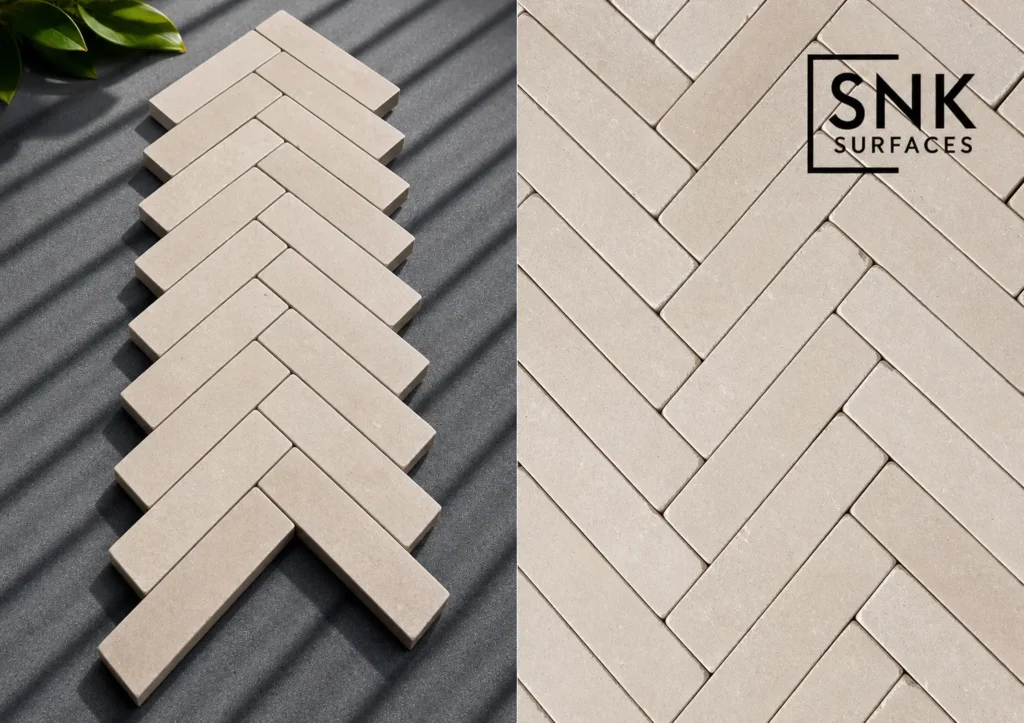
Thickness ranges from 12mm to 30mm, with 22mm calibrated as the standard for most UK patios (meeting UKCA & CE certification standards for safe building materials).
If you are a landscaper or contractor looking for a fast, efficient installation with minimal site cutting, you are not alone; it happens to be the format we supply most often for sawn mint sandstone paving 600×900 project orders across the UK.
Does It Need Sealing?
Like all-natural sandstone, this material is porous. Sealing at installation, and resealing roughly every one to two years, helps protect the surface from staining, moss, and algae, particularly in shaded or damp corners of a UK garden.
The good news is that sealing a pale stone like this is a relatively simple job, and most buyers find the light colour actually makes staining easier to spot and treat early. If low maintenance is your absolute top priority, it’s worth exploring our outdoor porcelain paving range though for genuine natural texture, mint sandstone remains unmatched.
Mint Sandstone Paving vs. Other Popular Colours
If you’re still deciding between colours, here’s a quick, honest comparison to help you weigh things up:
- Mint Sandstone: Pale beige and cream with fossil detail. Best for modern, contemporary patios.
- Kandla Grey Sandstone: Consistent dove grey. Best for uniform, minimalist gardens.
- Raj Green Sandstone: Green, brown, and plum blend. Best for traditional English gardens.
- Autumn Brown Sandstone: Warm browns and greys. Best for rustic, period properties.
Choose mint sandstone paving when you want a light, contemporary base tone with genuine natural character. It sits in a useful middle ground: pale enough to brighten a space, yet versatile enough to pair with almost any planting scheme.
Why This Is the Only Colour We Quarry Ourselves
Here’s the part most suppliers won’t tell you: The majority of Indian sandstone exporters don’t own a quarry at all. They buy stone from third-party owners, then resell it. That means lead times, colour consistency, and availability all depend on someone else’s operation.
This colour is different for SNK Surfaces. It’s quarried at the exact site we own and operate ourselves. When we quote a lead time or a minimum order quantity for a container load, it’s based on what we’re actually pulling out of the ground that week.
For a distributor or landscaper, this translates into something very practical: the coping around a pool and the paving on the patio can all come from the exact same beds, at the exact same time. That kind of consistency is genuinely hard to promise unless you control the source.
Ready to Source Direct from the Manufacturer?
Mint sandstone paving offers a pale, contemporary colour backed by a supply chain we actually control from our quarry to your container.
If consistency, honest sourcing, and competitive trade pricing matter to your next project, skip the middlemen.
Request a Free Sample Today to see the quality of our fossil mint Indian sandstone paving slabs for yourself, or Contact the SNK Surfaces Team to get a fast quote on UK container loads and trade quantities.
Frequently Asked Questions
Is mint sandstone actually green?
No. Despite the name, it’s a pale beige and cream stone, not green. The “mint” name refers to a subtle cool undertone, not the base colour.
What’s the difference between mint sandstone and Gwalior sandstone?
They’re the same family of stone. “Gwalior sandstone” is the regional Indian name, while “mint” is the name more commonly used in UK and export markets.
What finish is best for mint sandstone paving?
A sawn finish is the most requested. It gives a flatter, cleaner surface than a riven finish, which suits modern patios and commercial projects exceptionally well.
Do you own the quarry for this stone?
Yes. Unlike many exporters who resell stone from third parties, this stone is quarried at the same site SNK Surfaces owns and operates directly in India.