

Porcelain Tiles vs Natural Stone Paving — Which is Right for UK Gardens and Projects?
When comparing porcelain tiles vs natural stone paving UK buyers consistently ask the same questions — which lasts longer, which is easier to maintain, and which offers better value. Both are available from Indian exporters at competitive prices. And both are supplied by SNK Surfaces with full UKCA and CE certification.
This guide gives you an honest, detailed comparison — covering durability, maintenance, slip resistance, cost, appearance, and sustainability — so you can make the right choice for your specific project.
What is Porcelain Paving?
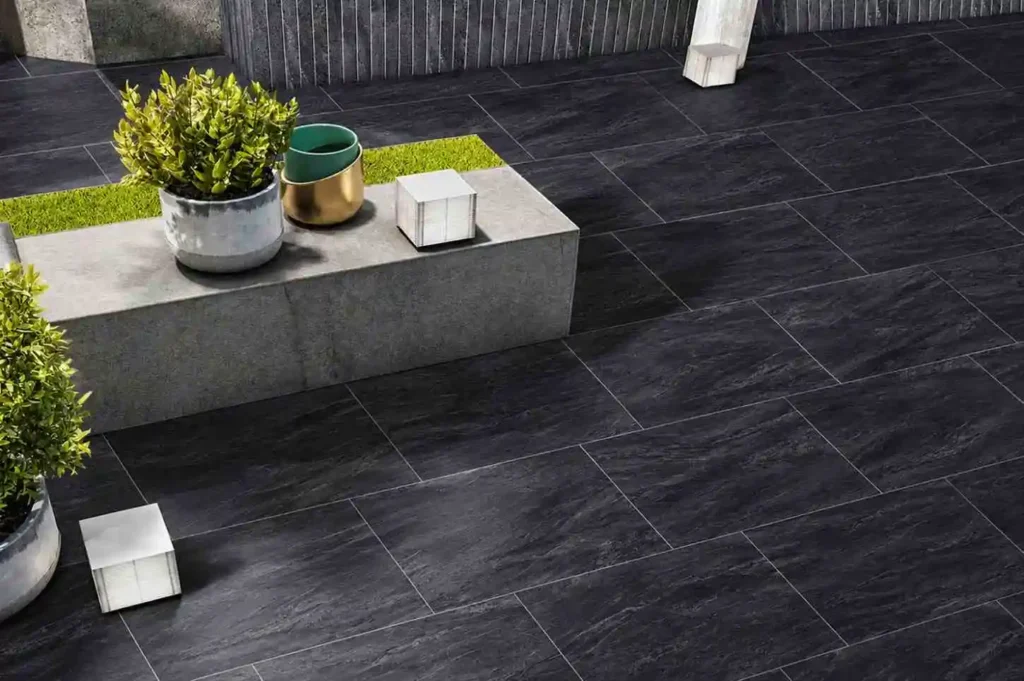
Porcelain paving is a man-made tile fired from refined clay, feldspar, kaolin, and quartz at temperatures of around 1,200°C. The result is a fully vitrified slab with an extremely low water absorption rate — typically below 0.5% — giving it exceptional strength, frost resistance, and stain resistance.
For outdoor UK use, porcelain paving is supplied at 20mm thickness with an R11 anti-slip surface rating, making it suitable for patios, driveways, pool surrounds, and commercial hard landscaping.
SNK Surfaces outdoor porcelain paving sizes:
- 600×900mm — the most popular UK garden patio size
- 600×1200mm — large format for contemporary spaces
- 600×600mm — versatile square format
- 800×800mm — ideal for driveways and commercial areas
What is Natural Stone Paving?
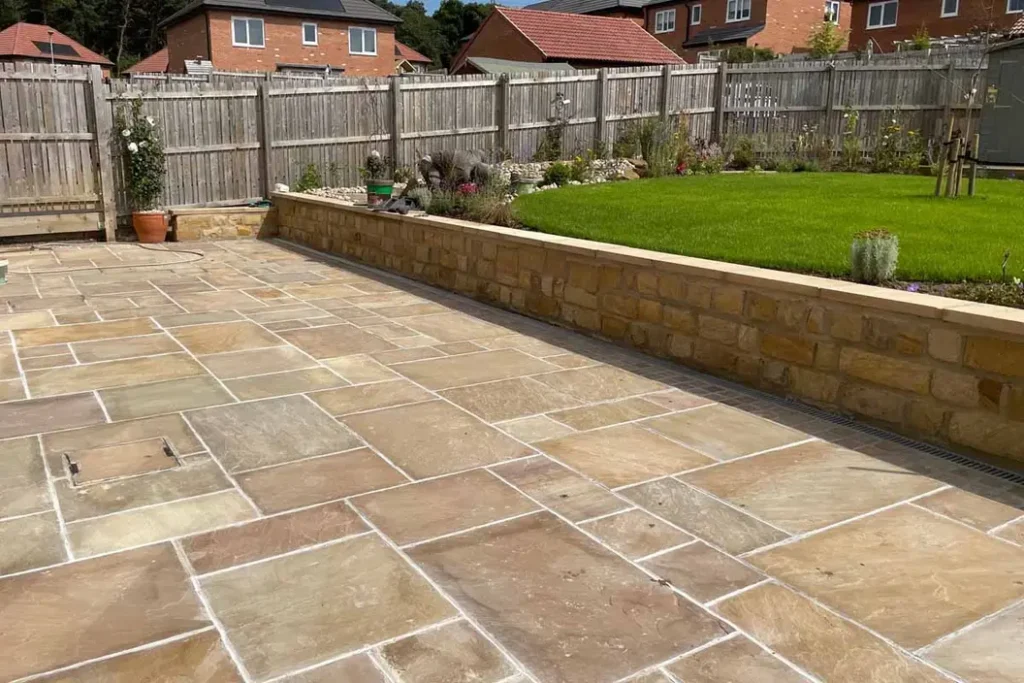
Natural stone paving includes sandstone, limestone, granite, and slate — quarried directly from the earth and cut to size. Each piece is unique, with natural variation in colour, veining, and texture that cannot be replicated by manufactured products.
India is one of the world’s leading sources of natural stone, with Rajasthan producing sandstone and limestone that has been exported to UK gardens for decades. SNK Surfaces sources natural stone directly from Indian quarries, supplying sandstone, limestone, granite, and marble with full UKCA and CE compliance.
SNK Surfaces natural stone range:
- Sandstone — Camel Dust, Mint, Modak, Raj Green
- Limestone — Kota Black, Kota Blue, Tandur Grey, Tandur Yellow
- Granite — Black Granite, Silver Grey
- Marble — Calacatta Oro and premium marble collections
Porcelain Tiles vs Natural Stone — Full Comparison
Durability and Strength
Porcelain is extremely hard and dense, with a water absorption rate below 0.5%. It is virtually impervious to frost, staining, and UV fading. Porcelain does not require sealing and will not degrade over decades of UK weather exposure. Its consistency is guaranteed — every slab is identical in thickness, dimension, and surface finish.
Natural stone varies in density and porosity depending on type. Granite is extremely hard and durable — comparable to porcelain in many respects. Sandstone and limestone are more porous, requiring sealing to prevent water ingress, moss growth, and staining. Unsealed sandstone in a UK climate will absorb water and can crack in severe frost over time.
Winner for durability: Porcelain — but granite comes close.
Maintenance
Porcelain requires almost no maintenance. Sweep regularly, wash with water and a pH-neutral cleaner, and power wash annually. No sealing required. Stains — including oil, wine, and moss — do not penetrate the surface and can be cleaned off easily.
Natural stone requires periodic sealing — typically every 1–3 years depending on stone type and exposure. Sandstone and limestone are prone to moss and algae growth in shaded UK gardens. Granite requires less maintenance than other natural stones but benefits from occasional sealing in high-traffic areas.
Winner for maintenance: Porcelain.
Looking for a lower-maintenance option? Our Kandla Grey porcelain paving recreates the same silver-grey look as natural Kandla Grey sandstone — with no sealing, staining or fading
Slip Resistance
Porcelain outdoor paving is manufactured with specific anti-slip ratings. The R11 rating — standard for all SNK Surfaces outdoor porcelain — is the recommended minimum for outdoor use in the UK, providing safe grip in wet conditions, around pools, and on driveways.
Natural stone slip resistance varies by finish and type. Sawn and sandblasted finishes provide good grip. Polished natural stone can be slippery when wet and is not recommended for outdoor UK use without a textured or flamed finish. Sandstone naturally has a slightly textured surface that provides reasonable slip resistance when properly maintained.
Winner for slip resistance: Porcelain — more consistent and certifiable.
Appearance and Aesthetics
Porcelain offers a vast range of design options — marble-effect, stone-effect, wood-effect, concrete-look, and plain colours. Digital printing technology means porcelain can convincingly replicate natural materials. The finish is consistent across every slab, which suits contemporary, minimalist garden designs and interior-to-exterior continuity (matching indoor tiles with outdoor paving).
Natural stone offers unique, unrepeatable beauty. No two slabs are identical. The natural variation in colour, veining, and texture gives a warmth and authenticity that porcelain cannot fully replicate. For traditional UK gardens, period properties, and projects where natural character is the priority, stone delivers something fundamentally different from manufactured products.
Winner for aesthetics: Natural stone for traditional settings — porcelain for contemporary projects.
Frost Resistance
Porcelain is frost-proof by nature. With water absorption below 0.5%, there is no water retained within the slab to freeze and expand. All SNK Surfaces outdoor porcelain is independently tested and certified frost-resistant for UK climatic conditions.
Natural stone varies significantly. Granite is naturally frost-resistant. Sandstone and limestone absorb water and can crack in severe frost if not properly sealed and maintained. In northern UK regions with frequent freeze-thaw cycles, unsealed sandstone carries a real risk of surface spalling over time.
Winner for frost resistance: Porcelain.
Cost
Porcelain from India is available at highly competitive prices due to large-scale manufacturing in Morbi, Gujarat. FOB prices for 20mm outdoor porcelain paving start at USD 12–22/sq m, with landed UK cost including zero-duty FTA freight typically arriving at £18–35/sq m depending on size and finish.
Natural stone from India is similarly competitive. Indian sandstone and limestone have been exported to the UK for over 30 years and represent some of the best value natural stone available globally. FOB prices start at USD 8–18/sq m for sandstone and limestone, with granite slightly higher.
Both materials from Indian suppliers represent significant savings compared to equivalent European or domestic UK-sourced stone or porcelain.
Winner for cost: Broadly equal from Indian suppliers — both offer exceptional value.
Sustainability
Porcelain is manufactured using natural raw materials fired at high temperatures. The manufacturing process is energy-intensive but modern Morbi factories increasingly use energy recovery systems. Porcelain’s long lifespan — effectively permanent when properly installed — means low lifetime environmental impact.
Natural stone is quarried directly from the earth with no manufacturing energy required beyond cutting and finishing. It is a natural, unprocessed material that will last indefinitely. Many specifiers and architects consider natural stone the more sustainable choice on a lifecycle basis.
Winner for sustainability: Natural stone — but porcelain’s longevity closes the gap.
Summary Comparison Table
| Factor | Porcelain | Natural Stone |
|---|---|---|
| Water absorption | <0.5% — excellent | Varies by type |
| Frost resistance | Fully frost-proof | Granite yes; sandstone/limestone risk |
| Maintenance | None — no sealing | Sealing required every 1–3 years |
| Slip resistance | R11 certified | Varies by finish |
| Appearance | Consistent, wide design range | Unique, natural character |
| Cost (FOB India) | USD 12–22/sq m | USD 8–18/sq m |
| Sustainability | Long lifespan, energy-intensive manufacture | Natural material, low processing |
| Best for | Contemporary, low-maintenance projects | Traditional, character-led design |
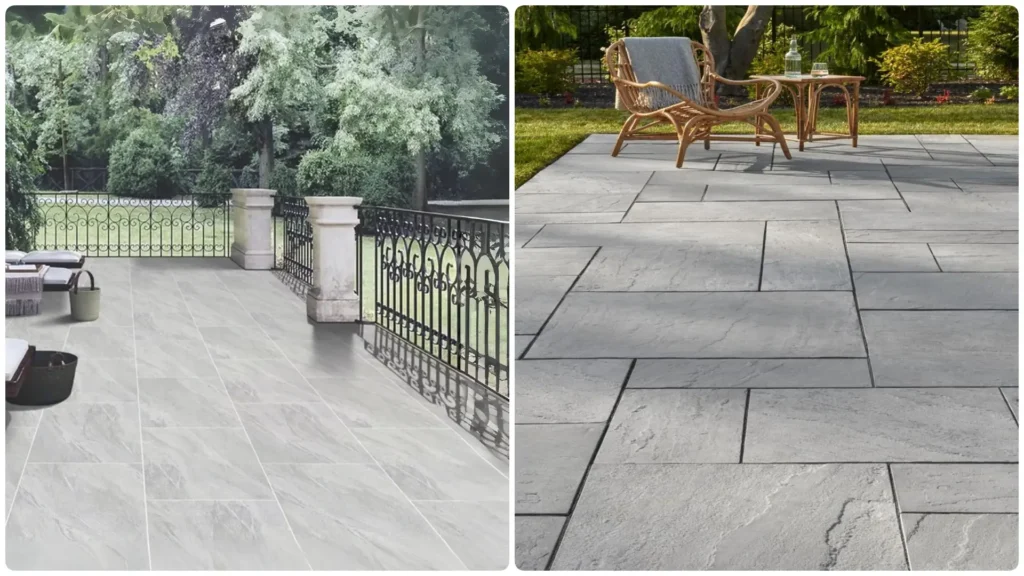
When to Choose Porcelain
Choose porcelain tiles for your UK project when:
- You want a low-maintenance surface that needs no sealing
- The design is contemporary or minimalist — clean lines, large format slabs
- You want interior-to-exterior continuity — matching indoor tiles with outdoor paving
- The project is in a high-traffic area — driveways, commercial spaces, pool surrounds
- Consistency across the entire project is important — no batch variation
- The site has shaded areas prone to moss and algae growth
- You are in a region with severe freeze-thaw cycles — northern England, Scotland
When to Choose Natural Stone
Choose natural stone paving for your UK project when:
- The property is a period or traditional building where natural materials suit the architecture
- You want unique character — no two slabs identical, natural variation is the point
- The project is landscaping-led — a garden designed around natural materials
- Sustainability is a primary specification requirement
- You are matching or extending existing natural stone already on the property
- The budget allows for slightly higher maintenance costs over time
Can You Use Both on the Same Project?
Yes — and many UK landscapers and architects do. A common approach is to use porcelain paving for the main patio and high-traffic areas (durable, low-maintenance, consistent), and natural stone for feature elements — steps, raised planters, retaining walls, or decorative edging — where the natural character adds visual interest.
SNK Surfaces supplies both porcelain and natural stone, making it straightforward to specify and order both materials from a single certified Indian exporter with consistent lead times and documentation.
Why Source Both from SNK Surfaces?
SNK Surfaces is one of the very few Indian exporters that supplies both premium porcelain tiles and natural stone — sandstone, limestone, granite, and marble — from a single source, with full UKCA and CE certification covering both product ranges.
For UK importers and distributors, this means:
- One supplier, one set of compliance documents, one container
- Mixed loads combining porcelain and natural stone in a single 40ft container
- UKCA and CE certificates covering both product categories
- Free samples of both porcelain and natural stone air-couriered to your UK address
- ISO 9001:2015 quality management across the full product range
Contact us at info@snksurfaces.com or call +353 89 413 9274 to discuss your project requirements and request samples and pricing.

Frequently Asked Questions
Is porcelain or natural stone better for UK gardens?
Both are excellent choices depending on the project. Porcelain is better for contemporary low-maintenance gardens — it requires no sealing, is frost-proof, and offers consistent appearance. Natural stone is better for traditional or character-led designs where natural variation and warmth are the priority. Many UK landscapers use both on the same project.
Does porcelain paving need sealing in the UK?
No. Porcelain paving has a water absorption rate below 0.5%, making it impervious to water, staining, and frost without any sealing. This is one of its main advantages over natural stone in the UK climate.
Is natural stone slippery when wet in UK weather?
It depends on the finish. Sawn, sandblasted, or riven natural stone finishes provide reasonable grip when wet. Polished natural stone is slippery when wet and should not be used outdoors without a textured finish. All SNK Surfaces outdoor porcelain carries an R11 anti-slip certification — the UK recommended standard for outdoor paving.
What is the most popular outdoor tile size for UK patios in 2026?
The most popular UK patio size in 2026 is 600×900mm at 20mm thickness — available in both porcelain and natural stone from SNK Surfaces. The 600×1200mm large format is increasingly popular for contemporary gardens and new-build extensions where continuity with interior tiling is required.
Can I mix porcelain and natural stone in one container order from India?
Yes. SNK Surfaces offers mixed load container options combining porcelain tiles and natural stone in a single 40ft container. This is ideal for distributors supplying both product ranges or for project-specific orders requiring both materials. Contact info@snksurfaces.com for mixed load pricing.
How does Indian natural stone compare to UK-sourced stone?
Indian sandstone and limestone have been exported to UK gardens for over 30 years and are well established as high-quality, competitively priced alternatives to domestic UK stone. Raj Green sandstone, Kota limestone, and Indian granite are among the most widely used natural stone products in UK hard landscaping. All SNK Surfaces natural stone is UKCA and CE certified.
What is the price difference between porcelain and natural stone from India?
Both are competitively priced from Indian suppliers. Porcelain FOB prices start at USD 12–22/sq m for 20mm outdoor paving. Natural stone FOB prices start at USD 8–18/sq m for sandstone and limestone, with granite slightly higher. Both represent significant savings compared to European-sourced equivalents. Contact SNK Surfaces for current pricing and samples.
SNK Surfaces is a UKCA, CE, and ISO 9001:2015 certified manufacturer and exporter of porcelain tiles and natural stone from Morbi, Gujarat, India. We supply importers, distributors, landscapers, and developers across the UK, Ireland, and Europe. Contact us at info@snksurfaces.com or +353 89 413 9274.